


Like many wellness ingredients, creatine started off in my periphery. I noticed it on social media but didn’t necessarily relate it back to me. Then, as my husband began exercising more, a container of creatine appeared in our pantry. In its black jar with neon writing, it looked skewed towards men (cough, gym bros, cough) and definitely not relevant to a woman in her early 40s whose exercise routine consists of the odd walk, the gym sometimes, and lots of carrying children’s backpacks and scooters.
But, slowly, the conversation started to shift. It began filtering into conversations about women’s energy, strength, mood, brain fog, recovery, perimenopause, and menopause (ding, ding, ding). Women in their late 30s, 40s, 50s and beyond were being told that this supplement might be less about bulking up and more about supporting the brain and body through some of life’s most demanding stages.
Wellness culture has a way of turning almost anything into a must-have. So it pays to question whether it is genuinely useful, or simply experiencing good marketing. But the more creatine appeared in conversations with women I trust, the harder it became to ignore.
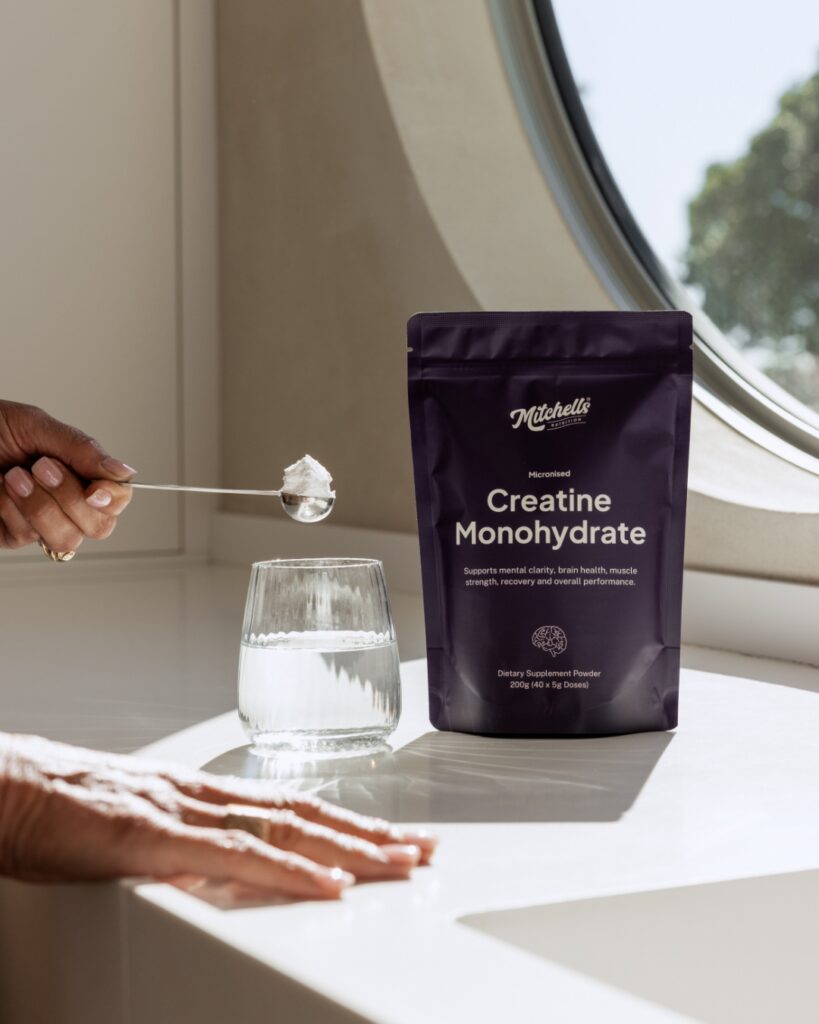
To get a clearer explanation, I turned to Emma Gibson, naturopath and head of nutrition at Mitchells Nutrition (a brand with its own creatine supplement, Creavitalis). “Creatine is one of the most researched supplements we know of,” says Gibson. The issue is that “almost all of the early research focused on young men,” meaning women were largely left out of the discussion.
That is beginning to change. A 2021 review published in Nutrients, an international, peer-reviewed journal, looked specifically at creatine supplementation in women across the lifespan. The review was broadly positive about its potential benefits for strength and exercise performance, while mood, cognition, and reproductive life stages were highlighted as promising but still emerging areas of interest, with more female-specific studies needed.
So what is creatine? It’s a compound your body makes naturally from amino acids and also gets in small amounts from foods such as red meat and fish. Most of it is stored in skeletal muscle as phosphocreatine, where it helps regenerate ATP, which is the body’s primary energy currency. “When you push hard physically or mentally, ATP gets burned through quickly,” says Gibson. “Phosphocreatine donates a phosphate group to recharge depleted ADP [essentially, the discharged battery] back into ATP in seconds, letting you sustain output for longer and recover faster between efforts.”
This is why creatine has long been associated with exercise performance. It helps support the short bursts of energy needed for lifting weights, sprinting, or anything your body does with force and speed. And it’s why the conversation is now expanding beyond muscle. The brain, like muscle, is an energy-hungry organ, and researchers are increasingly interested in how creatine may support cognition under pressure. A 2024 analysis on creatine and cognitive function published on Frontiers found a significant positive effect on memory, while results for other areas such as executive function, attention and processing speed were more mixed. A 2024 study in Scientific Reports found that a high single dose of creatine improved cognitive performance and processing speed during sleep deprivation, although the dose used was much higher than the recommended standard daily supplementation.
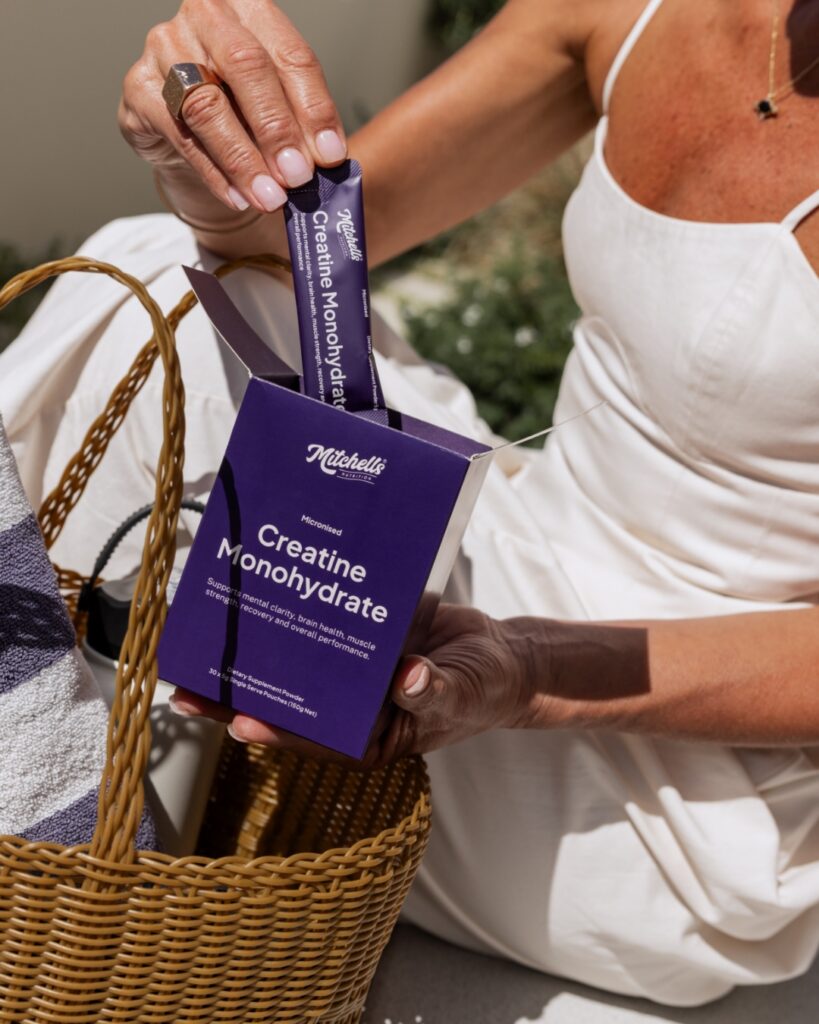
Gibson continues, “Women naturally store about 70 to 80 per cent of the creatine men do, partly due to lower muscle mass and lower dietary intake of red meat and fish,” she says. “That gap means women are starting from a lower baseline, and stand to gain proportionally more from supplementation.”
A review conducted through Monash Health Obstetrics and Gynaecology on creatine and women’s health notes that changes in creatine synthesis, transport and creatine kinase (the enzyme involved in the body’s creatine energy system) expression may occur across pregnancy, menopause, and other hormonally distinct stages.
Gibson believes this is where creatine becomes especially interesting for women navigating midlife. “As estrogen fluctuates and declines through perimenopause and menopause, creatine synthesis and storage become less efficient,” she says. “This overlaps with the period in a woman’s life when brain fog, low energy, poor recovery, and mood changes tend to hit hardest.”
Creatine won’t erase perimenopause symptoms, or replace proper medical care, sleep, nutrition, strength training, or stress support. But it may be one tool worth exploring, particularly for women who are strength training, eating little or no red meat, recovering poorly, or feeling depleted.
Dosage-wise, Gibson says 3 to 5 grams of creatine monohydrate per day is the most well-researched and widely recommended dose, and should be taken consistently. “For the vast majority of healthy adults, [this] dose has an excellent long-term safety record. Decades of research, including studies up to five years of continuous use, show no adverse effects on kidney or liver function in healthy people.”
Gibson advises speaking to a GP, naturopath, sports dietitian, or qualified health practitioner before starting any new supplement, especially if you are pregnant, breastfeeding, taking medication, or have a health condition or kidney concerns. This is important because creatine can increase creatinine, a marker used in kidney function tests, which may complicate interpretation for people already being monitored for kidney health.
From Gibson’s point of view, there are a few common mistakes people make when starting creatine, such as expecting instant results. Creatine works by gradually building up in the body’s tissues over two to four weeks, so consistency is key. Hydration is another. Creatine draws water into the muscle cells, so people may feel flat or headachey if they’re not drinking enough. And early scale weight gain. Gibson says this is generally intracellular water rather than fat, and recommends tracking changes in energy, strength, and mental clarity. Finally, she says, quality matters. Look for purity, testing, and certification.
It’s heartening to see a supplement commonly associated with men be researched with women in mind, and Gibson says the broader cultural conversation around perimenopause, cognitive health, and what supports women’s vitality throughout life has grown enormously.
This article originally featured in the Winter ’26 issue of Fashion Quarterly.
Words: Lucy Slight.
Imagery: Supplied.