The M/Other Space: Inside the powerful new exhibition redefining motherhood in Aotearoa
21 July 2026
By Sarah Murray
As MOTHERMOTHER opens at Sanderson Gallery this month, we speak to gallerist Lydia Cowpertwait and curators Nat Tozer and Michelle Reid about grief, matriarchal futures and why now is exactly the right moment for this exhibition.
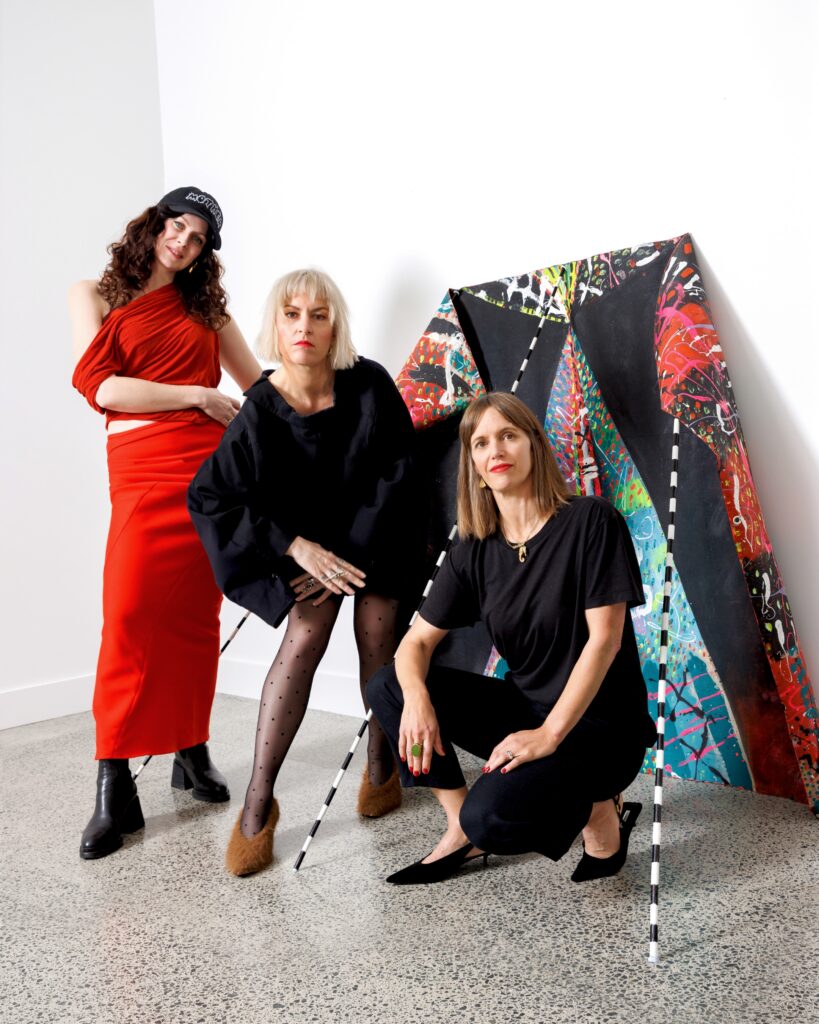
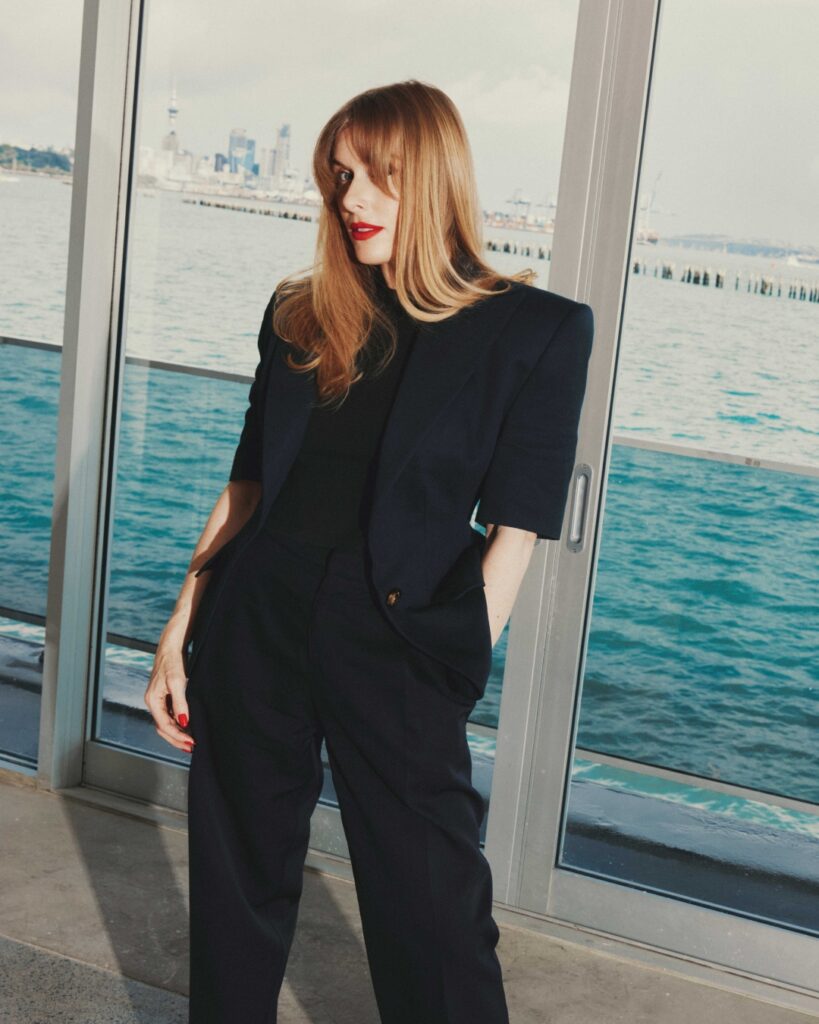
Lydia Cowpertwait, Nat Tozer and Michelle Reid captured by Babiche Martens Photography.
MOTHERMOTHER, a major exhibition bringing together more than 40 artists across four generations, is opening at Sanderson Gallery in Auckland/Tāmaki Makaurau from 23 July. We spoke to Director of Sanderson Lydia Cowpertwait, along with mothermother curators Nat Tozer and Michelle Reid, about what it took to bring it to life.
MOTHERMOTHER is a significant undertaking – over 40 artists, four generations. Where did the idea begin?
Lydia: I’d long admired mothermother since returning to Aotearoa from the UK. I became a mother in London at 31 while working as a curator, and experienced first-hand how difficult it can be to sustain a creative career while raising children, so I naturally gravitated towards initiatives that support creative mothers. The idea for this exhibition began last year when I approached Nat Tozer from the mothermother collective about presenting a guest exhibition in Room 2 at Sanderson. When we met again earlier this year, the conversation evolved, and I suggested that instead, the exhibition take over the entire gallery.
The press release describes mothering as “the connective tissue for intergenerational knowledge sharing.” Why does that feel urgent right now?
Nat: When so many societal structures are feeling unstable, our connective tissue is more vital than ever. This exhibition aims to foster community, contribution and reciprocity – to celebrate each other and the generations of artists whose practices have historically sat outside dominant institutional attention in Aotearoa. People are looking for new ways to build their futures that are imaginative and nourishing. Bringing these artists together feels important and urgent, because they are already doing this work – the conversations are already happening. It’s time to celebrate and amplify.
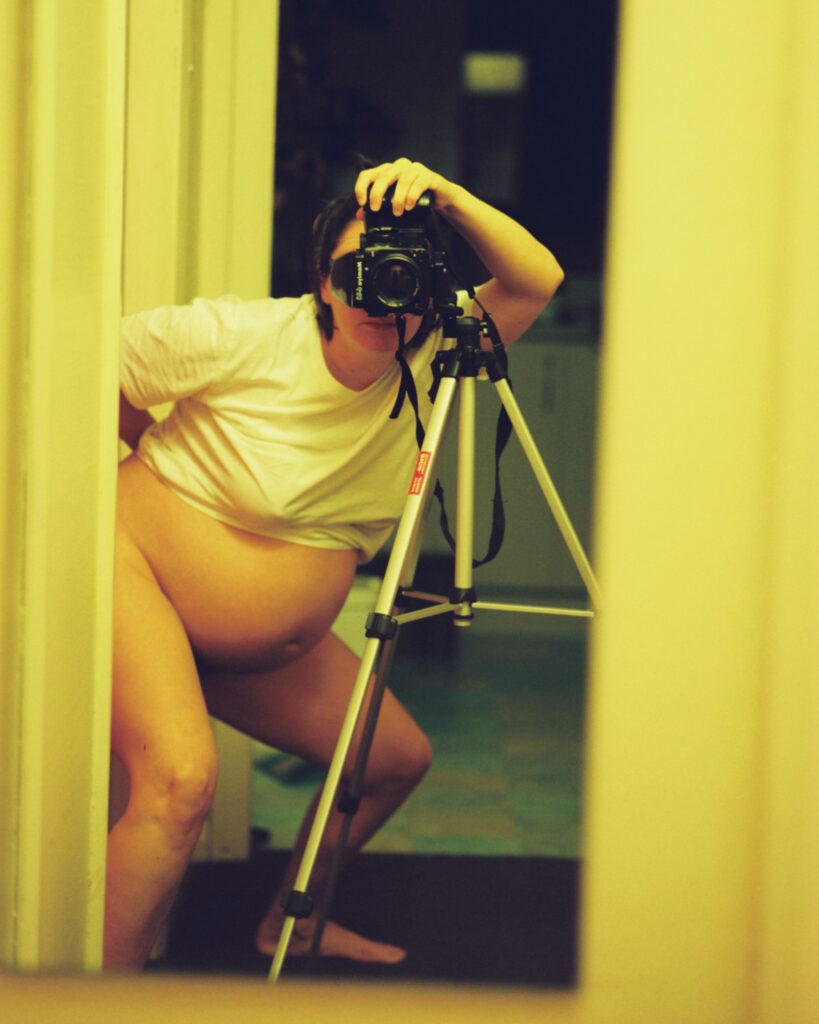
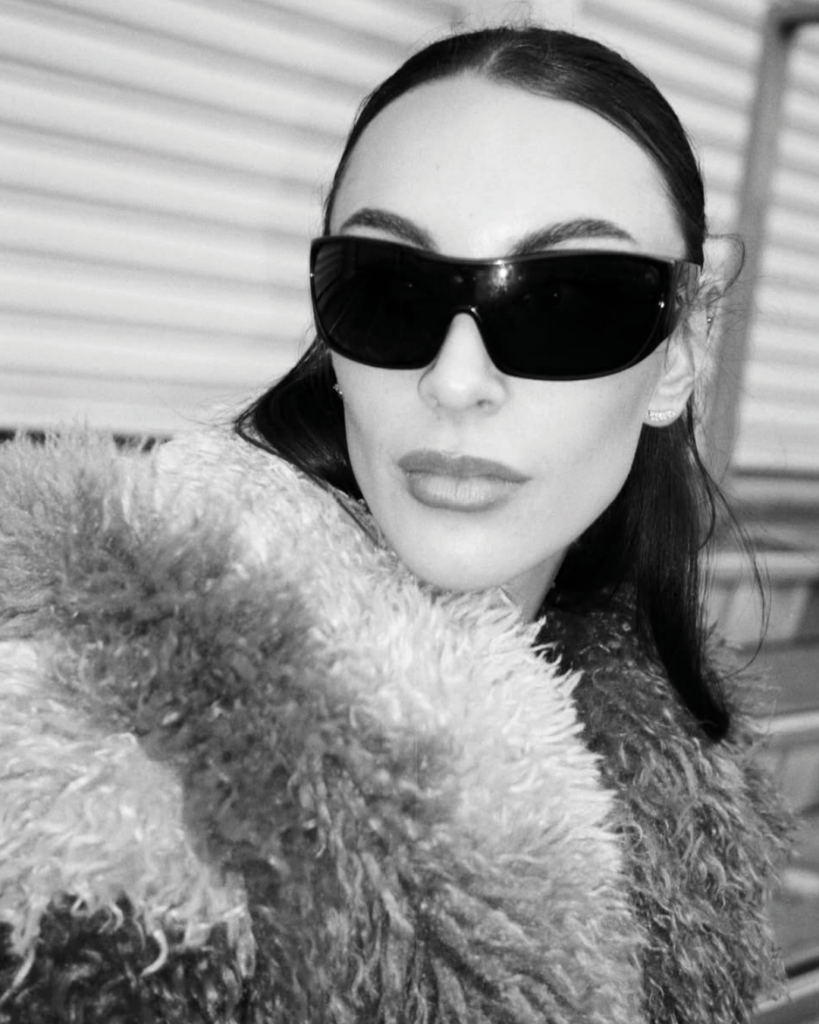
Sophie Bannan, Untitled, 2019, C-type print from 120 negative, 759 x 980 mm.
Judy Darragh, NO SHIT, 2026, Mirror acrylic, 570 x 470 x 100mm.
Is there a work or artist you think will stop people in their tracks?
Lydia: Sophie Bannan’s Untitled – the hero image for the show – is an unforgettable image. It captures the spirit of the exhibition with a raw honesty, refusing idealised images of motherhood in favour of something more intimate, vulnerable and powerful all at once. Sophie is one of the youngest artists in the exhibition and it’s a real privilege to showcase her work.
Nat: There’s a suite of sculptural works by Inga Fillary that I think will genuinely intrigue. Her practice works across film set-scaled domestic spaces – whole kitchens and bedrooms staged in states of decay, objects set on fire or left to rust for months. The longer you look, the more you sense an instability that feels very true to contemporary lived experience.
Michelle: Hana Pera Aoake’s film work Inflation, 2026, made me laugh – a playful attempt to pop balloons while sliding downhill. But the deeper concept is a response to the abstract nature of the financial sector, the act of sliding through inflation and bursting monetary scales. Light-hearted and profound at the same time.
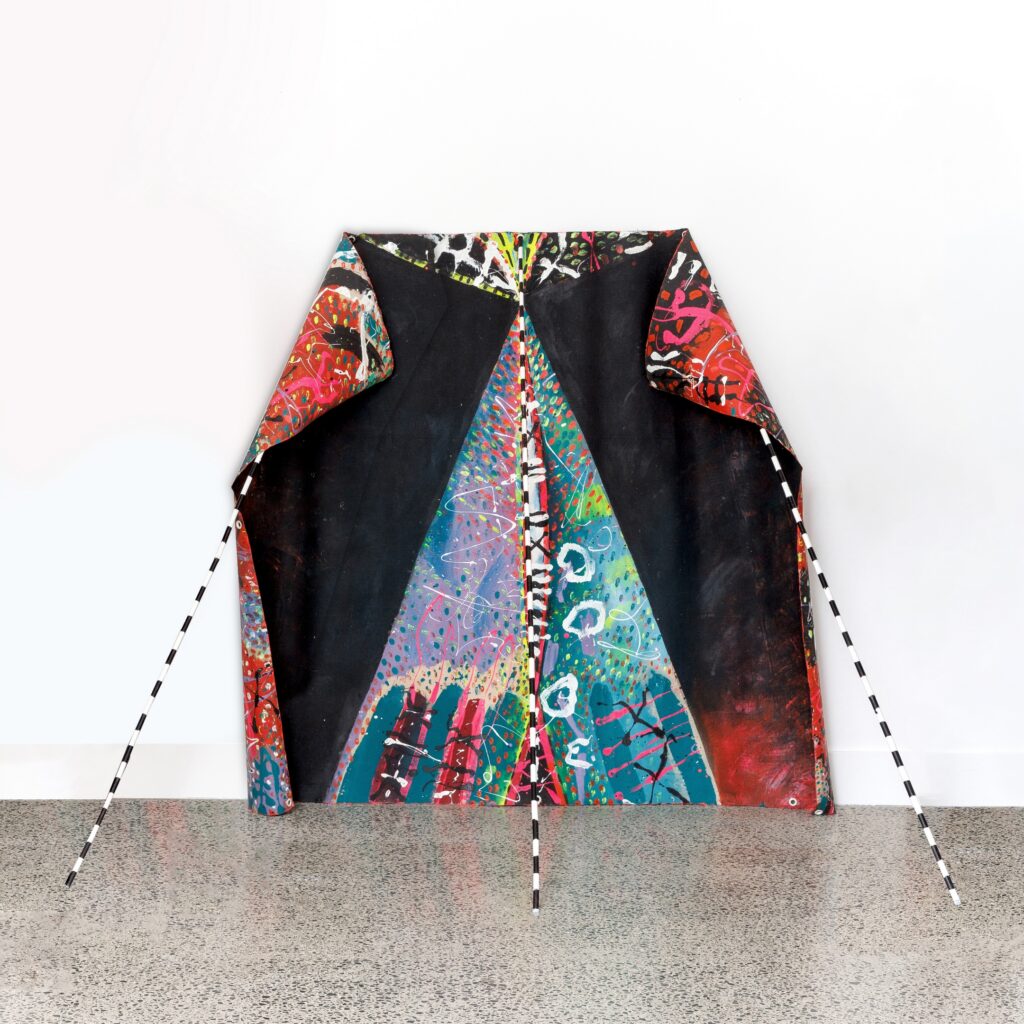
Philippa Blair, Untitled Cloak (Bright), 1983, acrylic on canvas, 1810 x 1470 mm.
Hanna Shim, What You've Been Making?, 2025, Fresh water pearls, velvet, upholstered on wood, 500 x 400 mm.
The exhibition explores mothering well beyond the biological – grief, ecology, kinship, matriarchal men. Which thread feels most urgent to you?
Lydia: What feels most urgent is the idea of mothering as an act of care, rather than a biological role. That opens up conversations about chosen family, ecological responsibility and the ways we nurture people, places and ideas. The notion of matriarchal men is particularly compelling – it challenges traditional assumptions about gender and care, suggesting that tenderness, generosity and emotional labour are not exclusive to women but deeply human capacities.
Nat: Right now, we are grieving the recent loss of two members of the collective – our darling sister Monique Lacey, and our mother superior Philippa Blair, both of whom have remarkable works included in MOTHERMOTHER. I think personal grief is radiating out to a wider collective, ecological and cultural grief. Grief and mothering are close correlates – both raw and embodied. The mother holds life, and grief can be a way of tending to what’s been lost.
Michelle: For me, the most joyful thread is kinship – through the dialogue the artists bring. The delight of hanging Judy Darragh’s No Shit near Jacqueline Fahey’s That is Life packs a real punch. There are multiple conversations happening in the room, and in this sense intergenerational wisdom feels so prevalent – nudging us to learn from our own heroines, through the simple act of making space for it to happen.
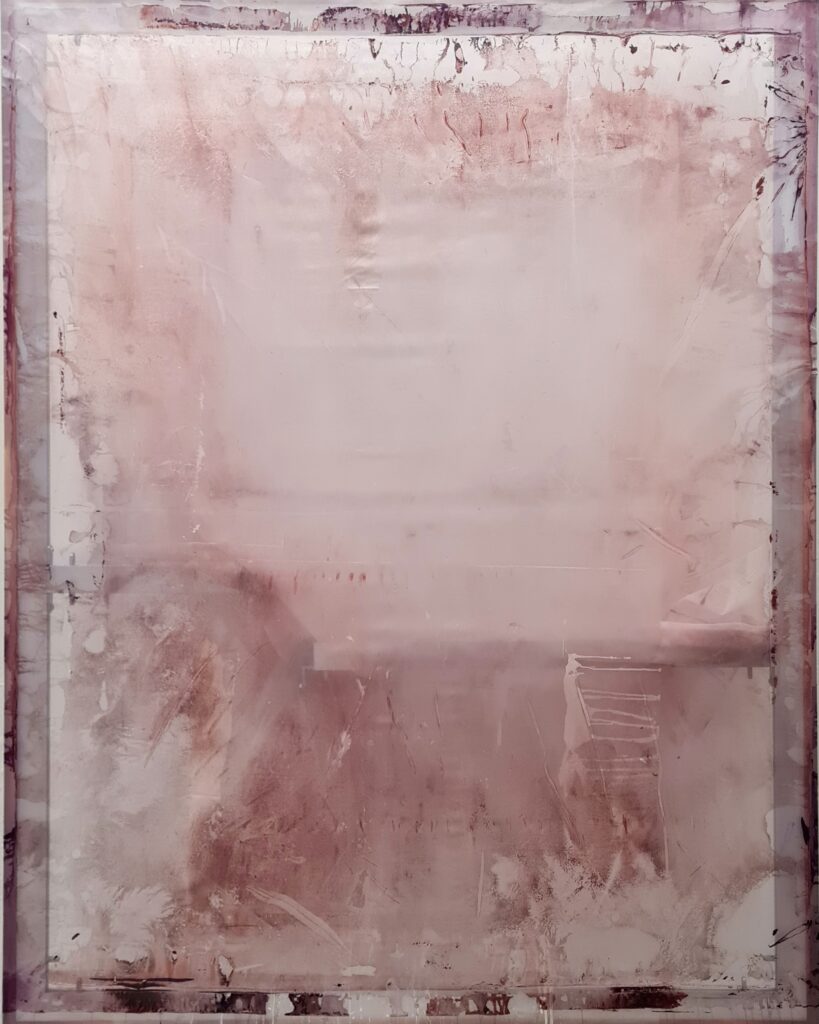
Rebecca Wallis, Fertile Ground, 2026, acrylic on silk organza, 1670 x 1270 x 75 mm.
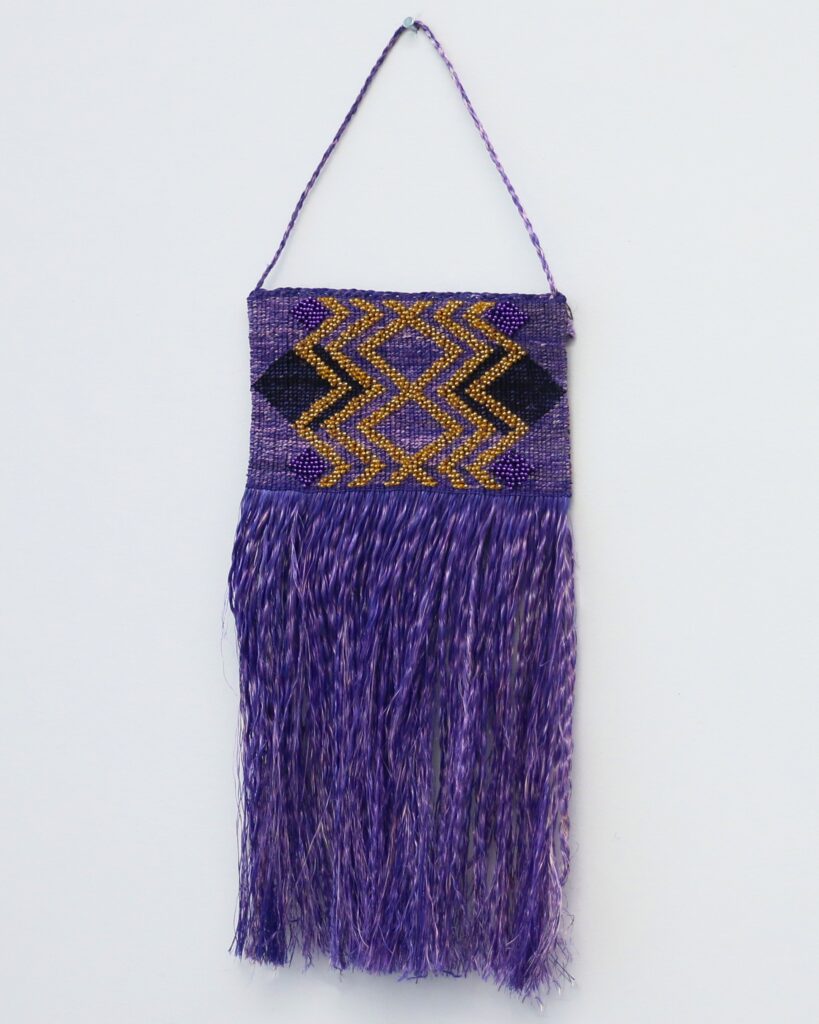
Esther Stone, Compulsion II, 2026, Muka taniko, glass beads, synthetic dyes, 440 x 175 mm.
The phrase “matriarchal futures” is in the press release – what does that look like to you?
Nat: Matriarchal futures look like networks of support; they look like senior artists mentoring emerging ones, like artists that sit outside institutional norms being championed rather than overlooked. We look at what can happen when artists work collectively rather than competitively and when artists don’t have to choose between caregiving and practice.
Does the theme of motherhood resonate personally for you, and has curating this show shifted how you think about it?
Michelle: Parenting two beautiful boys, now in their early teens, led me to my painting practice after a previous career. Mothering has drawn out some of my most beautiful and harshest realities. Curating this show has reminded me of the precious and extraordinary growth that happens after birth, followed close behind by the chaos of life. It’s still a wonder to me how we are all here. A mother, an embryo, the shape of societal norms, a mirror in our children. I have thoroughly enjoyed thinking through each and every artist’s practice.
What do you hope someone feels when they walk out of MOTHERMOTHER?
Nat: Energised. Like they’ve encountered a space where conversations are shifting the centre of gravity. We’re interested in planning the future we want, not the one we’re told to accept.
Michelle: Curious, open-minded and proud of the exceptional quality of work New Zealand artists create. It is my dream to see this show travel – it has the potential to express so much more.
Lydia: I hope people leave feeling that the idea of mothering has become larger, more expansive and more generous than they imagined. If someone walks away feeling moved, challenged or simply seen – then I think the exhibition has done its job.
MOTHERMOTHER opens on Thursday 23rd July at Sanderson Gallery, Auckland/Tāmaki Makaurau, and runs until Sunday 23 August. For more information visit: sanderson.co.nz