

All the baddies have scars. And I don’t mean that in the way the word baddie gets thrown around today for a confident, independent woman. I mean the old-fashioned kind of bad guy. Scarface. Darth Vader. The Joker. Mufasa’s brother with his very original name, Scar. It’s the battle-weary villains who are visually maimed so you know not to trust them, which, in a way, gives facial scars a very bad rap.
My scar is less glamorous, less daredevil than those movie villains. But no less life-threatening. It was skin cancer that had twice been dismissed as an irregular mole, until a skin cancer specialist stopped me at an event, booked me in, and after a biopsy, delivered the news. Once the initial fear about staging had settled — it was a lentigo maligna (an early form of melanoma in situ), and if there is one skin cancer you want to get, it’s this one — I moved on to my next most pressing concern. How I’d look.
“Don’t worry, babes, I’ll still love you,” my husband quipped on the way to the plastic surgeon. But I was never worried about him loving me. What he would perhaps never fully understand was that I was worried about me loving me. Call it healthy confidence, or perhaps vanity, but I’ve always rather liked my face. I had never once considered plastic surgery, and now here I was, sitting in a beige office in Remuera discussing facial reconstruction.
The initial plan was a simple closure — worst case, a 5cm scar. But after a series of unpleasant extractions and further tests, the melanoma was found to have tentacles, sinisterly reaching across the surface of my skin and taking most of my cheek with it — resulting in a 4cm diameter hole where my left cheek used to be. On the day of the reconstruction, the plastic surgeon had to pivot. No simple closure. Talk of a skin graft from my neck. I was shaking before going under, unsure how I’d even gotten myself into that undignified gown, compression socks, and blue hairnet. When I came around, the first words I heard were rotational flap. I grabbed at my neck and was relieved to find it intact. My left side felt entirely taped up, and incredibly tight, and it wasn’t until the dressing had to be changed 48 hours later that the full extent of my new 24cm scar became apparent.
For those first few days, my mum looked after me like I was her six-year-old child again. Then, my husband took over and became my nurse. Standing close, leaning into me, changing my dressing week after week in the rushed morning light — delicately peeling back the surgical tape, pulling it away in slackened strips, with a tenderness he must usually reserve for our children. The act landing more intimately, somehow, than his kiss. A ritual that continued for weeks after surgery.
I was grateful to be alive, and I was furious. I was hopeful, and I was frightened. Two things can be true, we know. I was annoyed the melanoma wasn’t somewhere else on my body — literally anywhere else. Why was it on my face? On my left cheek, referenced time and time again in every clinical note for the lesion. I barely looked at the scar. I hurried between dressings so my kids wouldn’t see it. I didn’t want to show them how vulnerable it made me feel.
In the weeks that followed, something settled over me that was hard to name. Not depression exactly — but a flatness. A heaviness that felt entirely unlike me. As though the numbness on the left side of my face had quietly seeped into everything else. It was a strange feeling that half my face didn’t really feel like mine anymore — the feeling, they said, might or might not, come back in a year. I avoided my friends. Declined invitations. I didn’t want to talk about it, didn’t want to perform being fine. I told the kids to kiss me on the other side, so I’d feel it. And I’d watch how they’d hesitate, before cupping their little hands around my chin to steady themselves, mindful not to accidentally knock into my scar side. And delicately kiss my ‘good side.’
And after years of living and breathing New Zealand fashion — using it as armour on the hard days — I discovered that my face was the one place a new purchase couldn’t reach. It was the one place that couldn’t be covered, or fixed, or lifted by something beautiful from a rail. I wanted to be fine about it. I just wasn’t. I glanced at the scar quickly between dressings, getting attached to the tape as its own kind of armour. Because no one sees what’s beneath.
“What do you think?” I finally asked the kids four weeks after surgery, between dressing changes one morning, bracing myself. “Poor mummy,’”said Sloane. “I don’t want you to have a scar.” But when I looked at Darby, my youngest, he just said: “I like it”, with such vigour that I could only laugh. I started to look at it differently after that.
Maybe scars don’t have to be beautiful. Maybe they just are what they are. Scars are stories. They are saviours. They are survival. They are a liminal space between before and after. A marker of time. Often, a demarcation line between life and death.
And when I thought about all the scars I’ve collected, maybe I was a baddie. Just not the narcissistic, world-dominating kind. Like all of us, I’ve had my battles — most of them entirely unseen, scratching at my soul, searing my heart. The grief that nearly swallowed me after my dad died, when I cried myself to sleep so often my pillowcase stayed damp for a year. The bleak, mechanical loneliness of pumping milk through the night for a premature baby who wasn’t beside me, but sealed inside an incubator in the neonatal unit where I wasn’t allowed to stay. The recession, the magazine, the no business experience, the nights I lay awake convinced I’d made a catastrophic mistake. The men dressed up as businessmen, behaving like bullies. The typing, again and again: this is not an acceptable way to conduct business. The motherhood, the work, the feeling of failing at both. And then, of course, the skin cancer.
For many of us, our most painful scars are the ones that never show. And if all the scars on our soul showed up on our face, the way my new one has — we’d all be covered in them. I mean, none of us get out of here unscathed.
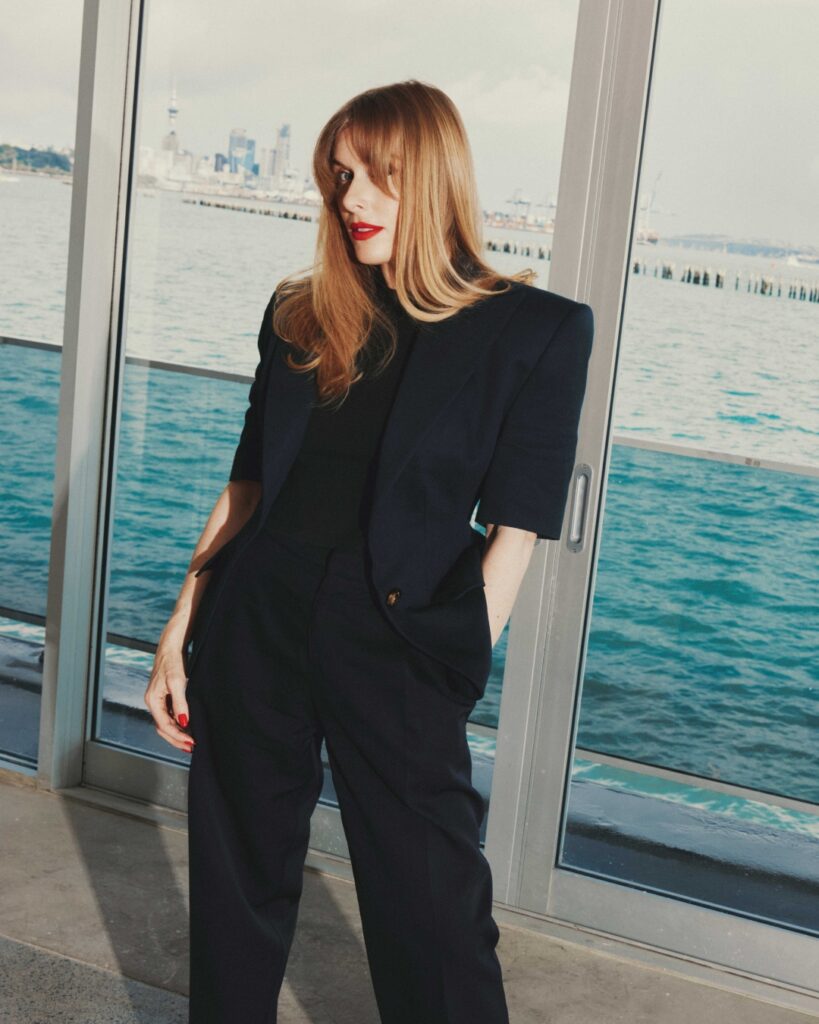
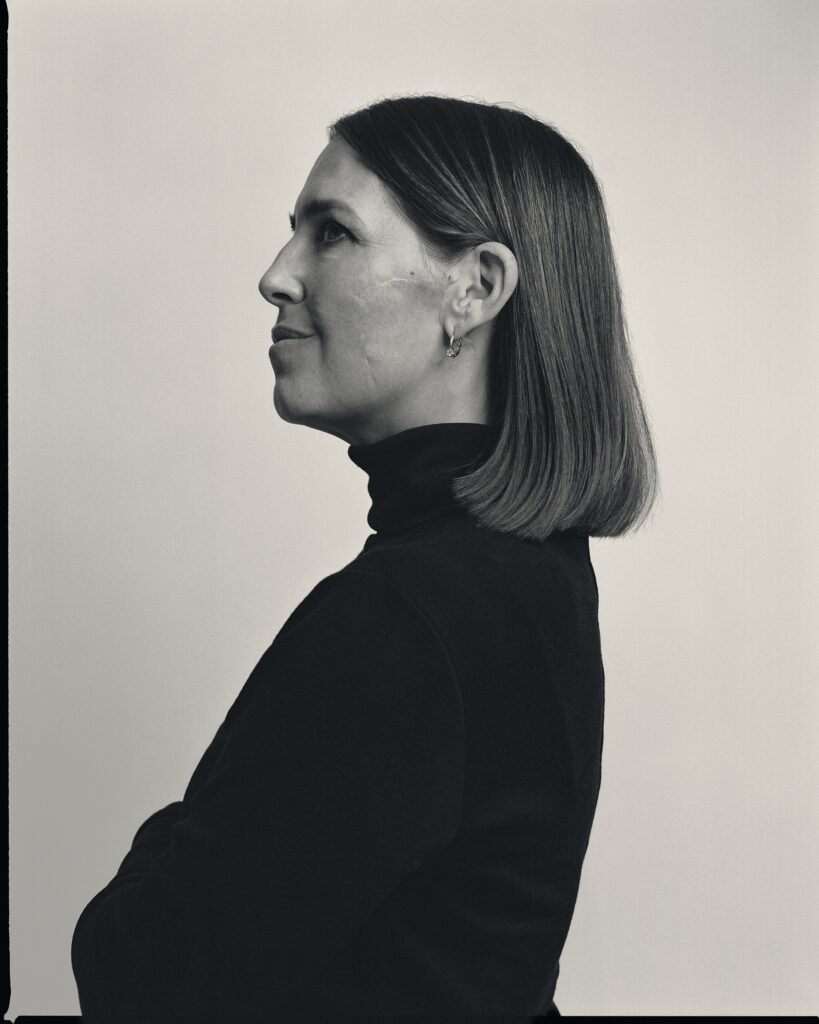
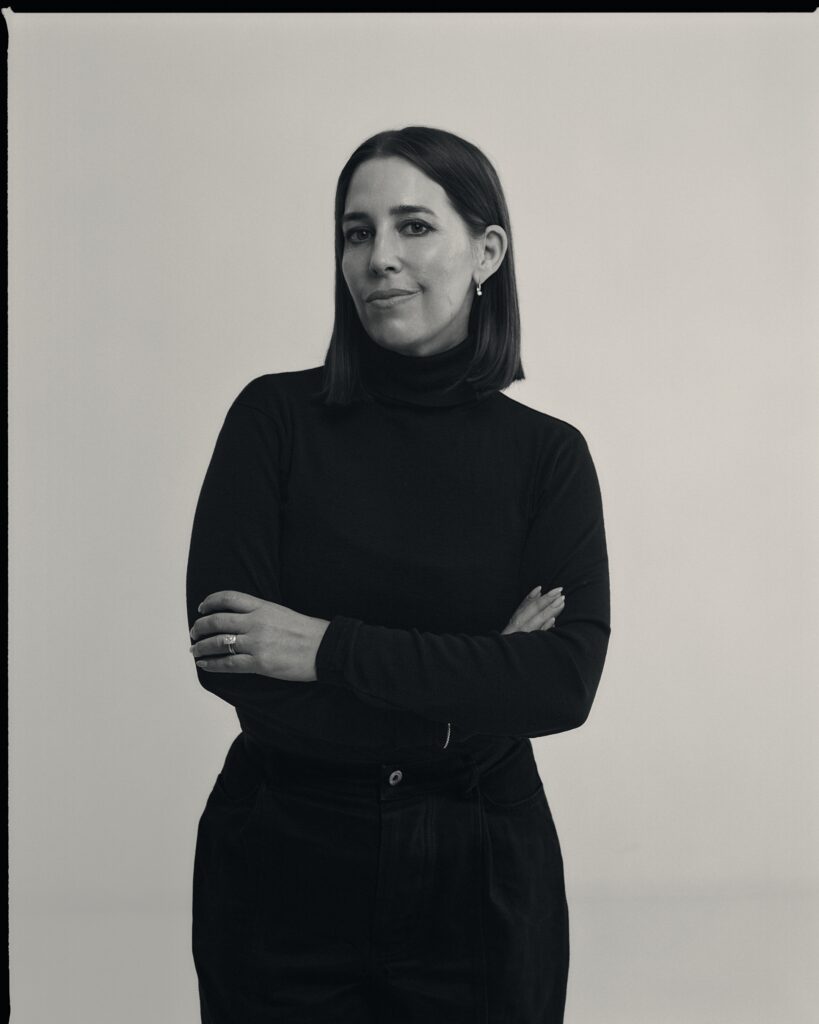
When I looked in the mirror this morning, dressing off, that red angry scar snaking all the way from my neck and around my cheek — cinematic, almost — I thought about how unfair that is. Scars tell people you’ve been through something, but not what. They flatten grief and fear and endurance into something visual. Something that reads, at a glance, as ugly. As dangerous.
And then I looked at it a little longer.
And I thought — maybe, actually. It suits me.