

To celebrate independence, ambition, and influence, this issue we spotlight women shaping the future of business, style, and success across fashion and design. Uniting six trailblazers — entrepreneurs, makers, architects, and creative leaders — whose careers are defined by bold thinking and fearless evolution. Their stories echo the daring innovation of the all-new Lexus RZ and its pioneering Yoke steering wheel: a symbol of control, precision, and reimagined direction. Together, they represent leadership with intent — women confidently navigating change, redefining industries, and steering their own futures with clarity and conviction. Here, we ask what steers them forward, the moments that altered their course, how they define power, when they feel most in control… and who travels alongside them on the road to success.
Karen Walker
Fashion designer and Lexus ambassador
We didn’t see New Zealand as a limitation — only as a great launch pad. Early on, I realised that being from the edge of the world meant I could approach things with a kind of refreshing naïveté. I focused on clarity: a strong point of view, a consistent visual language, and a sense of humour in the work. That combination helped our voice carry far beyond our postcode. Yes, I have one foot in the creative and one foot in the business, but I have astonishing teams working alongside me in both those areas who understand their goals and, also, how all areas of the business interconnect. The interconnectivity is important here.
Creativity and business are part of the same conversation. The creative instinct imagines the world that could be and the business instinct figures out how to make it sustainable. Moving between them is less about flipping a switch and more about staying curious, disciplined, and willing to zoom in and out all day long.
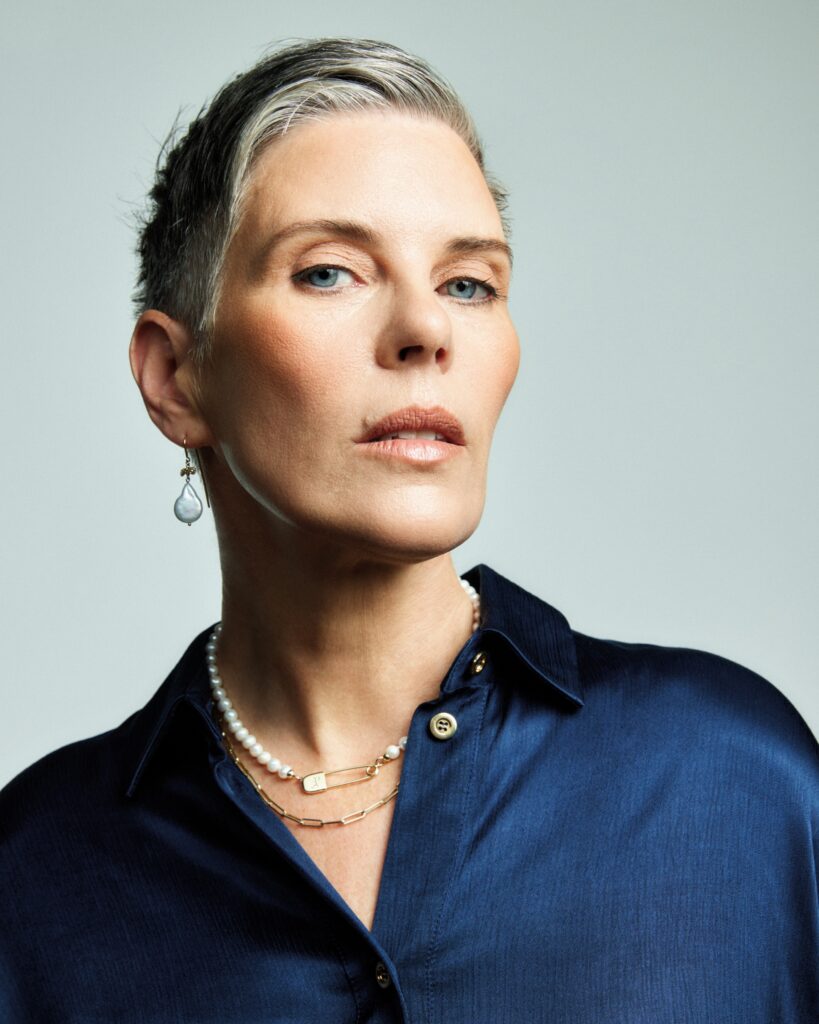
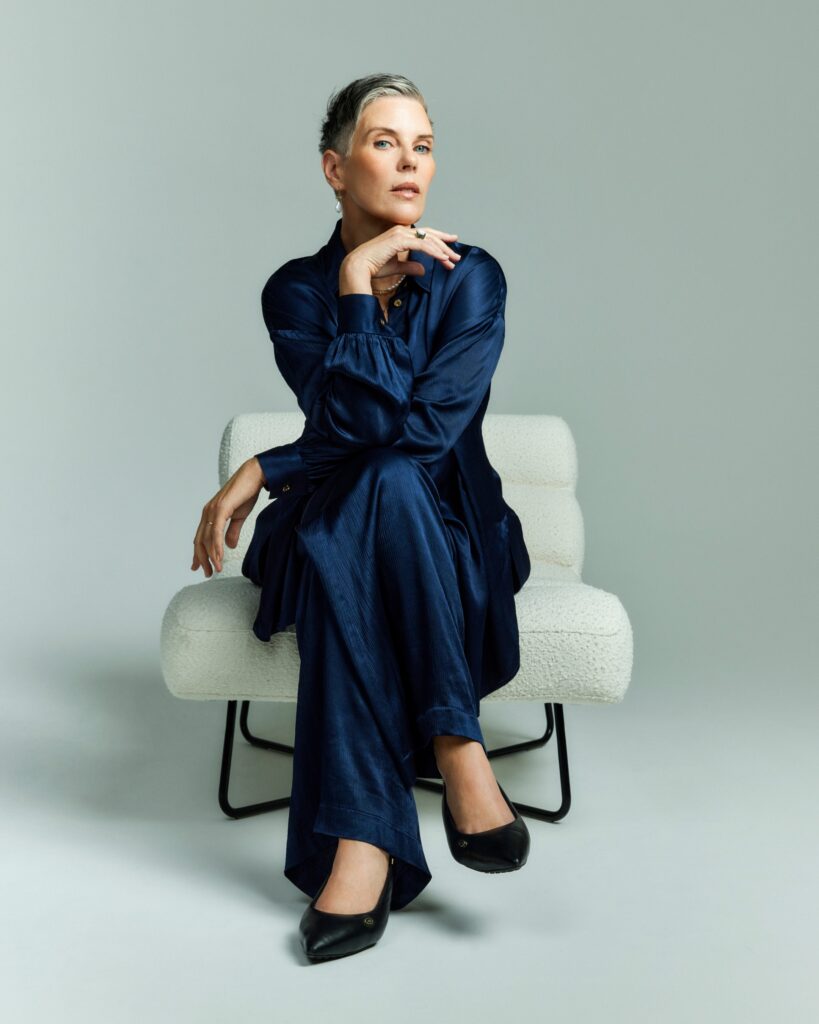
Karen wears: Karen Walker ‘Squall’ shirt in royal navy, $325, ‘Palazzo’ lounge pants in royal navy, $325, ‘Love Drop’ earrings gold-plated, $699, ‘Runaway’ safety pin & pearl necklace in gold, $4319, ‘Adventure’ chain necklace in gold, $7599, and ‘Chequerboard’ ring, $8029. Heels, Karen’s own.
Power, for me, is the ability to stay perfectly calm while everything around you is trying its best to become a drama. It’s keeping your vision clear, your humour intact, and your lipstick on straight. Real power isn’t loud. It’s that quiet inner voice that says, “Yes, I know exactly what I’m doing,” even on the days when you’re improvising wildly. It’s clarity, confidence, and the freedom to say no without apologising. Starting a brand with my own name on it was a risk. Bootstrapping it with $100 and not a single dollar of outside investment was a risk. Launching internationally from New Zealand in the ’90s was a risk. Showing in London and then New York for 28 seasons was a risk. Choosing to build a world around my own aesthetic — not what was trending — was a risk.
Risk is vital and inevitable in any business and perhaps more so in a creative business. Intuition is the designer’s most valuable tool — the thing that makes your work yours. You can be informed by data and trends, but ultimately your inner tuning fork has to guide the final call.
Lexus and I share a deep interest in craftsmanship, clarity, and the interplay between precision and imagination. Their approach to innovation — considered, human-centred, beautifully engineered — aligns with how I think about design. It was always, and continues to be, less like a partnership and more like a conversation we were already having. Being ‘the boss’ today means being the custodian of the vision rather than the controller of every detail. It’s about assembling great people, giving them direction, and letting them excel.
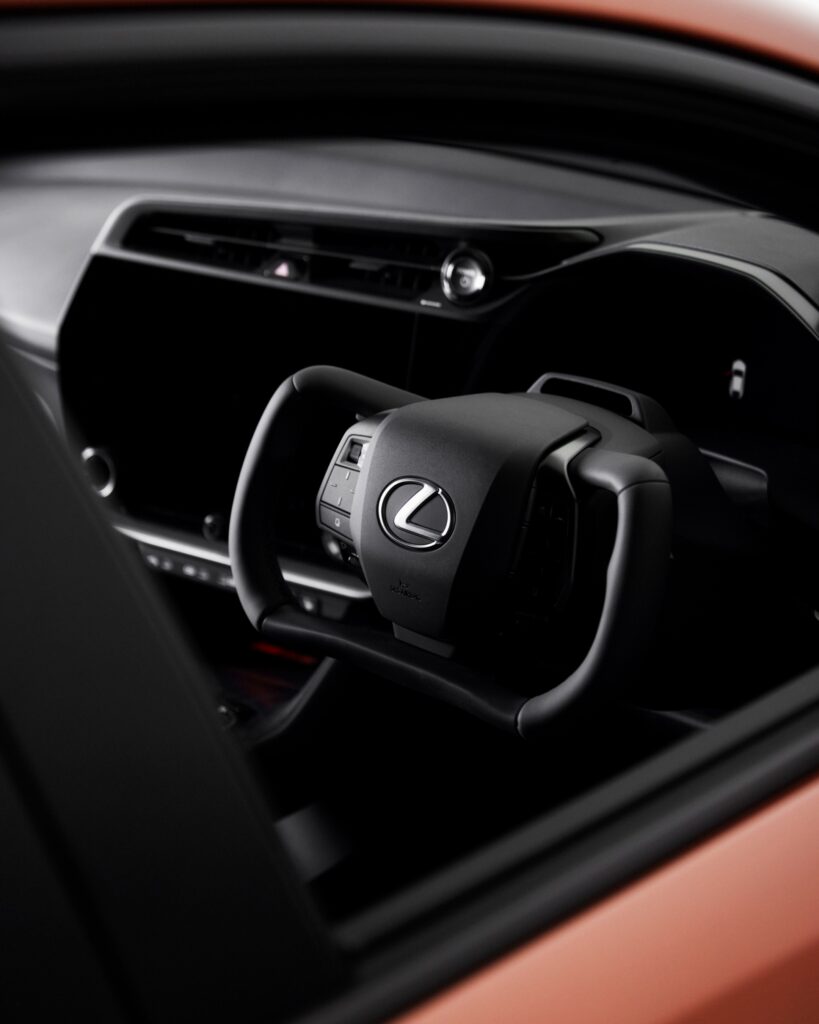
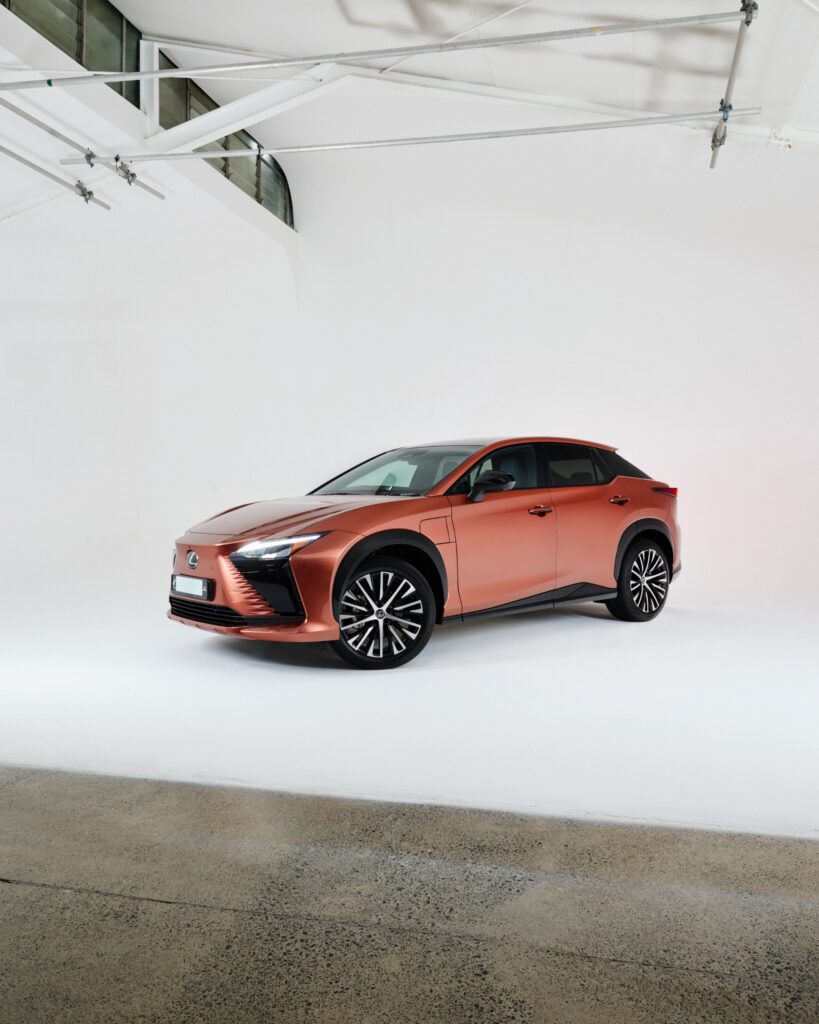
Enabled by revolutionary Steer-by-Wire, the all-new Lexus RZ’s Yoke steering delivers sharper response and seamless control. Without a traditional mechanical connection, input adapts intuitively to speed and conditions, improving precision, enhancing visibility and creating a calmer, more confident drive.
Phoebe Devine
Partner and head of design at Previously Unavailable
We create brands for, and invest in, some of Australasia’s most innovative and fastest growing start-up and scale-up companies. It’s a privilege. I love it when they start getting better than you! To me, that’s a sign that the creative culture in the business is hard at work and progressing in the right direction. It’s a continuous ride through massive technological shifts at the moment and the experimentation that comes with it is both energising and exhausting.
Leading a creative team is about educating and inspiring, but it’s mainly about creating the right conditions for them to do their best work. I am a big advocate for processes within creative teams, so you can spend all your energy on the work itself, which is way more fun!
At Previously Unavailable we build many digital-first brands and products, which makes us even more conscious around how to build brands that have an emotional connection and are not just transactional. Distinctiveness is going to be even more important with all the digital tools at our disposal, and creating these with strong ideas, not just trending digital tools that spit things out. It’s about remembering your product is your brand. We spend a lot of time making sure brand strategy aligns with product and business strategy so that everything is moving together.
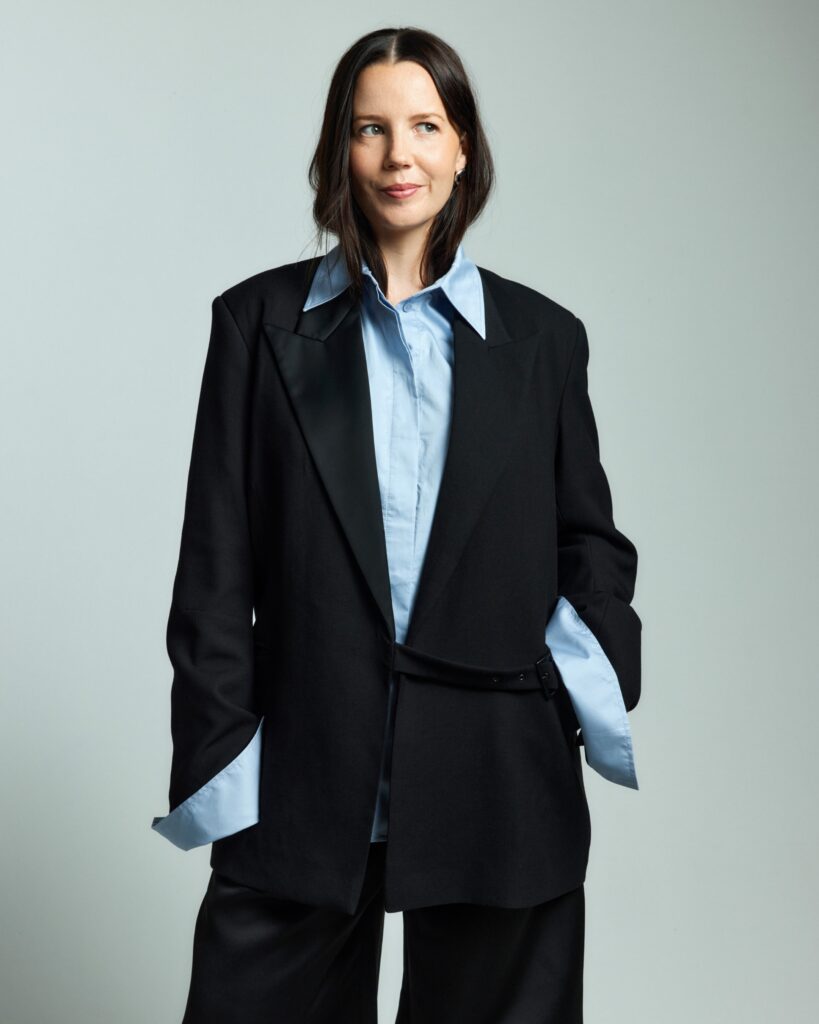
Phoebe wears: Camilla and Marc ‘Tyler’ shirt, $420. Zambesi ‘Savant’ jacket, $1200.
Harris Tapper ‘Kennedy’ trouser, $599.
I straddle between the design scene and the start-up ecosystem, which are quite different, and I see heaps of opportunity for more intersecting. I’d love to see more clashing of industries so you’re getting higher value content, more curated talks, and more conversations that push us forward. Education plays a big role in the design community.
As we are becoming more of a venture studio, we take risks all the time by punting on early stage companies and investing our time and skills into their businesses. When you have equity in something the stakes are high. Depending on the project, we really push the boat out design-wise because the company is creating a new category or is reinventing one. That means the work can often feel unfamiliar and intimidating, but it’s a risk we’re confident in taking.
I find power to be a loaded word! The only time I use the word power is when I talk about the power of design — super-charging, collective power. To me, the word ‘should’ means positive strength and moving things forward. I’ve always had the view that just ‘showing up’ everyday is super important. Practice, practice, practice. What drives me is this continuous building of a practice… My husband and I are expecting our first child later in the year and I’m sure that’ll bring even more drive, challenges, excitement and love to what I do every day.
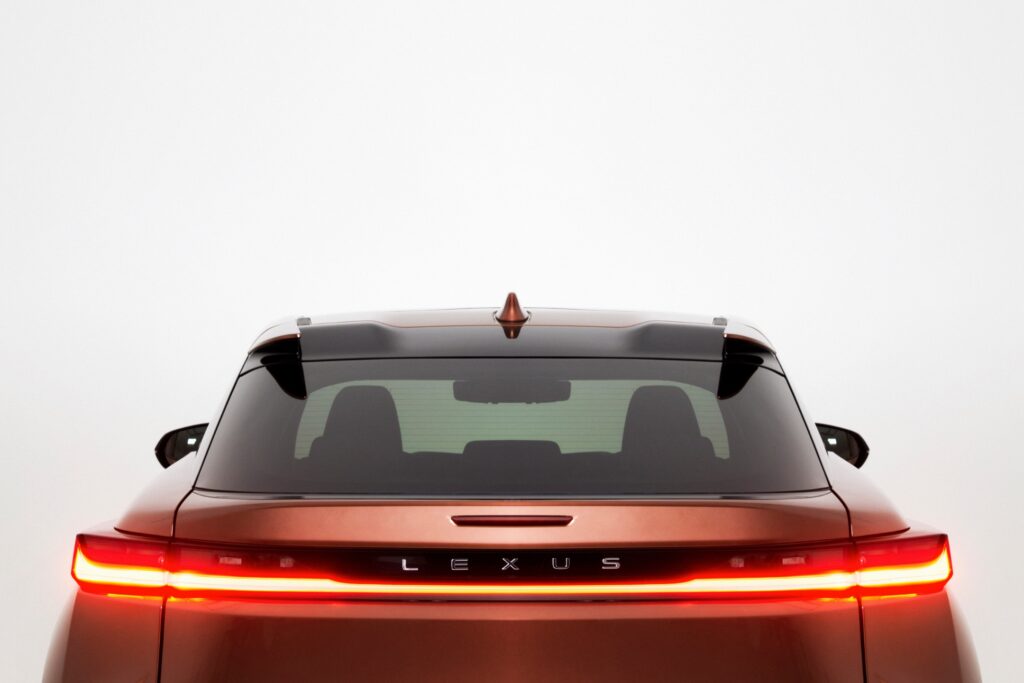
At the rear, a full-width light bar and sculpted silhouette create an aerodynamic finish. Clean lines and precise detailing emphasise the all-new Lexus RZ’s electric identity, while the wide stance enhances stability and presence on the road.
Kiri Nathan
Fashion designer
I’m not sure balance is the correct term when referencing harmony between heritage and innovation. Our tupuna were masters of innovation — navigators, engineers, inventors, survivors. Innovation is nothing new to Māori; it’s in our DNA as is our culture. I do the best I can each day to be innovative in my spaces, live my cultural values, and ensure what I do positively impacts more than myself.
There’s an overwhelming sense of responsibility to culture and the grind it takes to live that daily. I feel a huge responsibility to ao Māori. I’ve learned from far more talented and experienced Māori than myself in business, creativity, and life. Our brand lives and breathes that privilege, in every piece and relationship.
After 35 years in the NZ fashion scene, I try to transform my harshest learnings into opportunities for Māori and culturally centred designers. Even small gestures — a conversation with a shy designer, sharing contacts, connecting someone with a manufacturer — can make a difference.
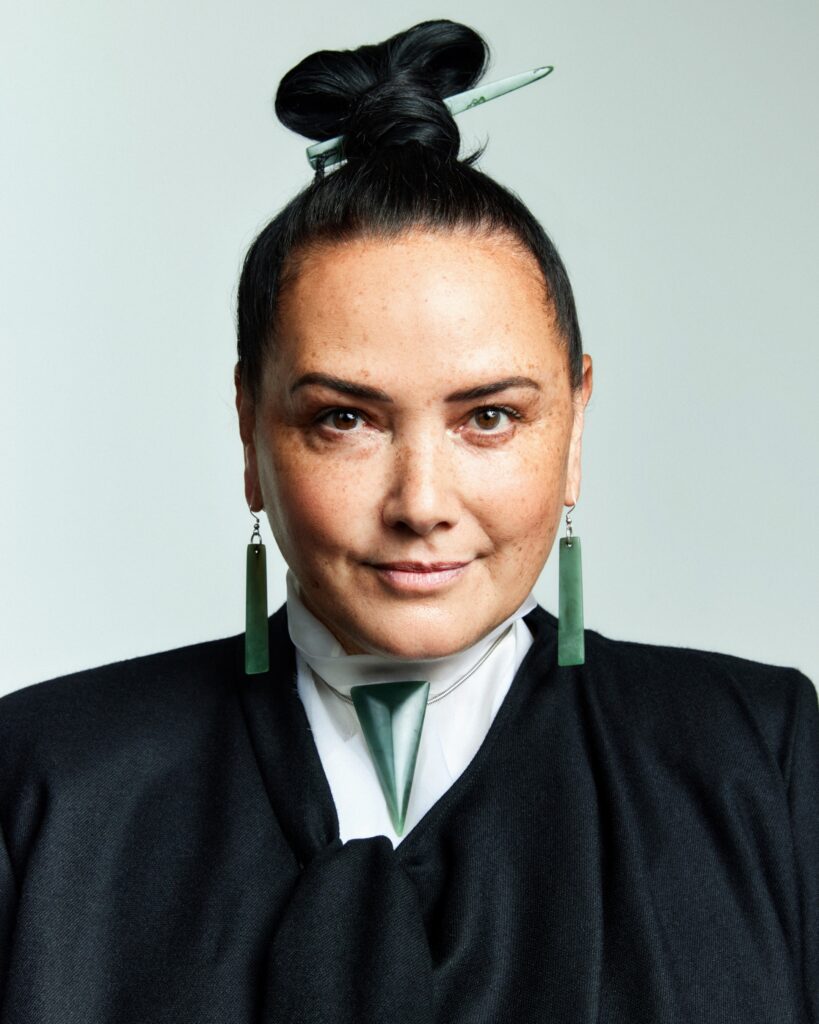
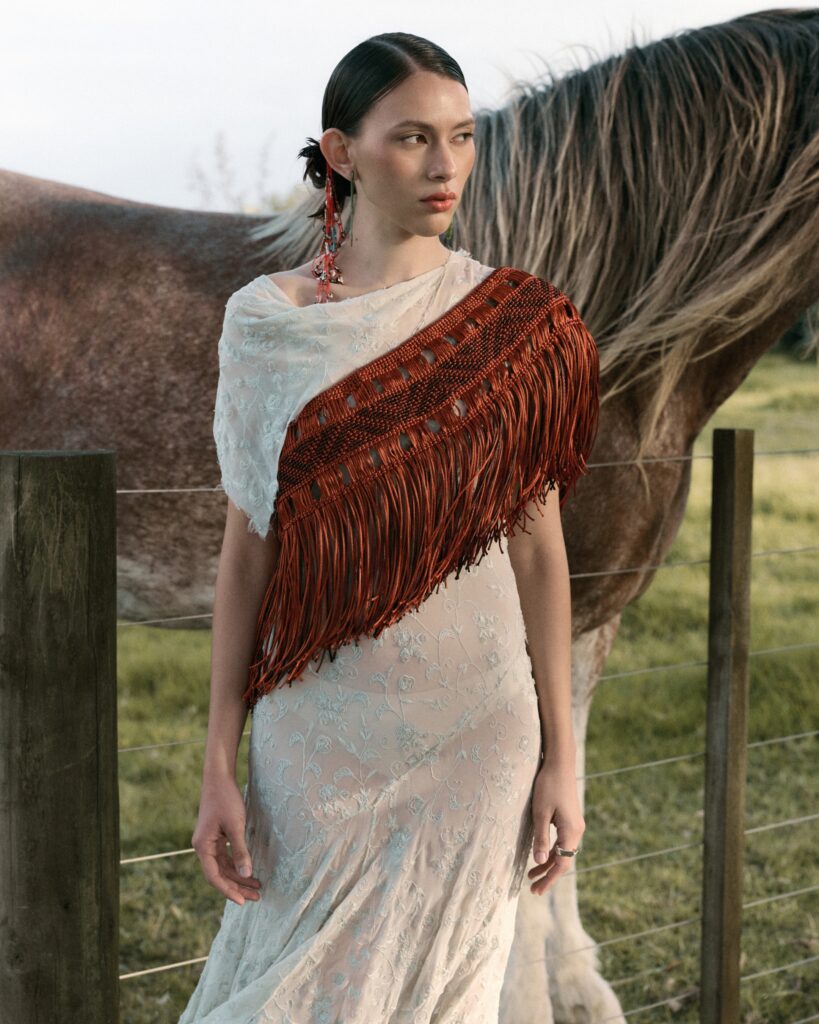
Kiri wears: Kiri Nathan Haakete Teera [jacket], $960. Heru [hairpin], custommade. Hei Whakapiwari [pounamu necklace], $1200. Whakakai [earrings], $450. Necktie, custom-made by Nathan.
All pounamu carved by Jason Nathan, exclusive to Kiri Nathan.
The boldest decision I’ve made was founding the Kāhui Collective, putting other people’s careers and brands before my own. The most pivotal was committing to the KAURI ecosystem, which will establish the first commercial Māori fashion industry, one that respects and reciprocates to culture and builds sustainable pakihi Māori in spaces we’ve never truly existed, let alone thrived. The cultural commitment and value set of my brand remain unchanged since we started, but business has been a constant rhythm of learning.
I had zero industry experience when we launched, so growth has come through intuition, access to quality suppliers, and lessons learnt quickly from mistakes. As both the creative force and business leader, I spend 85 per cent of my time on operations and growth, yet creativity is my love language. Creativity informs every aspect of what we do, not just the soul food moments.
Internal power, or mana, is being vulnerable, facing uncomfortable situations, and giving everything for kaupapa and others while knowing my whānau and chosen tribe have my back. That support allows me to be fearless. New Zealand fashion is under immense pressure — small markets, high costs, conservative spend. But the industry’s silos are breaking down, unity is growing, and indigenous culture is a superpower.
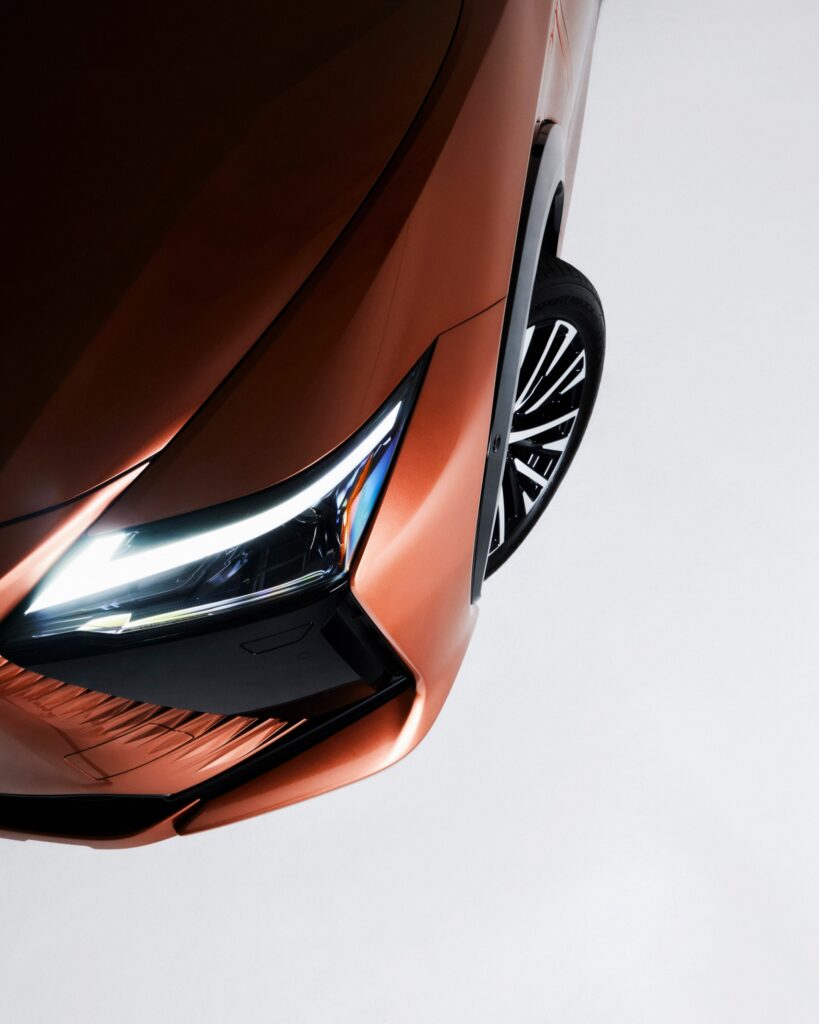
The aerodynamic detailing and unique design elements work to highlight exterior lighting signature effects such as the LED front fog lights and cornering lights, single LED headlights with adaptive high-beam system.
Lucy Vincent
Founder of Sans [ceuticals]
We live in a world of intense visual pollution — overstimulation, excess information, constant noise. When I approach design, I want to create things that soothe and bring a sense of calm and order. There are so many hidden, almost invisible elements that go into creating something that feels effortless to use. The texture of a material, the click sound of a lever, the subtle resistance of closing a lid. None of these things are standout, yet they all contribute to a sophisticated user experience. It’s a sensorial exchange and one of the most enjoyable parts of the design process.
Most products at the time communicated in very literal terms. There was this unspoken assumption that a product couldn’t be both natural and effective, or natural and sophisticated. I approached the design as a series of tensions intended to hold all of those things at once, taking cues from laboratory packaging and letting it speak for itself. My taste has stayed fairly consistent. I have just got better at trusting myself. What has refined over time is the design process — getting to the essence more efficiently, with less noise. That tension between form and function is where the best work is created.
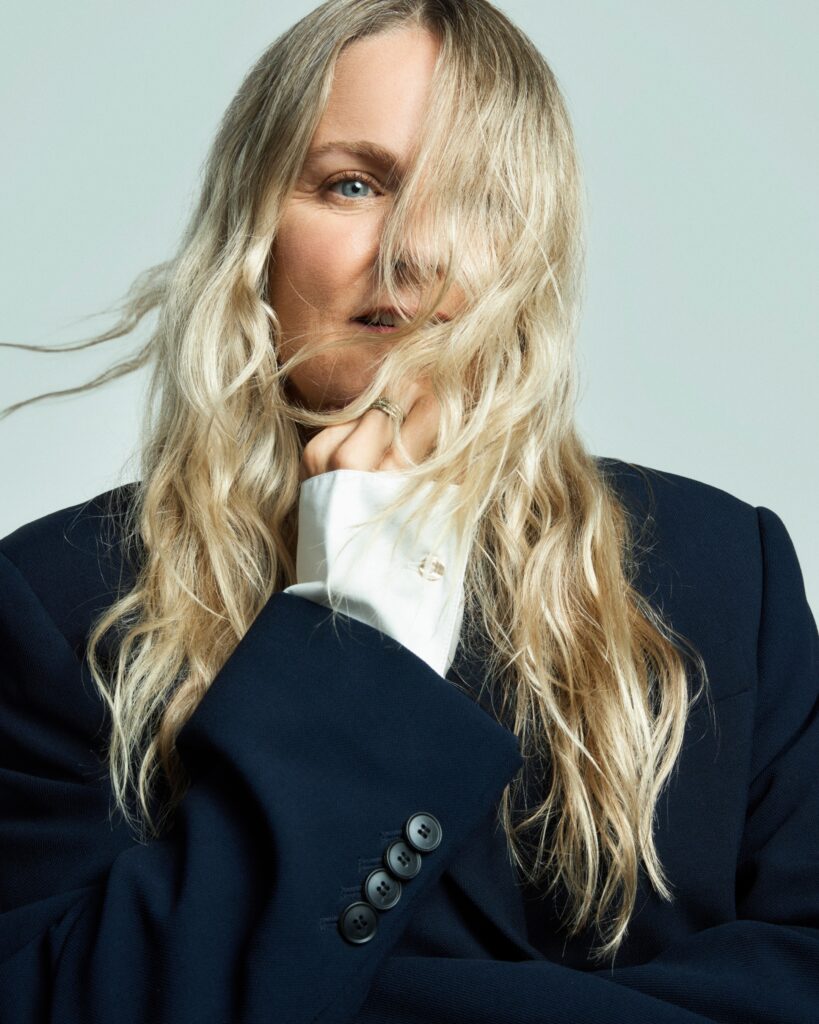
Lucy wears: Dominique Healy ‘Maeve’ shirt, $360. Camilla and Marc ‘Lena’ blazer, $780.
With Perpetual [Vincent’s latest hair creation] we began with pure function, a very clear, singular objective. But both are required for a customer to want to return. It has to be functional, yet pleasurable and effortless to use. The moment form enters the conversation, you revisit function. The relationship continues, back and forth. Perpetual took seven years to create. It was a long series of explorations, many roads that led nowhere. Rather than feeling defeated, I tried to approach each reset as an exercise in optimism.
Persistence in creation and business is everything. I think Buddhism has one of the best ways of describing [power]. The traditional notion of power is dominance, control, and force. It might work to some extent but it doesn’t create abundance. The idea of letting go, where there is less friction, creates more effortless influence. Curiosity is fundamental to that energy. It keeps you porous and receptive.
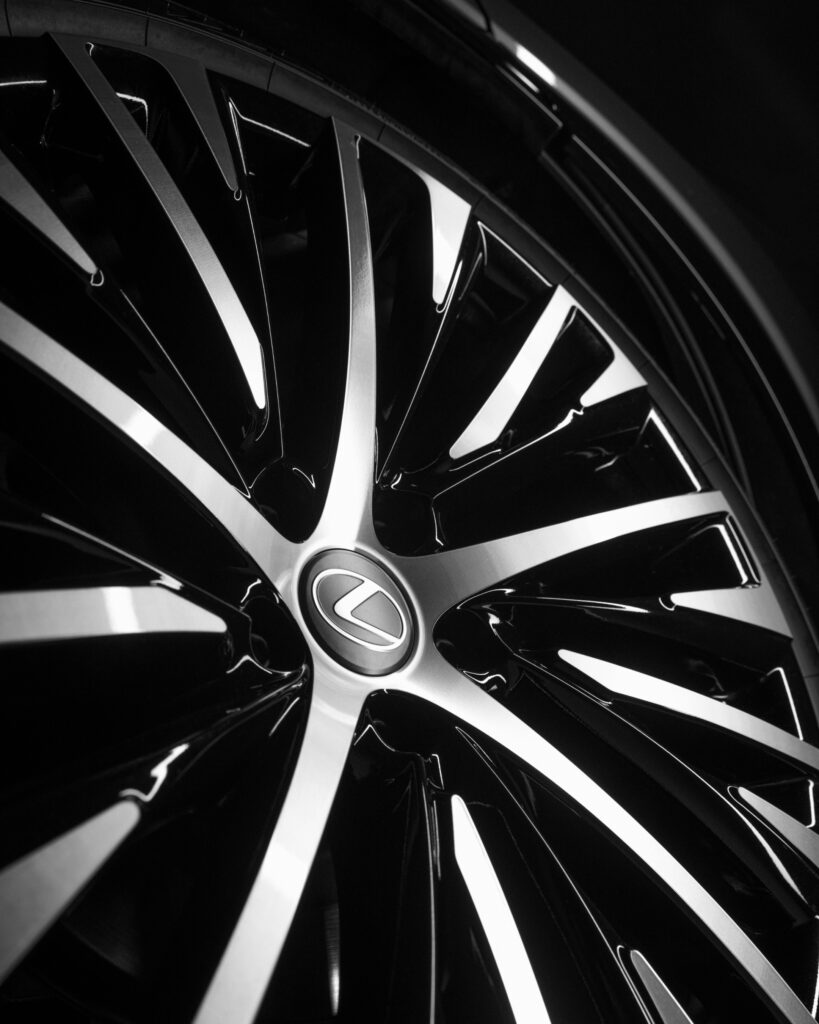
Equipped with an evolved version of the DIRECT4 all-wheel drive system, the system is designed to adjust the front/rear balance according to prevailing conditions and driver input, delivering a rewarding feel when cornering and precise line tracing. The 20-inch wheels have an alloy base and aerodynamic resin covers to smooth airflow and improve efficiency.
Megan Wyper
Co-owner of Acme
Acme started out designing coffee cups that resolved a few issues we found with what was available to the specialty coffee market at the time — cups and saucers sold separately, handles that fit fingers, rounded interiors to help with milk flow for latte art. Where we have evolved is further into the specialty coffee space. Paddy [my business partner] and I are specialty coffee professionals, so we design through that lens, always looking for ways to make things slightly more functional for both barista and end user. The Roman range is a classic example.
Coffee tastes change over time, and with better quality beans, baristas are pulling longer shots to extract flavour profiles. By putting coffee in a different vessel, the customer recognises their experience will be different. The cup is finer, the volume is different — it signals a longer extraction and a more balanced milk-to-espresso ratio, inviting people to slow down and appreciate something new. Precision is central to both coffee and product design. It’s about being comfortable with making mistakes, learning from them, and adjusting. Ceramics is a natural, handmade process, and things don’t always go according to plan. Mistakes happen, but we learn from them.
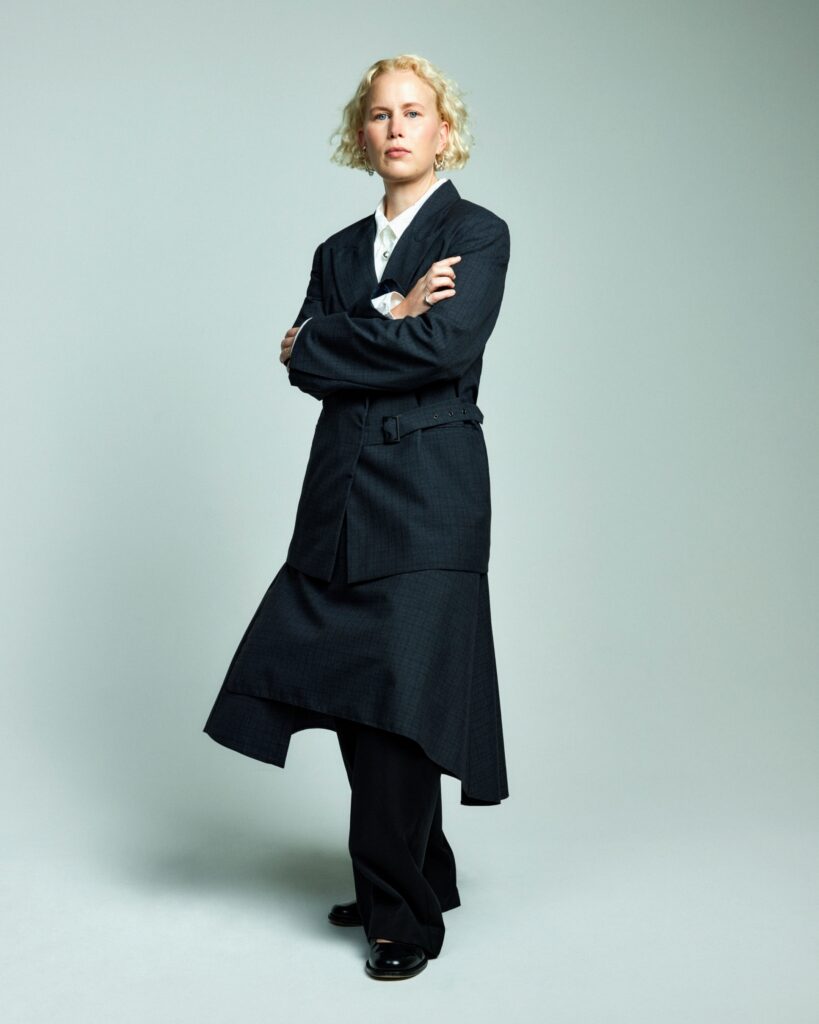
Megan wears: Porter James ‘Big Business’ shirt, $199. Zambesi ‘Savant’ jacket, $1200, and ‘Utility’ skirt, $590. Wynn Hamlyn ‘Utility’ trousers, $495. Meadowlark ‘Revival’ hoop charm earrings, $529, and ‘Orb’ necklace, $329. Shoes, Megan’s own.
Scaling a brand globally requires both control and surrender. Growth for us has been organic, built on relationships and word-of-mouth, and we scale intentionally to protect core values while maintaining cash flow. Independence as a business owner means making our own choices while honouring the legacy Jeff and Bridget [founders] started. What was once just Paddy and me has grown into a professional team that shares our vision, which has been incredible.
Instinct over data has always guided me. Being dyslexic, reading data hasn’t been a strong driver, but instinct has rarely let me down. Paddy loves spreadsheets, so we make a dynamic duo. Utility leads our design, but beauty follows through that lens. Daily rituals keep me sharp — coffee, a morning gym session, and working around people. Being in a café, surrounded by noise and energy, focuses me in a way nothing else does. I see hospitality culture evolving too.
Coffee continues to reinvent itself, experimenting with new flavours, while cafés return to simple, functional, cosy interiors instead of being driven solely by social media presentation. This balance of innovation, precision, and lived experience is at the heart of Acme’s ethos.
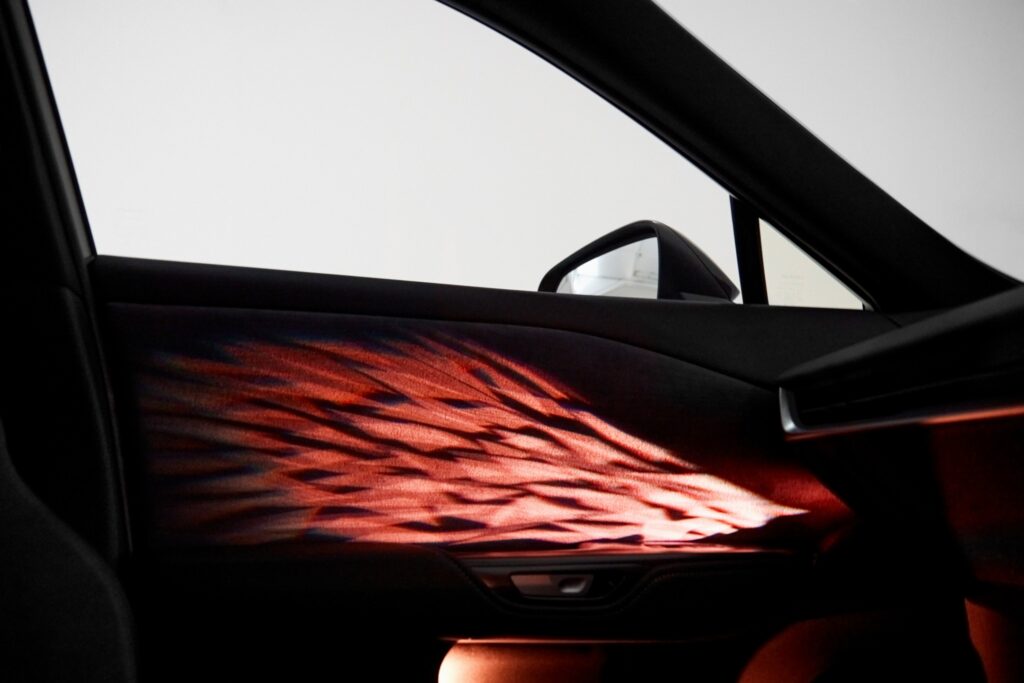
In terms of interior design, Lexus has introduced another first — multicolour ambient lighting with a new, dynamic shadow effect, which creates changing patterns that evoke the passage of time.
Annabel Smart
Founder and director of Studio 11:11
Our design philosophy evolved from figuring out what is important to us as people, and what influence and impact we can have through our work in the community. We feel a responsibility to create spaces with purpose, soul, and authenticity that improve the day-to-day experience for clients and end users. Design thinking isn’t dependent on scale, it’s about intent. Sometimes the smallest interventions can have the most impact. Making decisive creative calls comes back to the strength of the original concept. If the narrative and intention for a project are clearly defined at the beginning, most decisions become surprisingly straightforward. The concept acts as a filter, removing guesswork.
Intuition also plays a part — if one option sparks curiosity or quiet excitement, it’s usually worth paying attention to. Intuition is significant in strategy, too. In business, it often shows up as a subtle nudge — which project to take on, when to push an idea further, or when to step back. For a small studio, the team is the business, so hiring the right people is one of the most critical decisions we make. Learning to listen to and trust that internal signal has been invaluable. AI is reshaping the industry, but what excites me most is its potential to remove administrative or repetitive tasks, giving designers more time for experimentation, play, and material exploration. This shift will make taste, restraint, and emotional intelligence even more important.
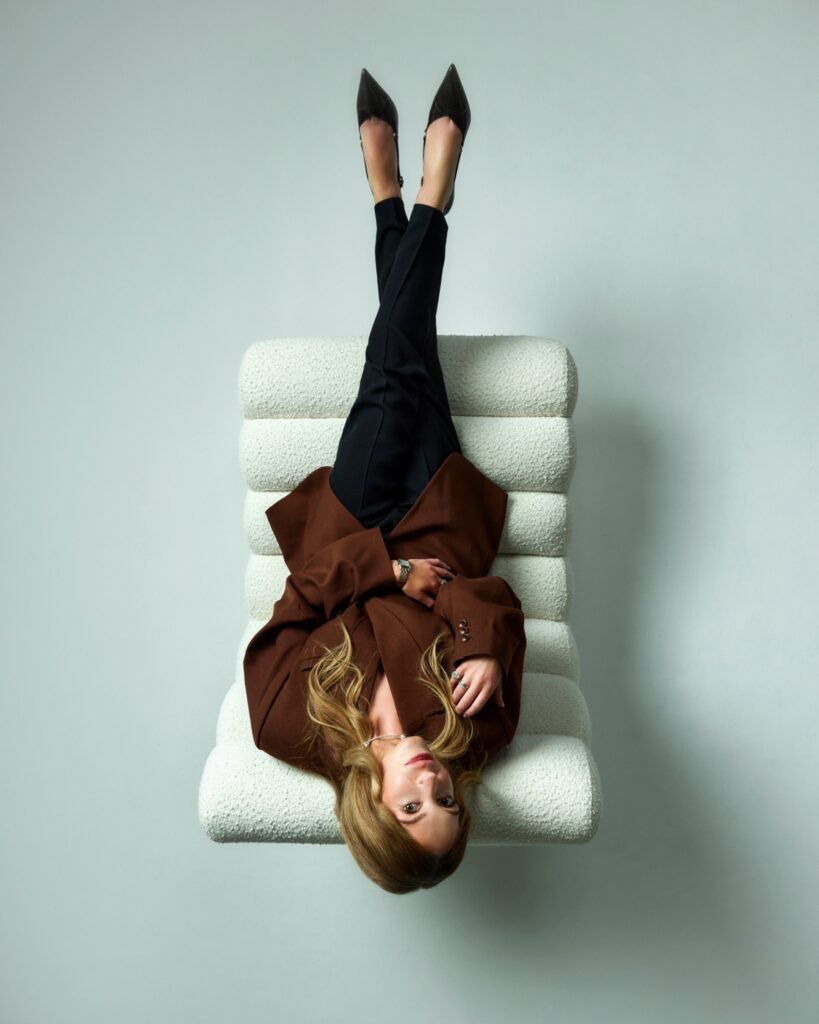
Annabel wears: Ksubi ‘Dare Cinched’ blazer, $549. Helen Cherry ‘High Waist Cigarette’ pant, $498. Deadly Ponies ‘Epona’ heels, $599. Meadowlark ‘Tulip’ chain necklace, $1815. Rings and watch, Annabel’s own.
Separating creative work from business admin has been a challenge. In the early stages of a studio, you need to be across everything, but eventually protecting creative energy becomes more important. Outsourcing admin allows me to focus on creative direction, relationships, and design thinking. Playing to your strengths matters.
One risk that paid off was starting Studio 11:11 with just one client and very little understanding of how to run a business. That naïve confidence turned out to be a gift. I feel most powerful in my work when a creative vision is shared and collectively embraced by the team. There’s something wildly powerful in those collaborative moments.
What drives me every day is the pursuit of beauty, in the broadest sense. Sometimes that’s material or spatial, certain scents or sounds. Other times it’s inspiring interactions with people, places, or things. I’m constantly looking for snippets of life that feel energetically uplifting and meaningful, and that search keeps me motivated.