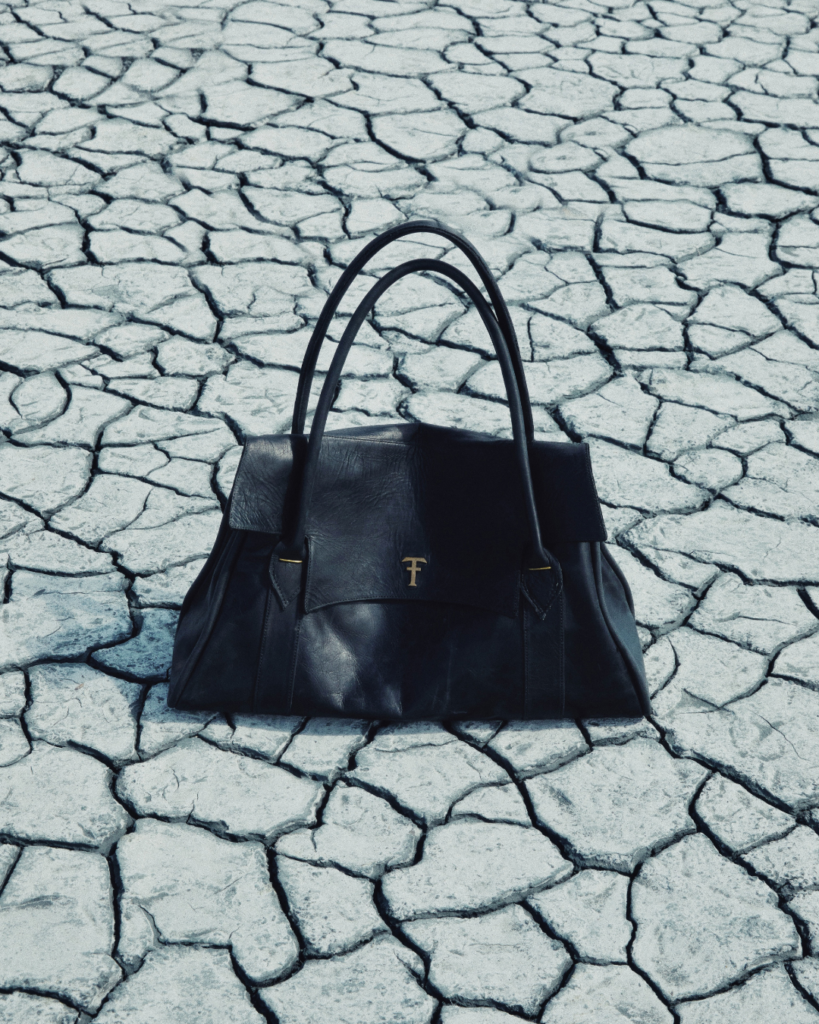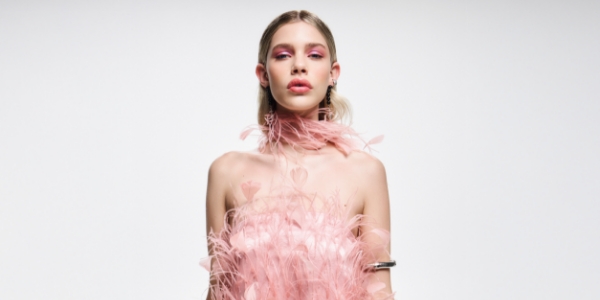


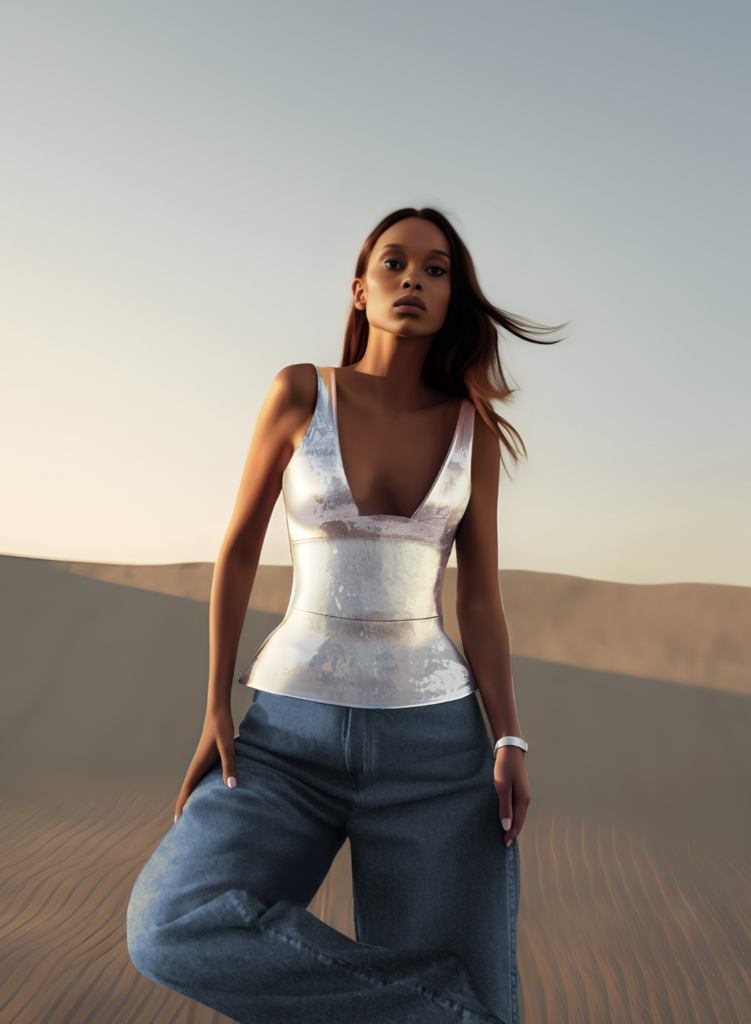
Last week, New Zealand model Elijah Timmins-Scanlon took to social media with a serious allegation: that iconic Kiwi brand Huffer had used AI to recreate his likeness in a campaign image – without his consent. To date, the post has garnered more than 600 comments and counting. Everyone from some of New Zealand’s most respected fashion photographers and make-up artists with decades in the industry, to local musician Benee, has waded into the comment section. The response has been largely unified – and quite outraged on Timmins-Scanlon’s behalf.
Huffer’s response? To start allegedly blocking anyone who questions them. No mea culpa. No explanation. No acknowledgement that this might be worth addressing. Just silence. FQ also reached out to Huffer for comment and received no reply. From a brand that at its height had Orlando Bloom wearing their iconic (and instantly recognisable) I Love NZ tees, it’s a disappointing stance.
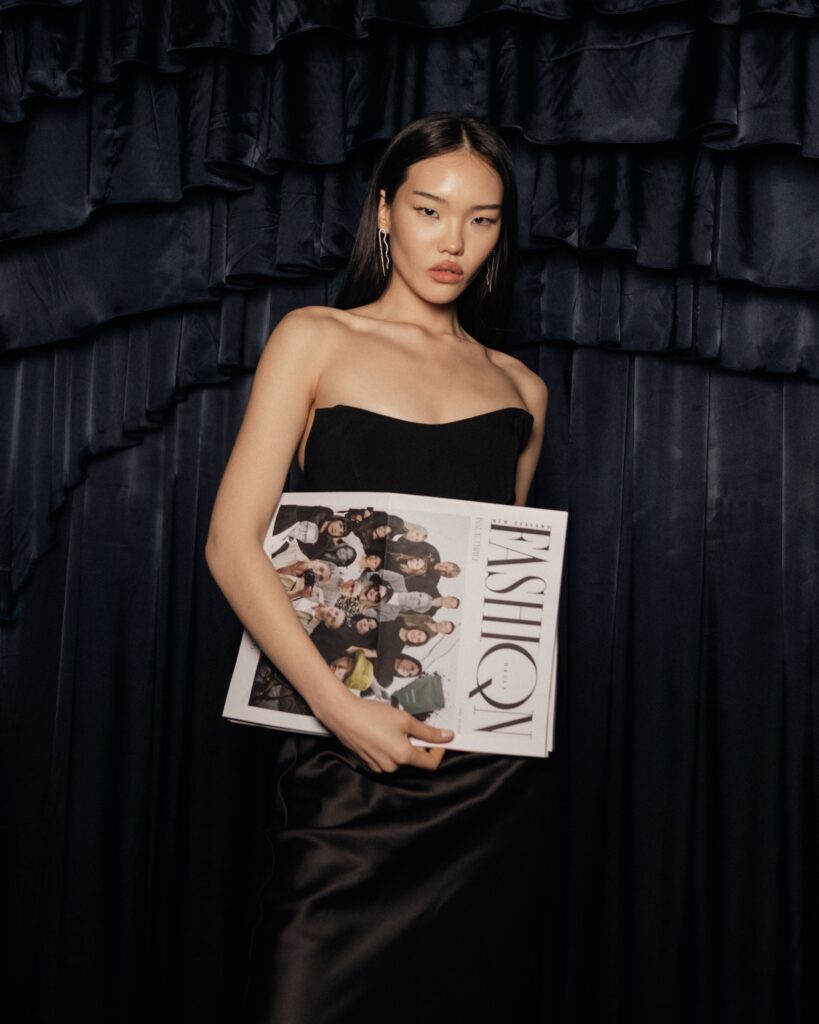
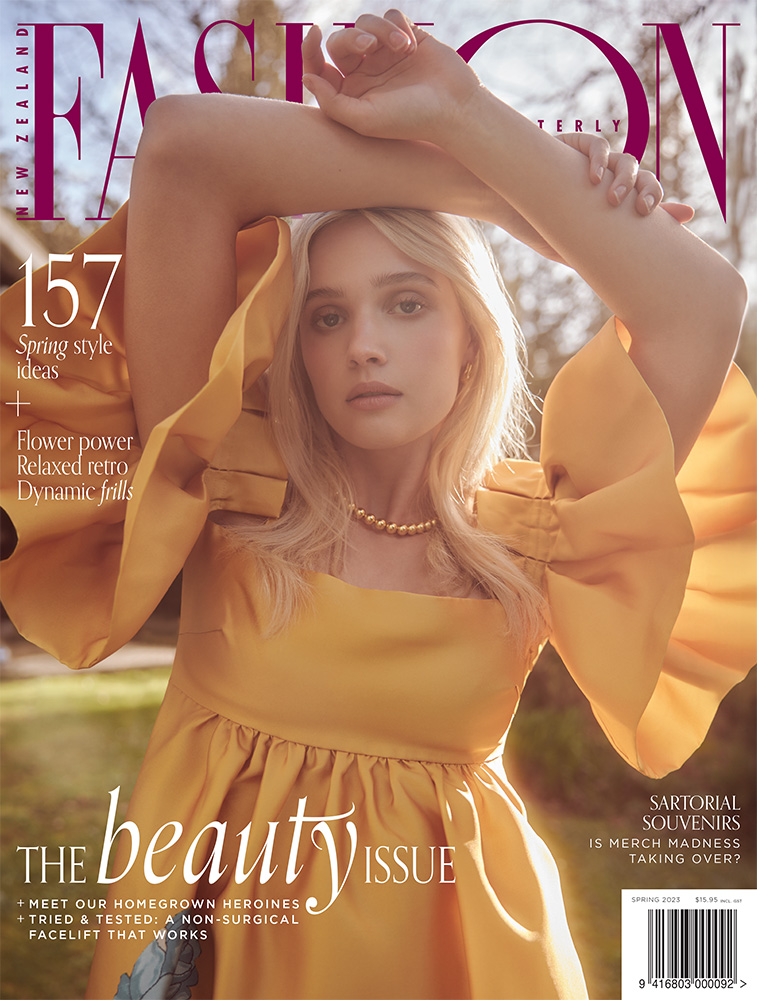
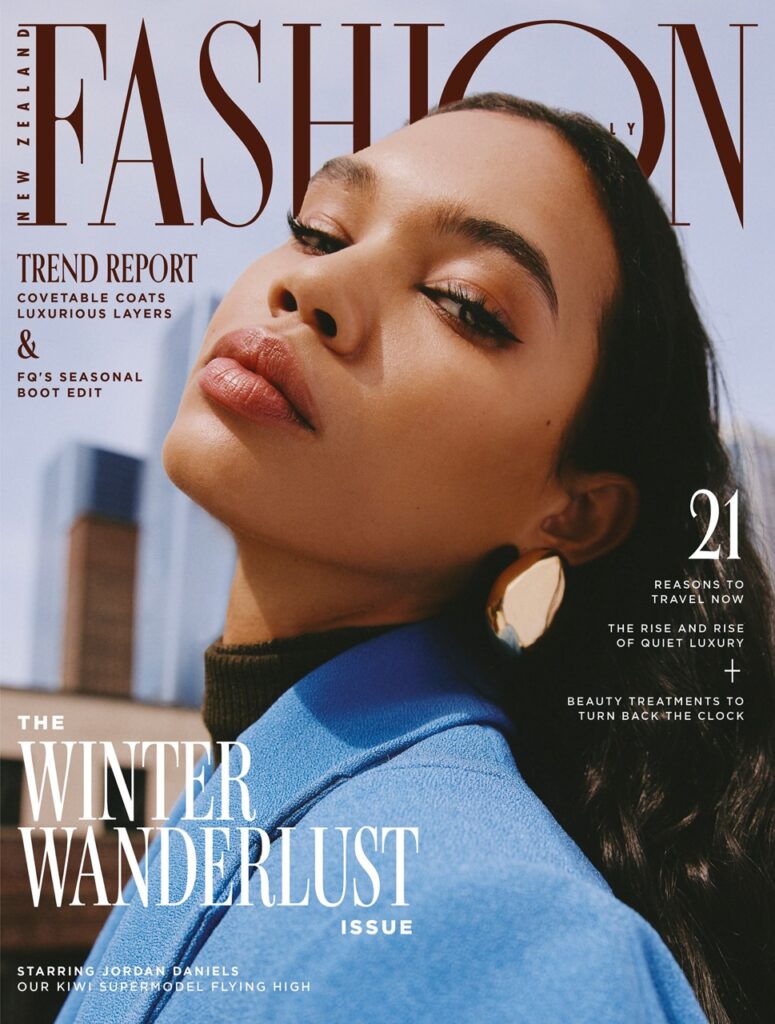
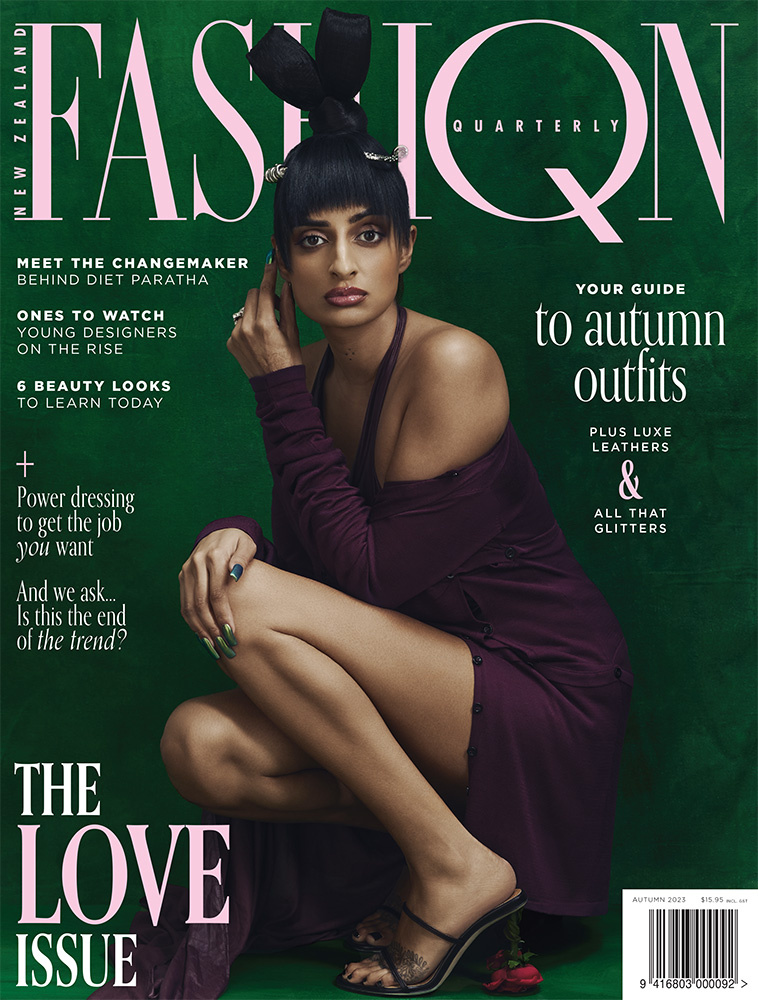
Now we all know the use of AI in fashion is not new. Almost three years ago at Fashion Quarterly, we trialled an AI shoot – just to see what would happen. At the time, my creative director Georgia Bramley and I felt conflicted enough about AI simply generating a model that we paid a real model to use their likeness for our AI avatar. Even then, I still felt uncomfortable watching the subtle shifts AI could make to a face, as we changed outfits and backgrounds. Naturally, we highlighted the fact this was an AI shoot so there was no confusion (although looking back at it now, in its almost primitive state, there definitely wouldn’t have been). In just those three short years, AI has come leaps and bounds and is now used by almost everyone. So much so that I find myself genuinely hoping for a typo in an email just to confirm a human wrote it!
When we contacted Timmins-Scanlon he said the lack of clear rules and regulations around AI is confusing for everyone. “[It] Feels like the wild west and I imagine it’s coming from both perspectives when it comes to brands and models. From what I’ve gathered no one knows the rules and we’re all just figuring it out.”
“I believe to protect, maintain and nurture the modelling and more broadly the creative industry as a whole In New Zealand, we need to have more discussions that ultimately lead to clear guidelines, legislations and if necessary laws on how we use AI.”
The reality is, it’s a grey area. Not to mention a genuinely complicated one. Diet Prada reported that last June, advocacy nonprofit Model Alliance helped pass the Fashion Workers Act in New York, which includes protections against exactly this kind of AI use. While currently there are no such laws in New Zealand, individual agencies are now hawk-eyed about their clients’ image rights.
Andi Plowright from Auckland agency 62 Management is unequivocal: “62 Management has a strong stance on protecting the image and intellectual property of the talent we represent,” she says. “We would never agree to our talent being used to generate new AI models based on their likeness without consent and proper compensation. Every job we do now has booking terms and conditions that explicitly reference AI as a usage that needs to be negotiated and signed off by the talent.”
That’s the right position. But it only works when brands play by the rules. For models, their face is not just an image – it’s their income, and their intellectual property.
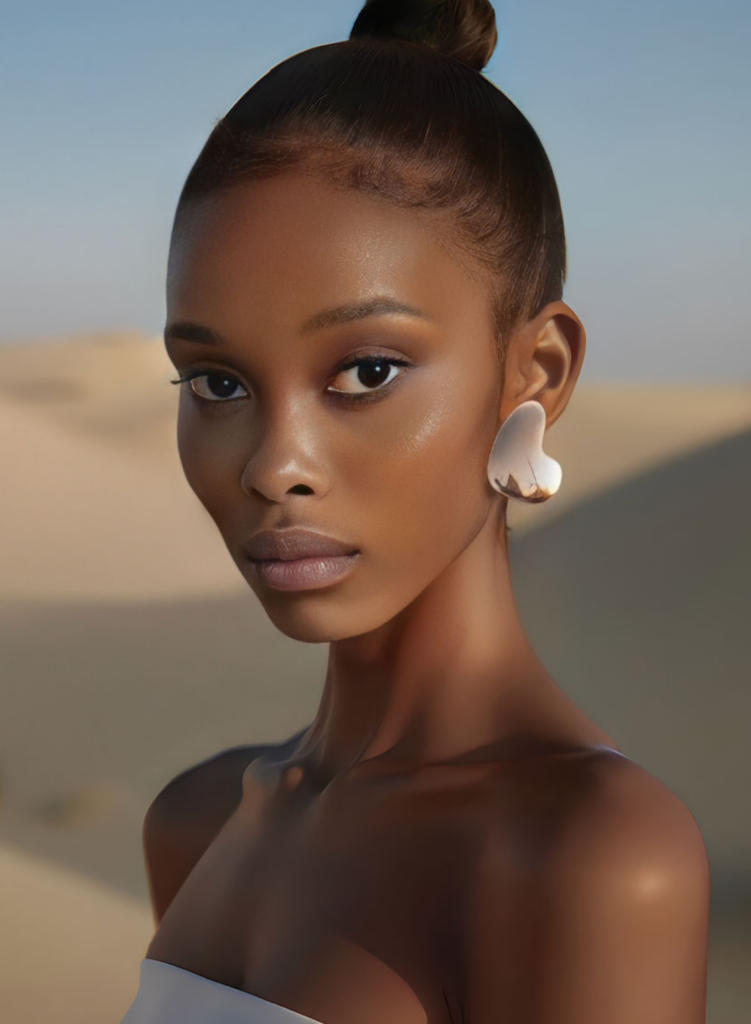
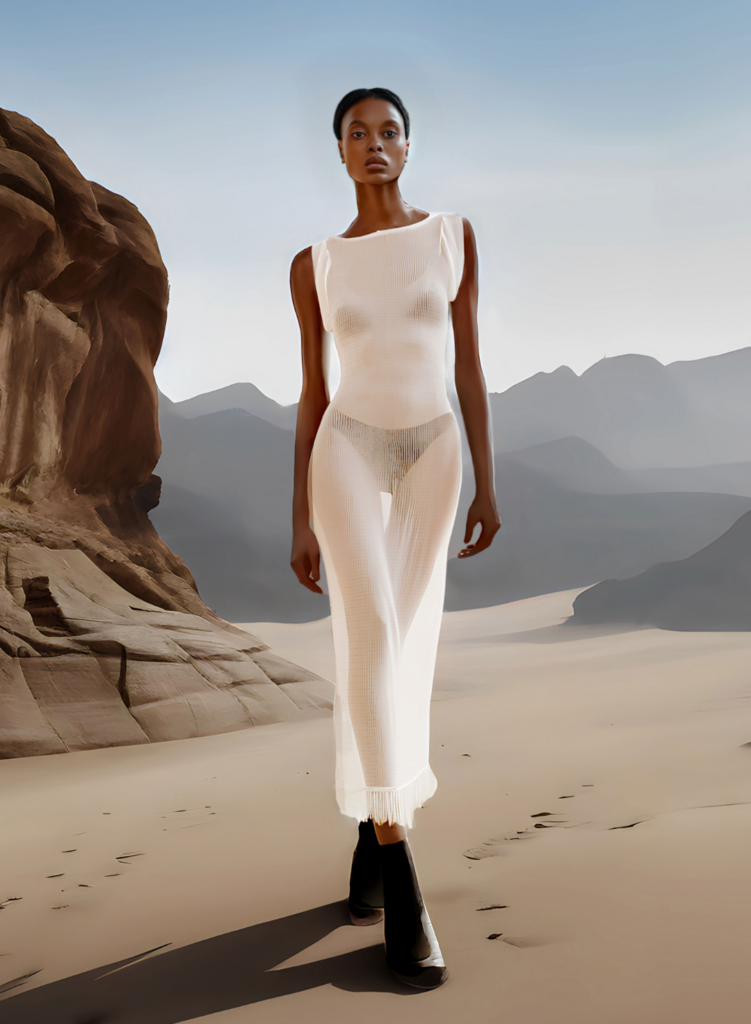
Globally, AI in fashion is everywhere. Last year, Guess featured an AI-generated model in a two-page Vogue advertisement – a small disclaimer printed in the corner. Gucci also faced criticism earlier this year for allegedly releasing AI-generated imagery ahead of their Milan Fashion Week show. And just last week, Diet Prada wrote about New York model Francheska Pujols, who alleged fast fashion retailer Rainbow Shops hired her for a catalogue shoot, then used those images to generate entirely new scenarios – think different settings, different poses, additional models – all without her consent. She has since dropped the suit, and you can make of that what you will.
But with the cost of running a business at an all-time high and retail under pressure, it’s not hard to see why some brands are tempted to cut costs with AI. A campaign shoot is expensive – I should know, we do at least three editorial shoots per issue using as many local creatives as we can. What is most difficult to get past about this recent faux pas by Huffer is the lack of transparency. And for some reason, it stings more when it’s a New Zealand brand. We can roll our eyes at faceless global conglomerates operating in the grey – it almost feels expected, like they were never going to care. But here, in our small but vibrant fashion industry, it feels less forgivable. We know these people. We champion these brands. We want them to do well. So when something like this happens, it’s disappointing. Ultimately, the onus is on the brand. It always has been. And now more than ever, their ethics matter.
AI itself is not the issue here – fashion has always evolved alongside technology. But if a model’s likeness is being replicated, altered or extended through AI, that should happen with their knowledge, consent and fair compensation. And as long as brands are upfront about how AI is being used, consumers can decide for themselves where they stand. I may not personally agree with replacing people entirely, but I can certainly understand the bottom line of a P&L spreadsheet.
When FQ did our AI shoot all those years ago, I wrote in my editor’s letter that while it was an interesting experiment, I missed the energy of a real shoot. The bustle and stress, the endless back-and-forth of competing (and often conflicting) ideas, and that incomparable feeling when you know you’ve finally got the shot. After more than 100 AI iterations nearly tipped us over the edge, I remember writing: sometimes you just can’t beat the real thing.