

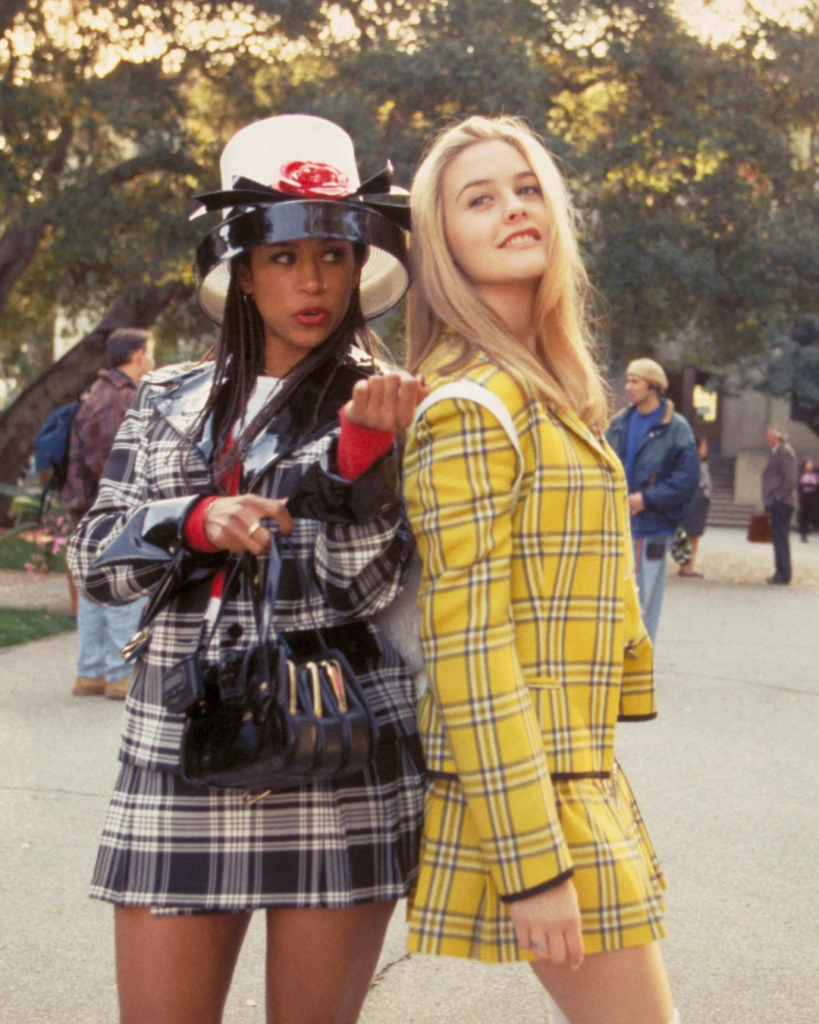
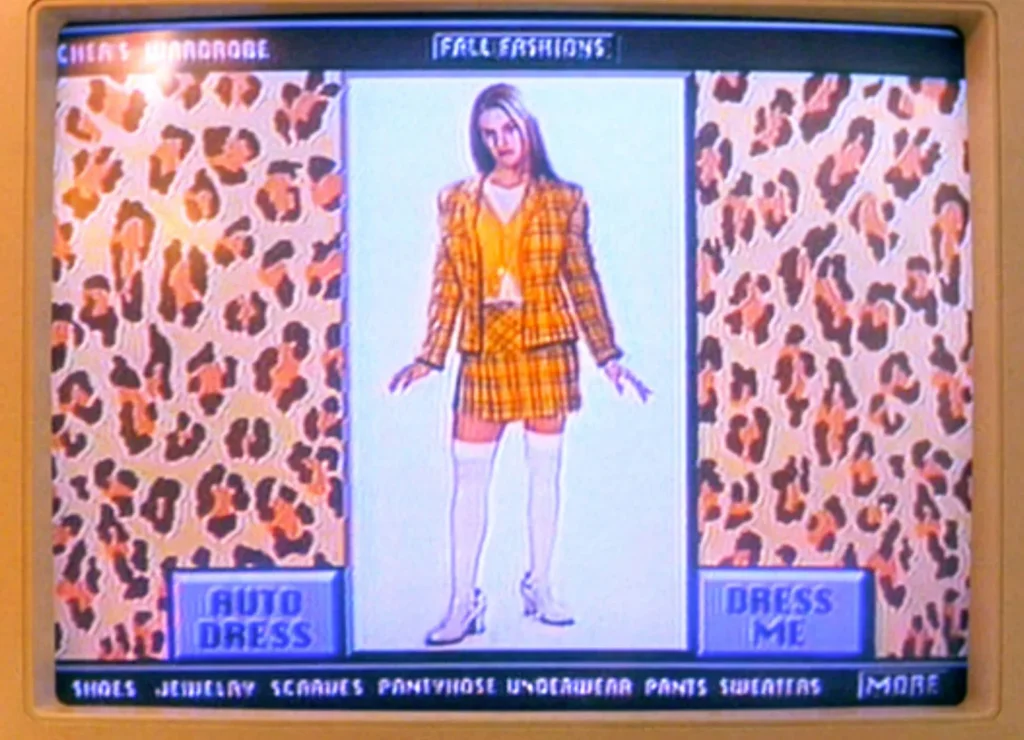
In the opening scene of Clueless, Cher Horowitz browses potential outfit combinations in her virtual closet on a touchscreen monitor. She selects a boxy, grunge-style shirt and a black mini, triggering a shrill alert and an on-screen warning: ‘MIS-MATCH!’ She tries again, landing on a conspicuous yellow plaid Jean Paul Gaultier skirt suit, before tapping ‘DRESS ME’ to clothe a digital avatar of herself.
Although pure fantasy in 1995, three decades on, AI-driven styling technology now catalogues our wardrobes, dishes out advice, and models garments on hyper-realistic avatars.
One such app is Alta, which founder Jenny Wang calls an “AI stylist that curates personalized outfits based on your own closet, lifestyle, weather, budget, activities, or trip.”
Alta makes digitising my wardrobe a breeze. A hastily snapped photo of a wrinkled garment becomes a polished render via the “Prettify” tool. After uploading a selfie and a full-length shot, you can then get to work, asking the app to dress your virtual avatar or to offer fresh styling inspiration.
Google has also entered the realm of digital dress-ups, debuting its virtual try-on feature for select apparel listings in Aotearoa in July this year. Claire Carter, Google New Zealand’s Industry Head of Retail, explains the process: “Tap the ‘Try it on’ button on the product image. From there, upload a photo of yourself, and in just a few moments, the tool will generate an image showing what you might look like wearing that exact item. You can scroll through different looks, save your favourites, and easily share them with friends to get a quick style check before buying”.
Curious to see how the feature works, I test it on local designer Jojo Ross’s Vespertine Jacket. It’s an uncanny experience to stare at a more statuesque, better-dressed version of me on my phone screen. Still, after researching Google’s privacy guardrails to understand better how my likeness is used, I’m comfortable enough to keep exploring.
A common thread among these AI styling applications is that they aim to solve everyday dilemmas faced by people worldwide.
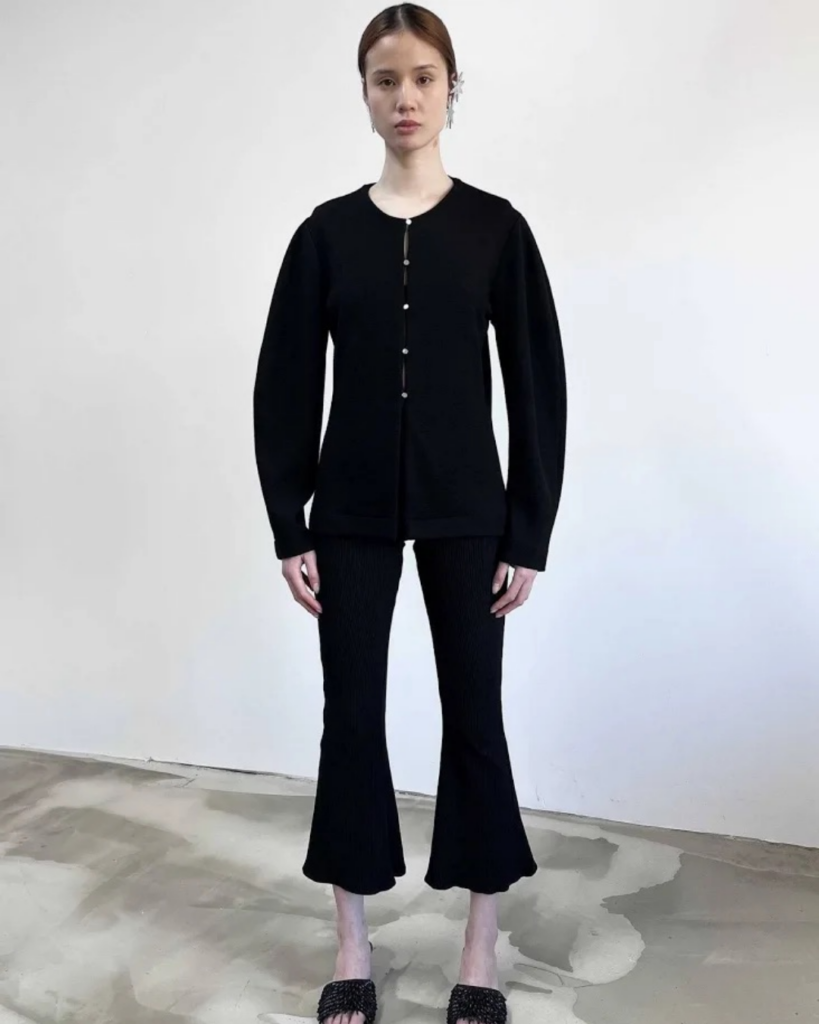
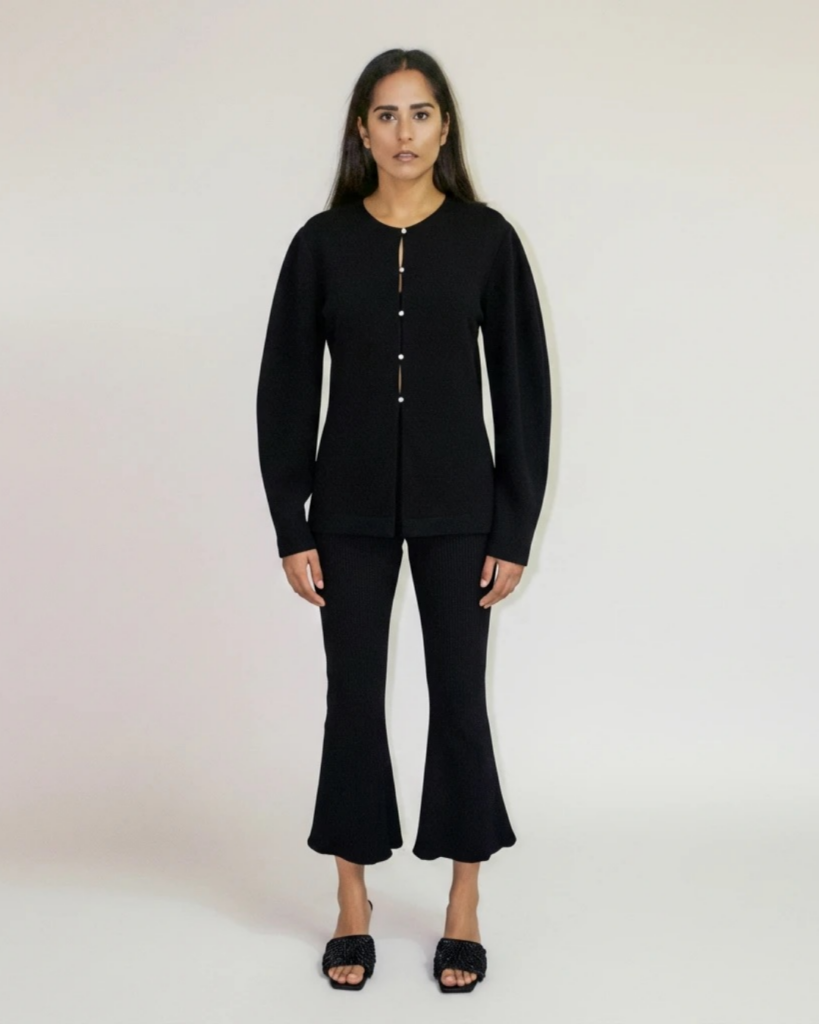
New York-based Wang built Alta to “eliminate decision fatigue and solve the disconnect between owning clothes and knowing how to use them.” Although cliché, the first-world problem of having a wardrobe overflowing with clothes but nothing to wear is relatable to many.
Wang points to Alta’s cost-per-wear tracking as a nudge towards more mindful consumption given that fashion is a highly polluting industry. Self-reported data from digital wardrobe organiser Indyx echoes this: nearly 60% of its users say their pace of buying clothes has slowed since joining, though causation remains unclear.
Still, by using new technologies, there are important trade-offs to consider. The data centres powering AI consume large amounts of energy and contribute to environmental harm. Additionally, many free styling tools rely on affiliate commissions from product recommendations, which encourage consumerism.
Jojo Ross, who runs a by-appointment showroom in Onehunga, sees both the potential and the shortcomings of the technology. With many brands opting for an online-only presence in the current economic climate, Google’s virtual try-on closes an important gap. As Ross puts it, “seeing a garment on your body…gives customers a lot more confidence in their purchase”.
Stylist Sarah Stuart notes, “being able to see how a piece might look before committing to the purchase could save time and potentially avoid a return – which is better for the customer, the business and, ultimately, generating less waste.”
The bigger question is whether the virtual experience is as convincing as getting dressed in real life. Ross isn’t yet convinced. “I can’t imagine how you can capture the fluid nature of drape and movement accurately… but I’d love to be proved wrong in this!”
Stuart shares her scepticism: “There’s still a big difference between seeing clothes and wearing them. You can’t tell how a fabric feels, how it moves, whether it stretches, where it actually sits on your body, or whether you can comfortably sit in it. Those details are often where the truth of a garment reveals itself.”
Wang insists Alta is built for exactly this complexity. It has to “interpret color, fabric, texture, fit, proportion, layering, occasion, weather, and personal preference at the same time, then understand how those variables change depending on the person wearing the outfit.” Even the ability to tuck or untuck a top on your avatar matters, she says: “A tucked shirt changes proportion, silhouette, and the relationship between pieces, so the model has to understand not just what someone is wearing, but how they want to wear it.”
Google takes a similar approach, having built a custom model that Carter says “understands the human body as well as clothing nuances, like how different materials fold, stretch, and drape” to give users “an authentic feel for how the material actually behaves on a body.”
To combat AI biases, Wang says Alta’s model considers “all races, genders, and body shapes,” including the capability to “generate plus-size bodies, ethnic hair, hijabs, and tattoos.” Carter cites Google’s “extensive fairness testing across a diverse range of body shapes, sizes, skin tones, and proportions.”
Having tried Google’s technology and been impressed by its accuracy, writer and plus-size fashion lover Jess Molina says the appeal of virtual try-on goes beyond convenience. “I know how stressful it can be to go into a store and try things on at times. There are feelings of shame and of trying to squeeze yourself into clothes not made for every size. But also I think it’s a good way to address the barrier of most places not stocking their bigger sizes in store and only having it online.”
Wang also points to what AI democratises: personal styling and shopping services once reserved for celebrities and the ultra-wealthy are now accessible to everyday consumers.
But accessibility and technical accuracy are one thing — capturing style is another. Personal style is deeply subjective, shaped by identity, personal narrative, and social context. As FQ Stylist of the Year Courtney Joe puts it, “A stylist is a storyteller — clothing is their medium. More often than not, it’s rarely about the clothes, but what they need to communicate.”

Stuart agrees the brief always begins with the person, not the clothes: “After nearly 20 years of styling, there’s also an instinct that develops. You start to know when something is right before you can necessarily explain why. There’s no algorithm for that – thankfully.”
However, for many everyday consumers, this instinct is harder to come by. A 2026 survey commissioned by ASOS found that while 67% of participants derive fashion inspiration from social media, 50% say developing their own style has become harder. Ironically, despite unprecedented access to online style references, this phenomenon can in part be attributed to algorithmic homogenisation, which has contributed to an increasingly uniform sense of fashion and beauty. “We’re constantly being shown what we should like,” Stuart says. “The challenge is learning to separate ‘I keep seeing this’ from ‘I actually love this.'”
Even so, AI styling remains a purposeful tool for creative expression. Wang says Alta helps “narrow down an endless world of options into a set of strong, personal suggestions.” And as Carter puts it, virtual try-on is ultimately a “brilliant playground for style experimentation” — a safe space to try bold colours and new drapes you might have otherwise scrolled past.
I don’t believe AI styling technology will erode my own style code, which I’ve acquired through years of trial and error. However, I do recognise how it’s evolving through tools like Alta, as I take delight in wearing forgotten pieces in new ways — what Wang describes as a kind of dopamine hit from “shopping” your own closet.
AI also can’t prevent an occasional fashion faux pas, something that’s part of the very human act of getting dressed. Even with her covetable virtual closet, Cher had to go through trial and error to don a look that just felt right. As Stuart puts it, “Technology can generate great options. But helping someone believe they look incredible? That still takes a human.”
Words: Hemma Vara.
Imagery: Supplied.