

Time has always felt in short supply. When I was a kid, sick days at home meant lying on the couch watching Sesame Street sandwiched between Aerobics Oz Style and Days of Our Lives; the latter not by choice, but because Mum and Nan planned their afternoons around the soap, accompanied by endless cups of tea and a well-stocked biscuit tin.
To this day, I can still picture the opening sequence: an hourglass, grains of sand slipping through, followed by the immortal line: “Like sand through the hourglass, so are the days of our lives.” It’s remarkable how something so melodramatic can stay with you for decades.
Lately, though, it feels less like a soap opera catchphrase and more like a quiet truth.
That same awareness of time slipping away sits at the heart of Run Lola Run, Tom Tykwer’s exhilarating 1998 thriller and one of my all-time favourite films.
Lola has just twenty minutes to find 100,000 Deutsche Marks and save her boyfriend, Manni. The film unfolds as she races against the clock, each moment altered by the smallest decisions and chance encounters. It’s a reminder that time isn’t simply measured in minutes, but in choices — and how quickly a life can change.
Today, time itself feels like a luxury. We’re encouraged to move faster, respond instantly, and consume endlessly. Our days are organised by notifications, calendars, and glowing screens that constantly remind us what comes next, but rarely ask us to be present in the moment we’re actually living.
Which is why I’ve become fixated on the idea of buying a watch.
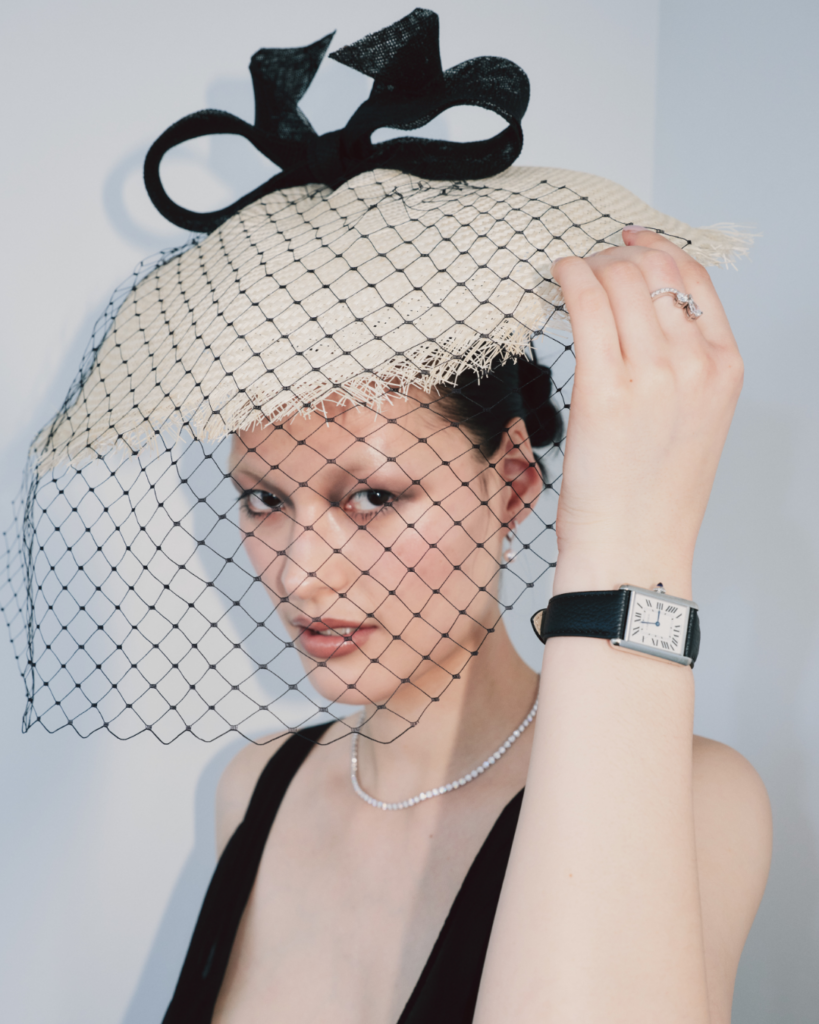
Not because I need another way to tell the time — my phone already does that hundreds of times a day — but because a watch asks something different of you. It doesn’t interrupt. It doesn’t buzz. It doesn’t demand your attention. You choose to look at it. In that small, deliberate gesture, time becomes something you acknowledge rather than something that controls you.
Perhaps that’s what I’m really buying: not a watch, but a different relationship with time. One that’s slower, more intentional and grounded in the present. In an age that prizes constant acceleration, wearing a watch feels almost subversive, a quiet declaration that not every second needs to be optimised, only appreciated.
Not a digital one, though. I gave the Apple Watch a decent run through much of the late 2010s, but it always felt like another screen strapped to my wrist, delivering the same endless stream of alerts and distractions I was already trying to escape. If anything, it made me feel more accountable to time rather than more present within it.
Because a watch is a physical reminder of the thing we’re all supposedly chasing: presence. It asks nothing of you beyond an occasional glance. There’s something reassuring about that. Time isn’t quantified or gamified — it simply passes by, like sands through an hourglass.
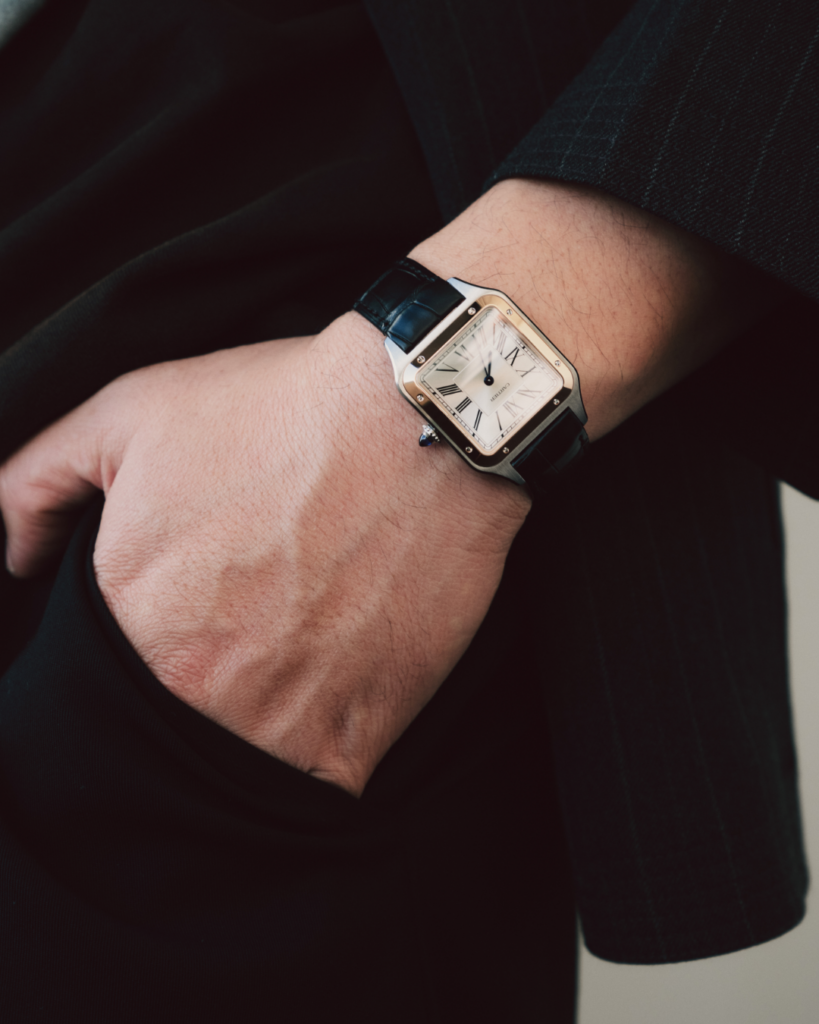
It’s a far cry from the year 2000, when I proudly bought a Jacob the Jeweller knock-off from a market in Bangkok, seduced by the oversized swagger of the era (I blame Fat Joe and Ja Rule). These days, I’m drawn to something quieter. Less flash, more permanence. A watch that will outlast trends rather than announce them. A grown-up watch that challenges time itself with its timelessness.
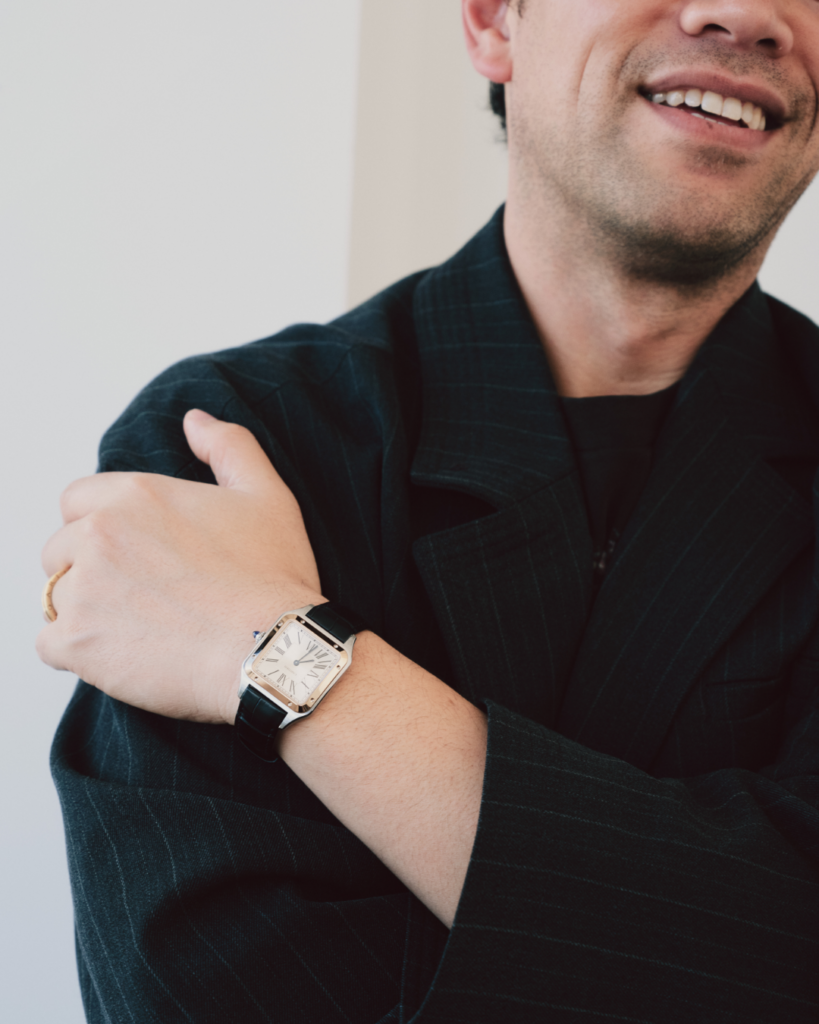
If money were no object, my shortlist would be just that — short. The Cartier Santos-Dumont on a black leather strap. A Patek Philippe Calatrava. The Tissot Le Locle 39mm (deep navy dial please). What unites them isn’t status or price, but restraint. They all possess the kind of quiet confidence that has become increasingly rare: elegant proportions and considered details. Much like the clothes I find myself wearing these days, they’re classic without feeling conservative.
That’s perhaps the real value of a good watch. It shouldn’t dominate an outfit, but complete it. It becomes part of your personal uniform rather than the headline. Like a well-cut blazer or a favourite pair of shoes, it says something about taste without needing to announce itself.
Maybe that’s why I’ve come back to watches.
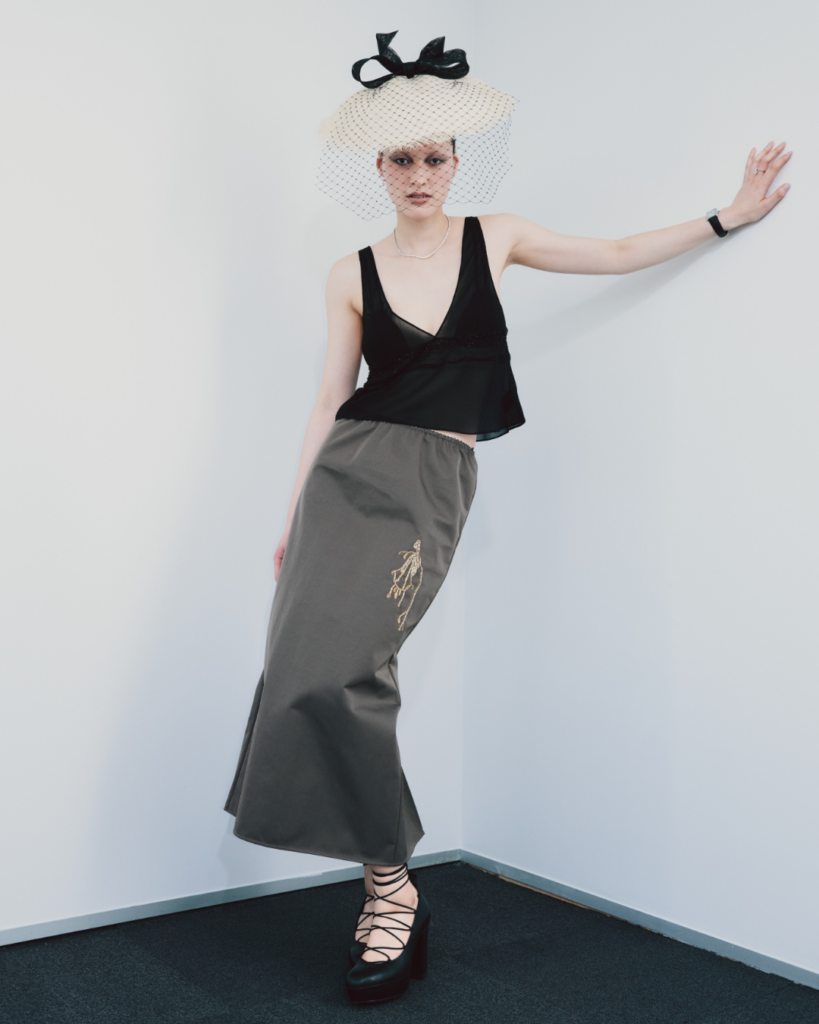
I’ve found myself drawn back to something simpler. Mechanical. Analog. Something that marks the passing of time without competing for my attention.
It’s a feeling that takes me back to the Batman watch I wore when I was ten. I remember studying its hands far more than I ever worried about whether I was actually late.
Back then, a watch wasn’t about productivity or performance; it was an object of fascination that marked a certain independence and possibility.
As the earworm of ABBA’s “Slipping Through My Fingers” quietly loops in my head while I race to meet my editor’s deadline, I’m reminded that perhaps what I’m after isn’t nostalgia at all.
It’s a small daily reminder that time is something to inhabit, not just manage. A good watch can support that.
This article originally appeared in the Spring ’26 issue of Fashion Quarterly.
Words: Dan Ahwa.
Imagery: Scott Hardy.