

For many Māori, returning to our tūrangawaewae or ancestral pā helps us feel a sense of belonging, where we feel grounded in our whakapapa, connected to those who came before us and reminded of who we are. But for many urban Māori who have moved away from our haukāinga to larger cities, opportunities to experience that connection can be few and far between.
But stepping into TE PĀ, the new cultural and creative precinct of indigenous fashion designers, artists, creatives, and business owners in Glen Innes, evokes a similar feeling of connection. Although it’s not a traditional marae, it has been created as a community space where anyone, from anywhere, can come along and feel at home.
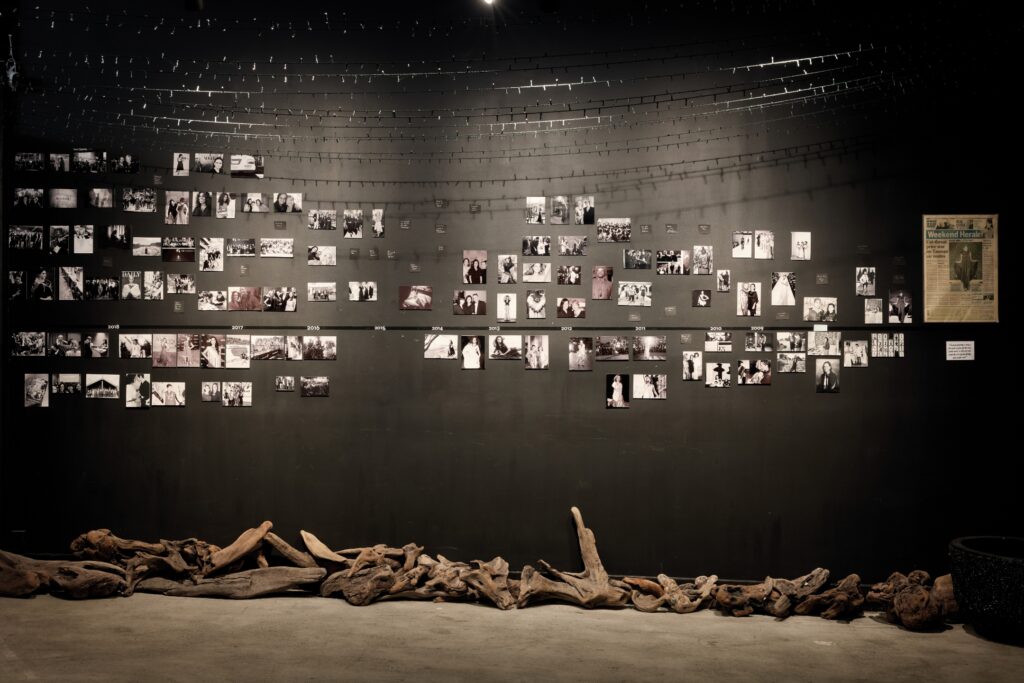
As you enter, a wall of black-and-white photographs draws your attention telling the story of fashion designer Kiri Nathan’s journey over the past three decades, from studying fashion, launching her self-titled label in 2010, to dressing and gifting taonga to world leaders, and being appointed a Member of the New Zealand Order of Merit.
The photographs capture other precious memories including a trip to China led by Nathan with emerging designers who would later become the first members of the Kāhui Collective, the world’s first group of Māori, Pacific, and indigenous designers. The latest memory captured though is the opening of TE PĀ this Matariki, marking another milestone weaving stronger pathways for indigenous creatives. Spearheaded by Nathan, TE PĀ (The Village) is a retail block made up of eight units embodying a traditional pā site, marae, and wharenui architecture.
“All of these fit outs have been made with help from whānau and friends. The people that bring their aroha and their tautoko into these spaces, that is the warmth that everyone feels when they visit. It’s infused with aspirations for building something that hasn’t existed before,” says Nathan.
For Nathan, TE PĀ was never just about opening another retail precinct. It was about creating the kind of place where indigenous creatives could see a future for themselves.
“With fashion it can feel like a very uncomfortable and anxiety-inducing space for many people, including me. I wanted to ensure that, not only our whare, but anywhere that we are as Kiri Nathan, the brand, that everyone feels supported, welcomed, and that they belong. I spent a lot of my earlier life feeling like I just didn’t quite belong in these spaces, like they could smell the poor on me or the brown on me, or whatever the hell it was. But I would be devastated if anyone ever felt like that in my spaces.”
Each space carries its own Māori name with its own meaning: Ātea, Te Āhuru Mōwai, Paepae, Mahau, Poupou, Maihi, Raparapa and Tatau.
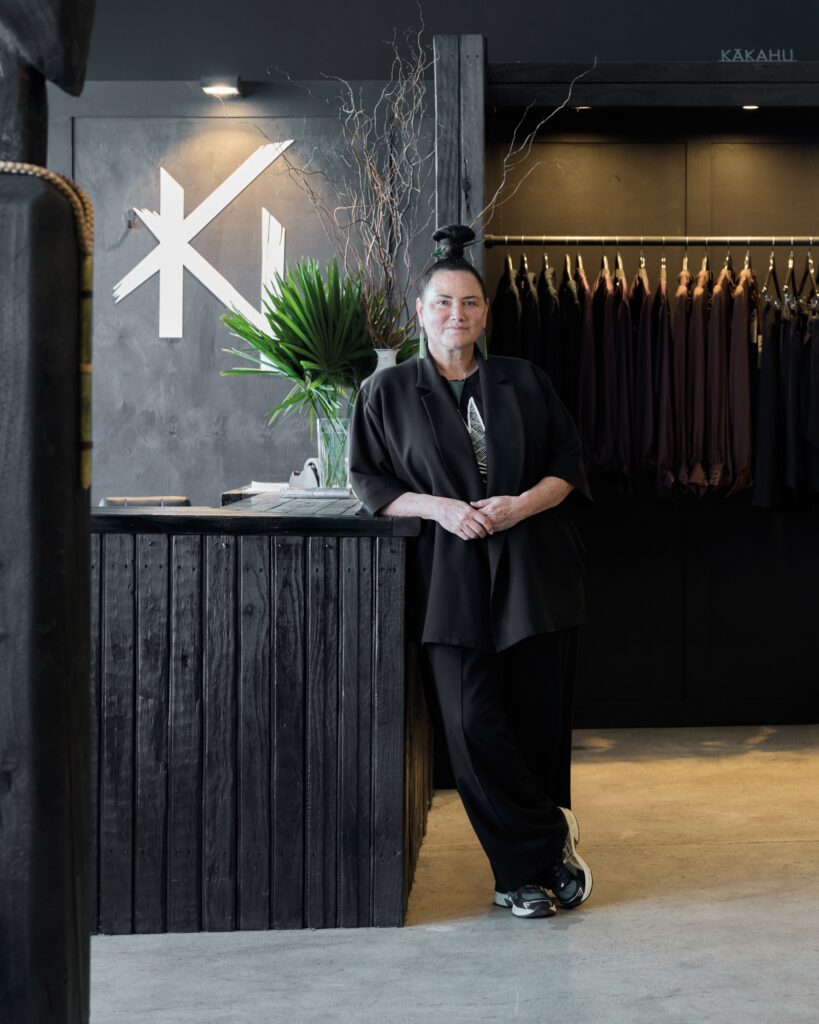
Te Āhuru Mōwai, a safe haven and nurturing shelter, is the largest space at TE PĀ covering 600 square metres. It welcomes you with scent. A bespoke diffuser fragrance, created especially for Nathan, by one of her dear friends Tiffany Witehira of Curionoir, fills the air with notes of rhubarb, oud wood, and sandalwood — fruity, woody, and quietly grounding.
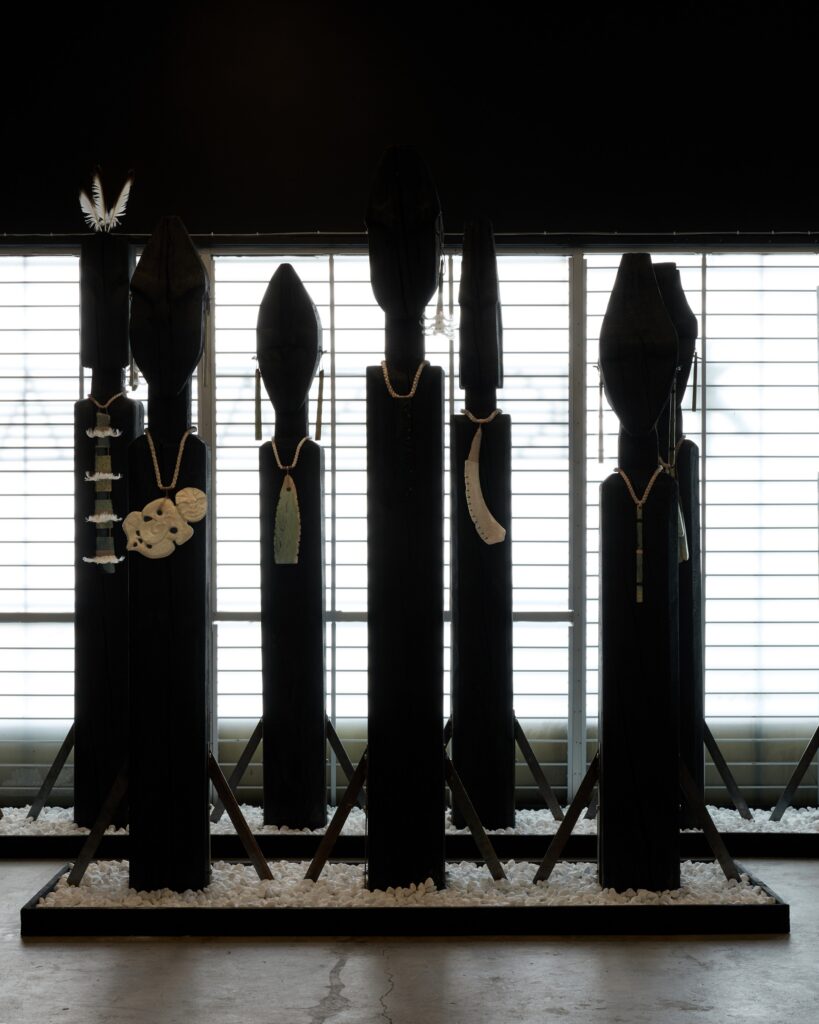
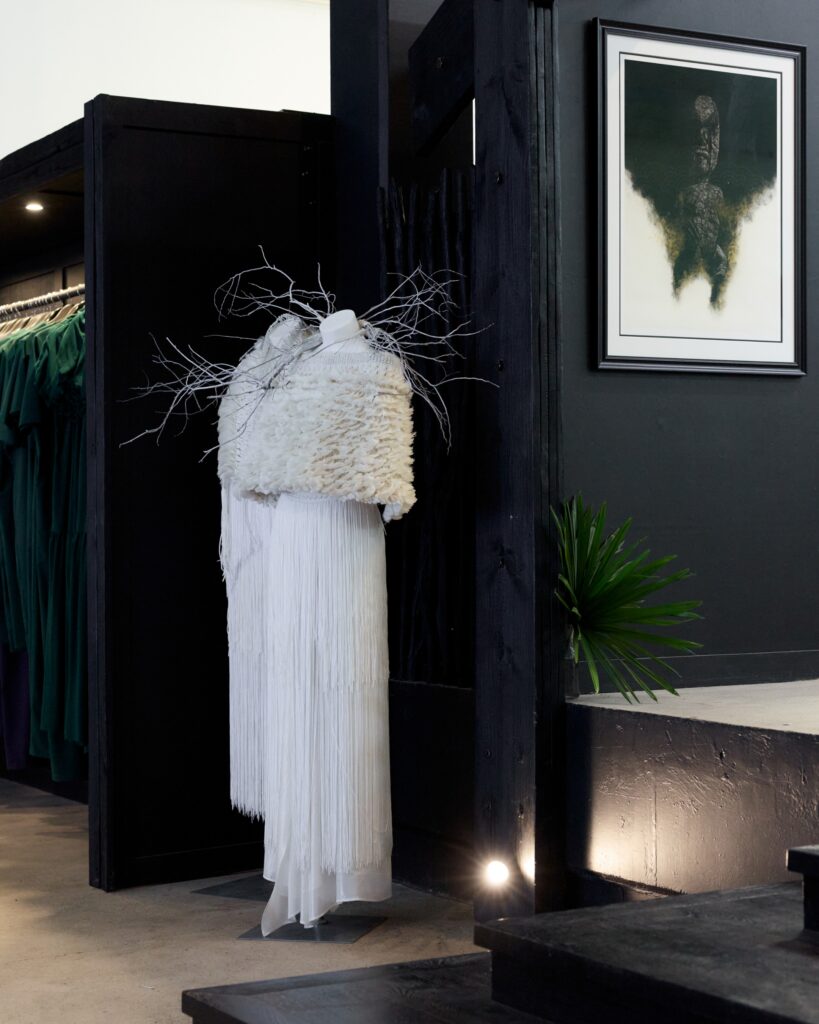
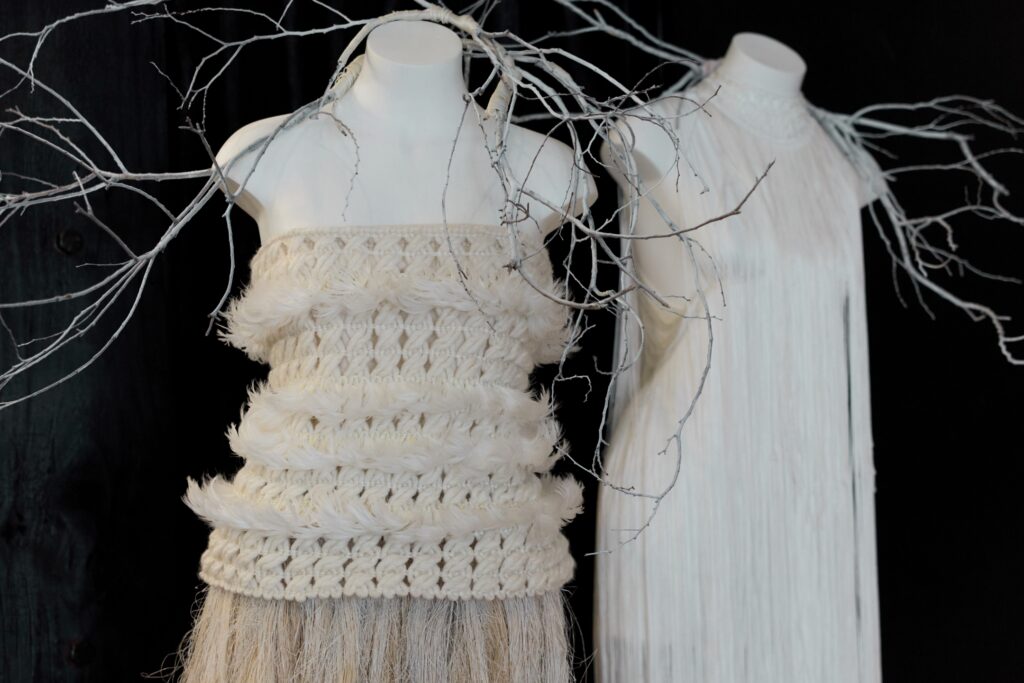
Te Āhuru Mōwai is split across two levels, separated by a waharoa, Mānuka wooden pā fencing and a set of steps. The lower level is home to the retail space of the Kiri Nathan label, renowned for the mastery of contemporary raranga (Māori weaving), considered slow fashion, and taonga. Upstairs, a creative hub features a wharekai (kitchen), office, lounge space, photo suite, and a production room used to sample Nathan’s label and develop other emerging designer’s collections, run workshops, and teach interns and designers how to responsibly commercialise and grow their labels.
Nathan and I settle in on the couch for our interview. Before we begin, she invites me to choose from a collection of luxury wool blankets from Noa Blanket Co to keep warm. It is a simple gesture, but one that speaks to her instinctive manaakitanga. Here, we talk about the history of the TE PĀ the building, constructed in the 1970s, originally a supermarket when she was in primary school.
“Over the years the different whare have been many different things — video stores, Dress for Less. The art gallery downstairs was the Glen Innes food court. She’s a really old building but we love her.”
Nathan and her whānau have called Glen Innes home for five generations and whakapapa to local mana whenua, Ngāti Pāoa. Every creative occupying TE PĀ either grew up here, or connects to the Tainui waka, making the opening a proud moment for the whole community. “For those of us who’ve grown up here, it’s important to us all that we feel safe and connected to places that are being built or revitalised in our home. This whare is deeply rooted in the history and the people of this place, and you feel that when you come in.”
Nathan says that when she was growing up, pursuing fashion as a career was laughed at. She hopes TE PĀ provides a reference point for people coming through who want careers in the fashion or creative space, to show “they can do it, and there’s pathway to get in there now.”
Paepae is a space of connection and storytelling, home to the new Kāhui Collective Store, the country’s first Māori and indigenous fashion department store selling clothing, jewellery, taonga pounamu (greenstone), pōtae (hats), rāranga (weaving) from more than 30 indigenous labels from across Aotearoa and the Pacific including J’AKE Studios, KaistorSt, Czarina Wilson, Shona Tāwhiao, Adrienne Whitewood, and more.
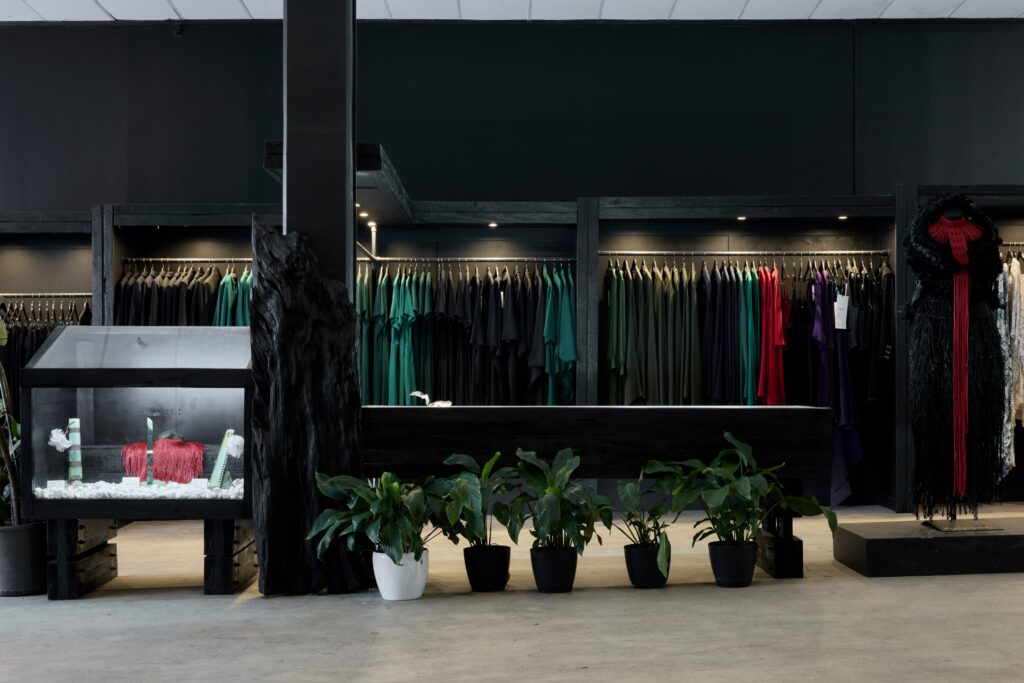
Looking through the clothing racks, you can’t help but feel a sense of pride that something like this even exists, when only a decade ago the idea of Māori fashion as an industry was still finding its place. Now we have access to dozens of indigenous brands in one place. The jewellery cabinets are full of taonga — pōtae, kete, heru, pearl earrings — making the space feel more like a gallery, where each piece is a work of art, almost too beautiful to wear.
“People should come here because they’re going to experience something that they can’t experience anywhere else in the country or the world and to support these small brands. This is not a huge mall with fast fashion brands. These are all tiny businesses that have come together and are offering quality works.”
Mahau, a space of welcome and connection, is home to designer Pania Greenaway (Ngāti Tūwharetoa, Ngāti Maniapoto), whose timeless collections blend relaxed tailoring, knitwear, and thoughtfully crafted textiles designed to last.
Ātea, a greeting space and point of welcome, is occupied by Tongan creative and fashion designer Czarina Wilson. Her store there, Celebrate Aotearoa, offers Māori and Pasifika gifts and homewares. Her recent accolades include having her designs acquired by Auckland Museum and being named a finalist in the World of Wearable Art Awards 2026.
Before moving into TE PĀ, Wilson says she hadn’t created kākahu for a decade. The space has helped her return to her craft, including creating monomono pani (bun style quilting).
“Having this space has made that journey easier because I have somewhere apart from home, dedicated to work, experiment, and [to] leave things set up. Working alongside Kiri has also been valuable because she’s always been that genuine someone or safe space where I have someone that’s nearby to share my ideas with and get a second opinion from,” says Wilson.
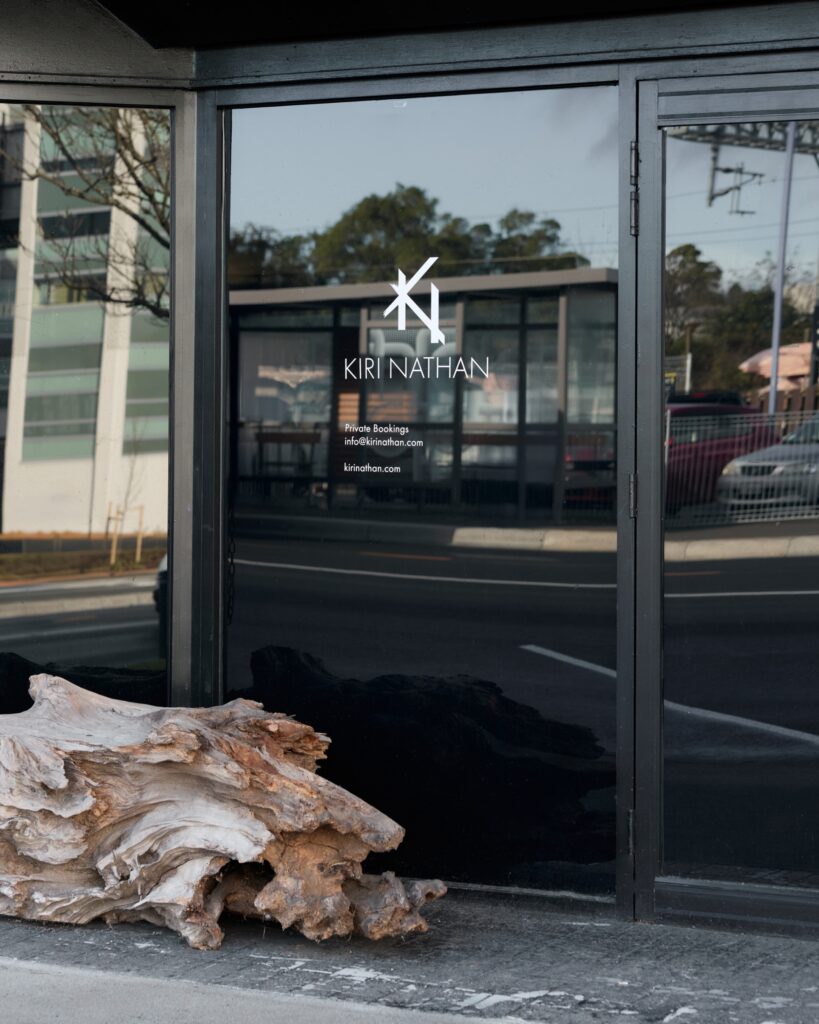
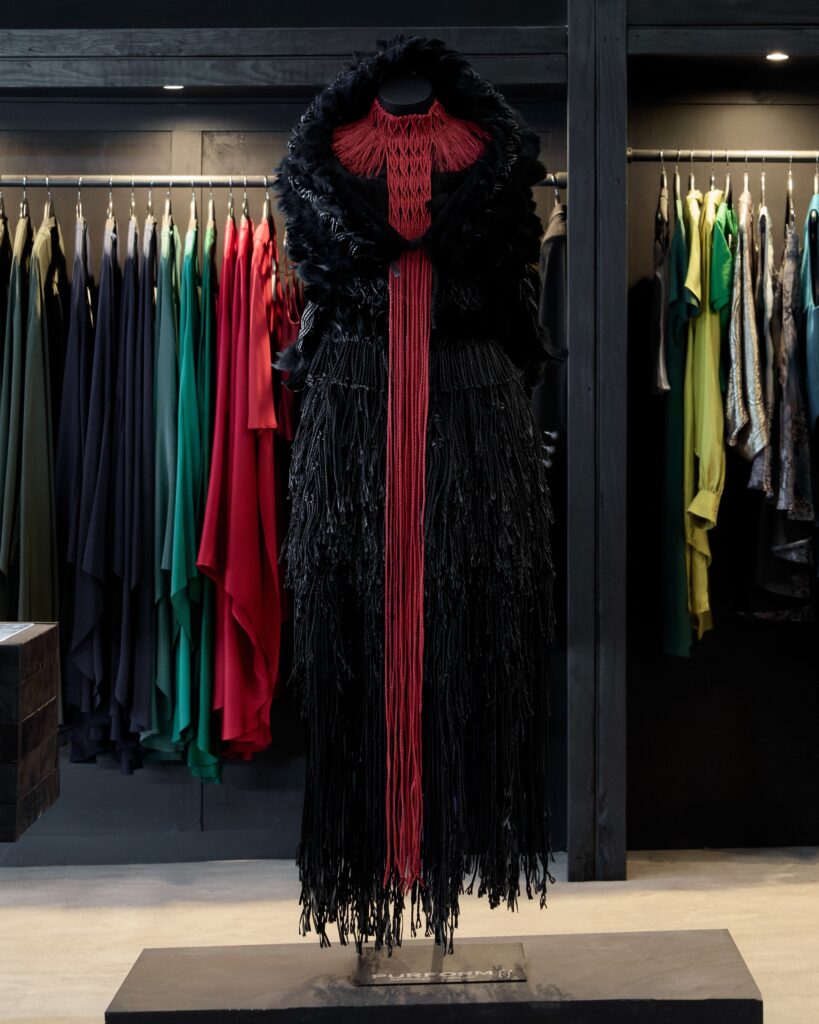
For many designers based in other regions who have relied solely on online sales, having their work stocked in the Kāhui Collective Store has given them greater visibility. Nathan says, “This offers access to a larger market. People can come in and try clothes on that they previously could only see online.”
After our interview, Nathan, her husband Jason, Wilson, and I sit down for kai. Like the close of a pōwhiri, the meal brings a sense of whakanoa (lifting tapu or cleansing). Over warm sourdough sandwiches with bread drizzled with olive oil, butter, and garlic, we talk about what’s next: the Indigenous Fashion Symposium, the Kāhui Collective show at New Zealand Fashion Week 2026, and the future of TE PĀ.
For Nathan, the vision for TE PĀ is ensuring its sustainability. Development plans include the 400-square-metre TE PĀ Art Gallery downstairs showcasing established and emerging indigenous artists, as well as a curated indigenous market.
Much of what already stands has been built through countless hours using repurposed and recycled materials. Tāmaki Regeneration Company (TRC) has been one of the few organisations to back the project, along with local businesses: Precision Construction, Signature Construction, and Jalcon Homes. “TRC have been our main support system throughout this entire haerenga, through considered leases, helping us source materials, connecting us with building suppliers, or creating weekend working bees with their employees.”
For a precinct designed to nurture generations creatives, TE PĀ has been built largely on the belief in what the space could become. Her next chapter will depend on others sharing that belief. As I leave, the scent of sandalwood lingers behind me. I know I’ll return for another kaupapa or chance to reconnect with the whānau who bring this place to life.
Like every great pā, TE PĀ reminds me that home is defined not by its walls, but by the people within them, whose generosity and manaakitanga become the true taonga of the space.