

A few years ago, it felt as though fashion had finally begun to expand its definition of beauty. Runways that once presented a singular silhouette started to look a little more varied. Curve and mid-size models appeared in campaigns that had historically excluded them, and conversations around size inclusivity moved from the margins into the centre of the industry.
For a moment, it seemed possible that fashion — an industry so often criticised for its narrow ideals — might be undergoing a genuine recalibration. But lately, something feels different. Heroin-chic silhouettes returned on Gucci’s autumn/winter 26 runway. The Y2K revival has ushered ultra-skinny jeans back into circulation. Celebrities once celebrated for their curves are re-emerging with noticeably slimmer frames. Then there’s the GLP-1-shaped elephant in the room. Spend five minutes scrolling through social media and a not-so-subtle pattern begins to emerge. Bodies, it seems, are shrinking again.
This regression isn’t simply anecdotal. According to the Vogue Business Spring/Summer 2026 Size Inclusivity Report, of the 9038 looks presented across 198 shows in New York, London, Paris and Milan, 97.1 per cent were shown on straight-size models (the equivalent of a NZ size 4-8). Of this number only 0.9 per cent of models were plus-size (NZ size 18+), while 2 per cent were mid-size (NZ size 10-16). These numbers are some of the lowest yet since Vogue Business began tracking inclusivity in March 2023.
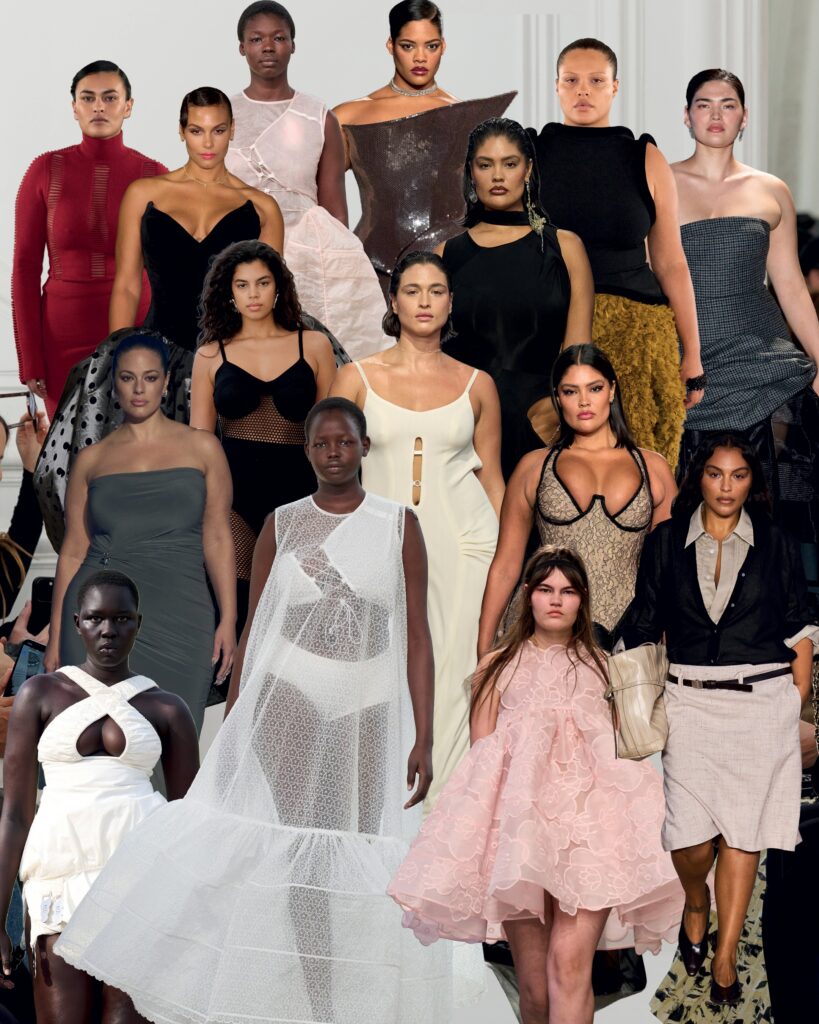
This feels especially striking because it follows so closely on the heels of a moment when the industry looked to be moving in the opposite direction. In the late 2010s, curve and mid-size models started to appear on some of the industry’s most visible stages. By 2023, models including Ashley Graham, Paloma Elsesser, and Precious Lee had walked runways for houses such as Versace, Valentino, and Chanel, signalling what many hoped was a more permanent shift.
“During the pandemic, there was a brief period of recalibration,” recalls journalist, stylist, and creative director Dan Ahwa. “Casting expanded, narratives shifted, and the influence of the Black Lives Matter movement prompted a reconsideration of how race, identity, and culture were reflected in the media.”
For many, this was an exciting and empowering time to exist in a bigger body. But as quickly as that momentum gathered, it appears to have stalled. “I haven’t seen that momentum sustained,” says Ahwa. “A wider cultural turn toward conservatism has reframed inclusivity as excess and complexity as inconvenience.”
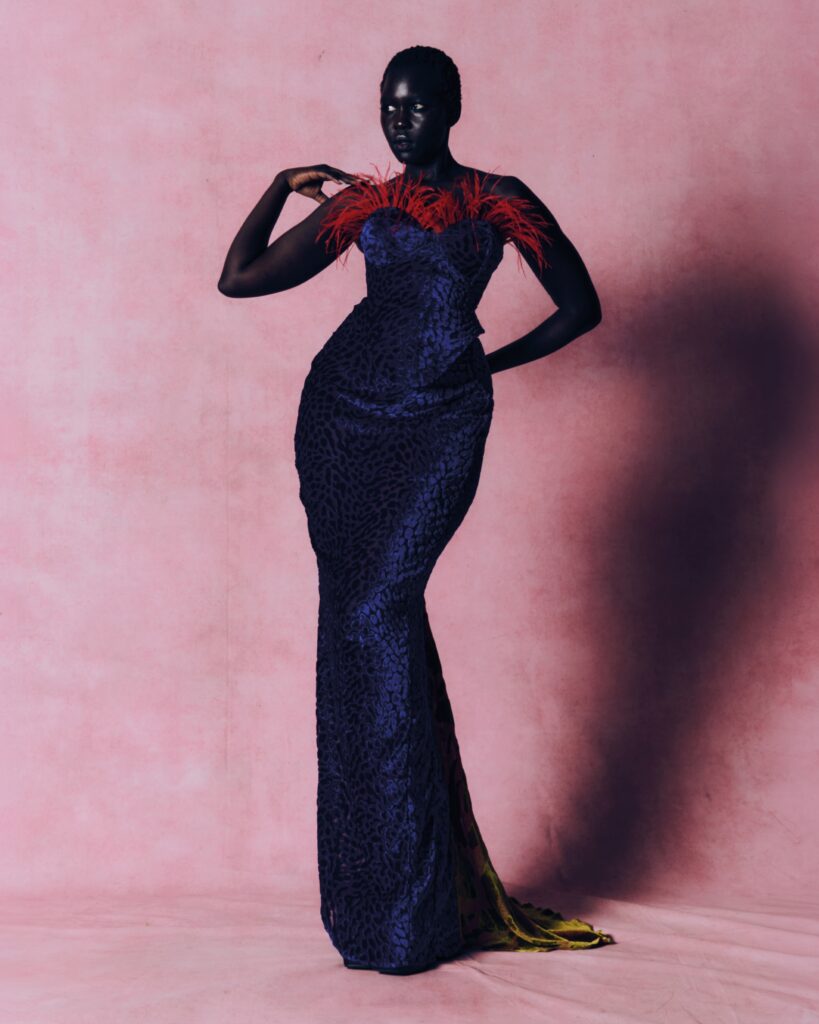
Rather than continuing to push forward, he suggests the industry has defaulted to familiar territory, with the return of Y2K and indie sleaze trends reviving not only the silhouettes of the era but also the narrow ideals embedded within them. “What we’re witnessing now isn’t evolution, but consolidation — a return to ideals that prioritise restriction over representation, and nostalgia over responsibility.”
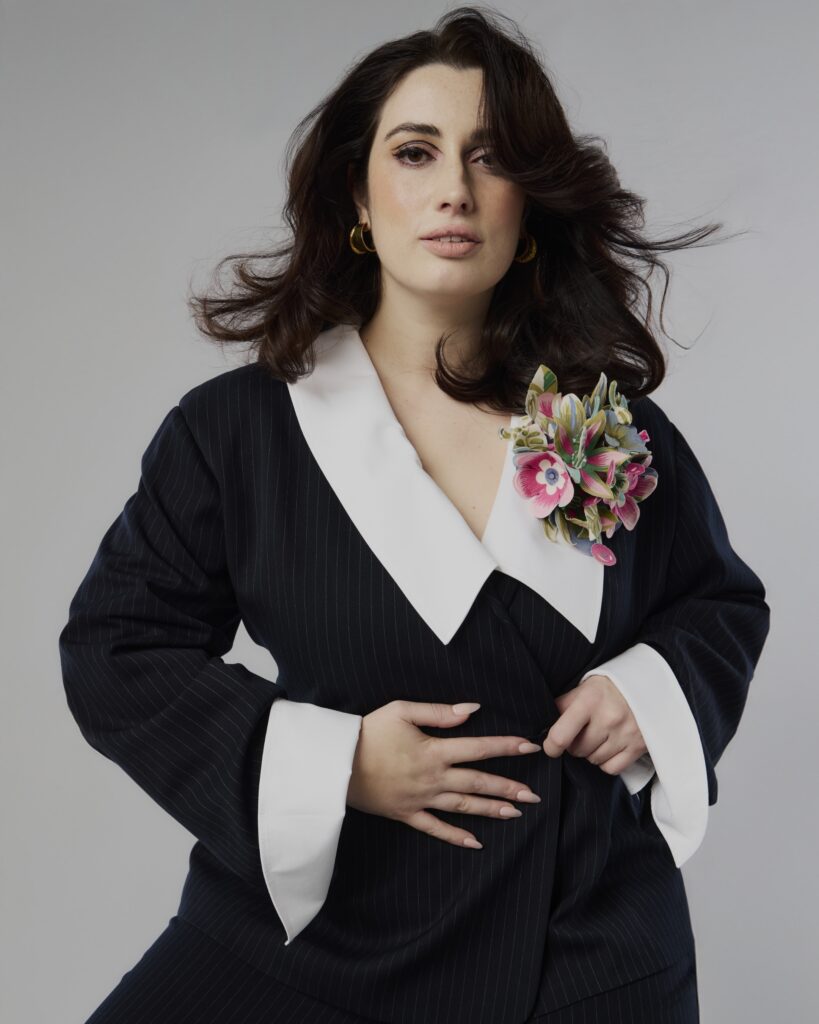
For model and author Kaarina Parker, there were many years when fashion felt like a world that simply wasn’t built for bodies like hers. “There were no plus-size models when I was growing up,” she says. “I can’t remember seeing someone who resembled my body type until I was well into my 20s.” The rise of the body positivity movement began to shift that narrative. Parker started modelling in 2021 and has since walked in multiple New Zealand Fashion Week shows, fronting fashion campaigns for brands including Ruby and Bendon.
Yet within New Zealand’s fashion ecosystem, curve modelling continues to exist within structural limits. “It’s impossible to work full-time as a curve model here,” Parker says. “There simply aren’t enough jobs.” And even those limited opportunities appear to be shrinking. “There are brands that used to shoot curve models for e-commerce who no longer do,” she explains. “Some labels have removed their extended sizing entirely, while others have shifted those sizes to made-to-order only. It’s frustrating as a working model and devastating as a consumer.”
For London-based model and 2025 FQ Fashion Awards Model of the Year, Isabella Moore, the shift has been tangible. “I find I’m booked for less e-commerce shoots as brands slowly stop showing bigger bodies online and reduce their size offerings,” she says. More of the work she is put forward for now sits outside fashion altogether. “I’m being put forward for more lifestyle jobs such as skincare, beauty, or car commercials.”
Part of the issue lies not only in casting but in the mechanics of design itself. “Designing for bigger bodies and all the considerations that come with that isn’t really taught in fashion schools where they learn with mannequins that are size 8 and 10,” explains Evelyn Ebrey, a journalist and co-producer of documentary series Cutting the Curve.
The process is far more complex than simply enlarging a pattern from a size 8 to a size 20. “Bigger bodies require different thought as to how fabric sits, drapes, and moves, and if it’s not taught properly then it’s something designers have to figure out for themselves,” she says. “I feel like many designers that may want to do extended sizing don’t necessarily know how to start,” she says. However, there are some brands that are investing in understanding those nuances. In 2021, New Zealand label Liam (stocked at all Ruby stores) introduced extended sizing across sizes 4-24. Rather than relying on a single sample size — the industry standard — the brand develops garments using both a size 8 and size 16 sample.
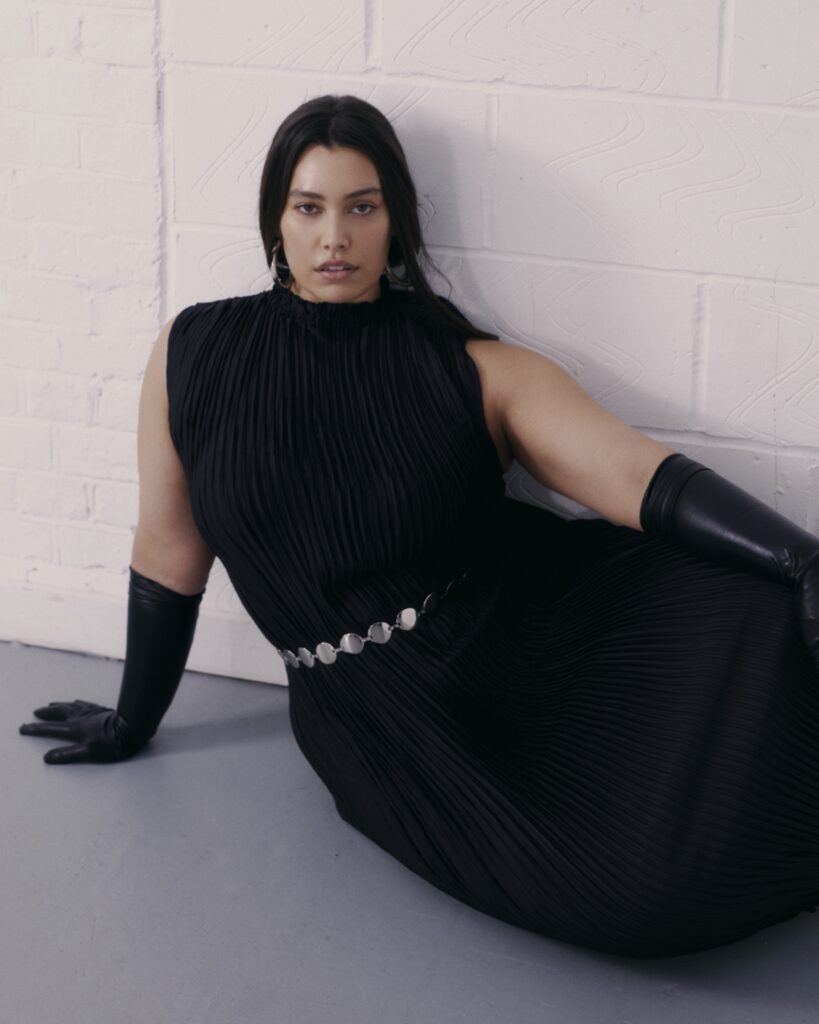
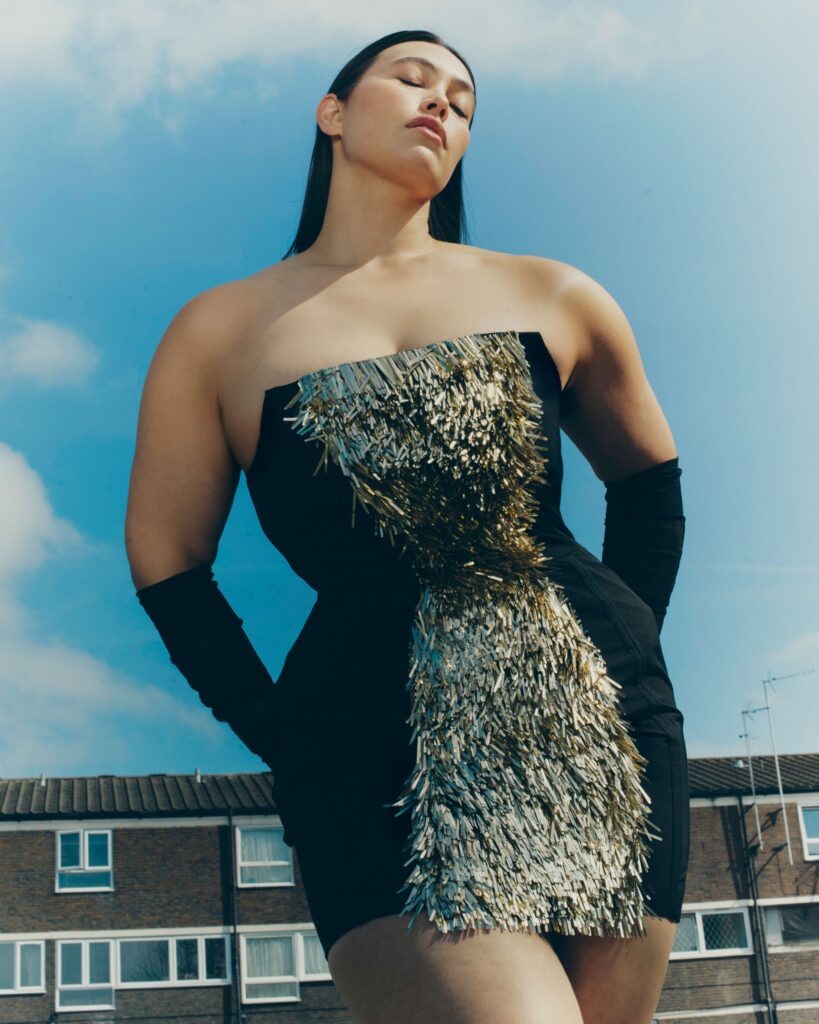
“Sampling across two different sizes gives you a much clearer understanding of how the garment behaves across the full range,” says Ruby general manager and Liam designer Emily Miller-Sharma. To refine those fits, the team continues to work closely with people of different shapes and proportions, adjusting their size blocks based on ongoing customer feedback. The response to this increase in sizing has been overwhelmingly positive — and at times unexpectedly emotional.“What I’ve found most difficult is the gratitude that is expressed,” admits Miller-Sharma. “I’m glad people feel supported by what we’re doing, but it also makes you realise how rarely they’ve been considered before.”
Extended sizing, however, requires a deeper financial commitment than many brands are prepared to make. “There’s an initial development cost,” explains Miller- Sharma, “and then there’s the increased investment in production and stock because you’re carrying more sizes. When companies pull back from that investment, it does say something about the wider pressures facing the industry. That is what is most concerning to me.”
As genuine size diversity declines, another curious phenomenon has emerged on the runway. Recently, there has been a growing trend of designers exaggerating or manufacturing curves on sample size models through corsetry, cinched waists, bustled skirts, and sculpted hips. In another context it might pass without comment, but against the near absence of models whose bodies naturally carry those shapes, the irony is difficult to ignore. Journalist Anastasia Vartanian — who’s known on Instagram as @fatannawintour — explained this contradiction best when she wrote in a recent article for Polyester Zine: “The runway loves curves, but not on plus-size women.”
Moore recognises the paradox. “You still have to be skinny first for the doors to be open to you before you’re allowed to play with fashion freely in the industry we know, even if it’s adding faux curves,” she says.
However, even when curve models are cast in shows, that representation can feel precarious. “When you look around and see only straight-sized models backstage you can’t help thinking, ‘Am I only here to tick a box? Was I booked for my modelling abilities or because this designer wants to be seen as inclusive?’,” says Moore. “It’s a constant exercise in trusting yourself and blocking out the noise.”
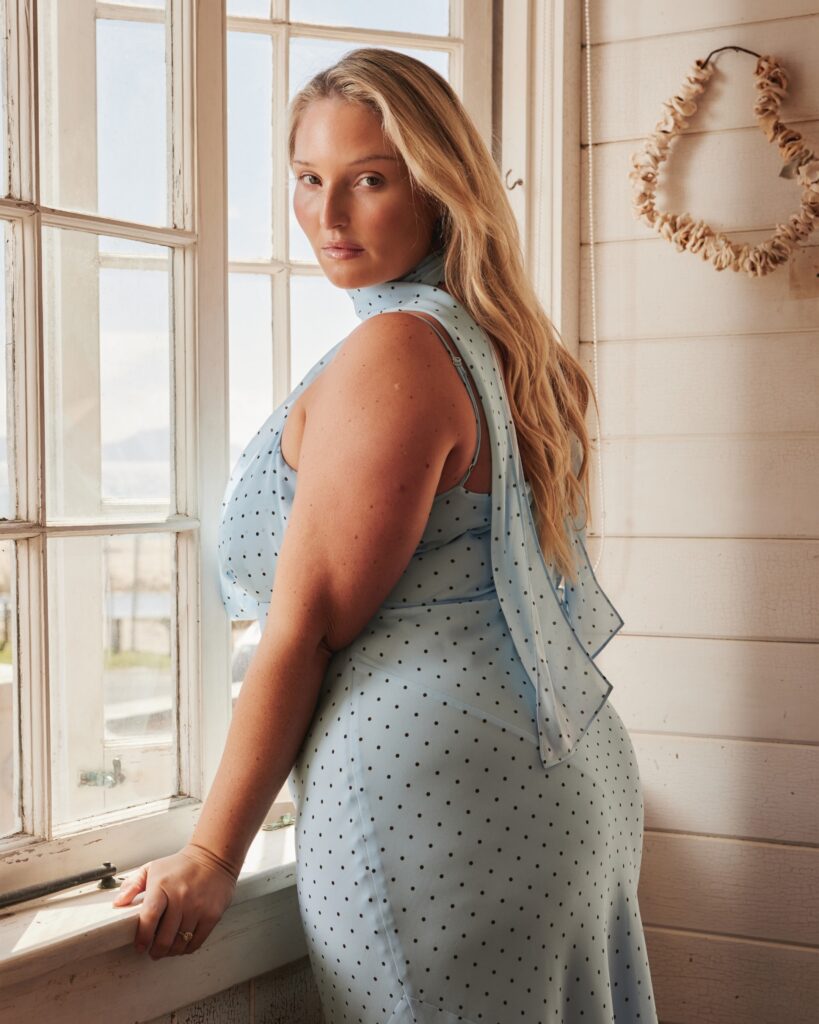
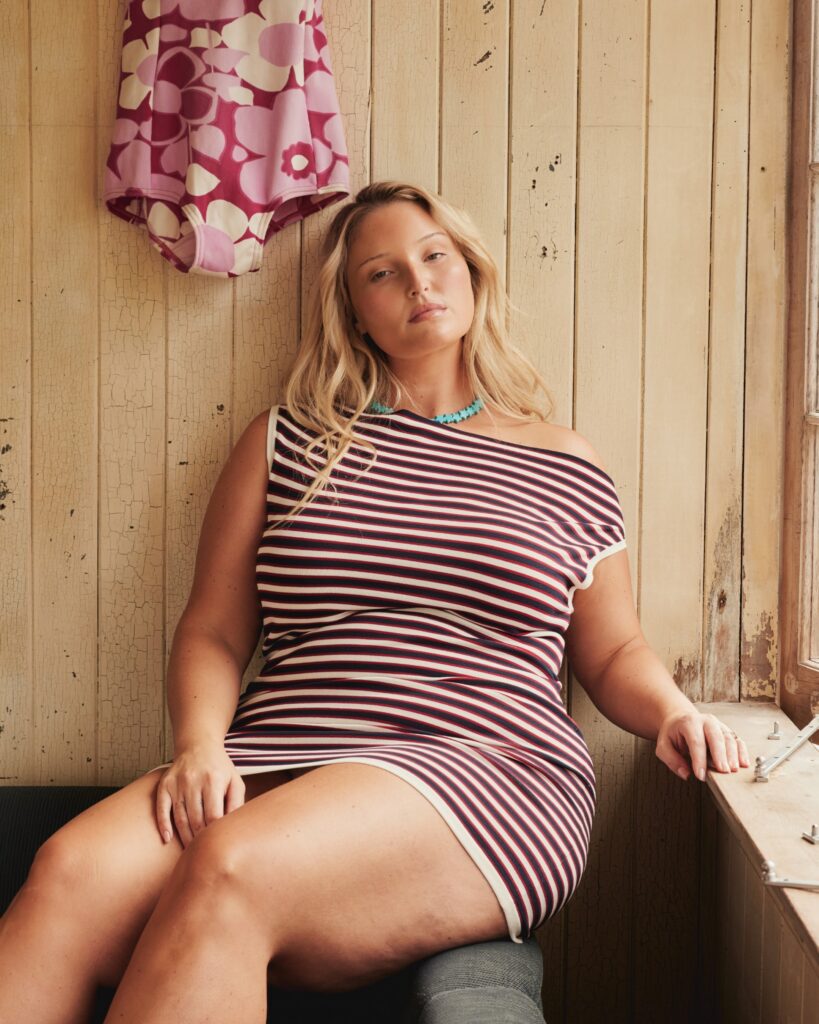
For Parker, the experience can sometimes feel less like progress and more like tokenism. “Sometimes, if I have the energy, it makes me angry,” she says. “Other times it just makes me tired. As someone who has often been the one plus-size model in the least flattering outfit because it was the only thing that would fit, I sometimes question whether no representation is better — but then again, I have bills to pay.”
Ebrey sees the same dilemma. “I have mixed feelings about tokenism,” she says. “While inclusion is always appreciated, even if it’s small, if a brand can cast one curve model why can’t they cast a few more?” Beyond symbolism, she notes that representation also has practical value for consumers. “If I’m shopping online and see models that are a similar body size to me, I get a much better idea of what that garment would look like on my body and it definitely makes me more inclined to buy.”
Tokenistic casting on today’s runways extends beyond size, revealing glaring gaps in racial diversity too.
“Meaningful representation is everyone being included across the board, and that goes for age, disabilities, gender, ethnicity and size,” says Ebrey. “Our world is so wonderfully diverse and has all kinds of beauty in it, so as we all buy clothes, fashion needs to be a true reflection of that in every way.”
Parker thinks genuine inclusion requires change across the entire fashion ecosystem and not just on the runway. “We need more stylists like Dan Ahwa and Sammy Salsa who know how to dress different bodies and make them feel beautiful,” she says. “We need designers who can make clothes for bigger bodies and not just one shapeless dress. You can’t call yourself a well-rounded designer if you’re not able to create clothing outside of this one narrow binary. It’s the same way that you can’t call yourself a make-up artist if you can’t do make-up on different skin tones.”
Despite the current regression in size inclusivity, there are still individuals and organisations pushing for progress. “There are agencies in New Zealand, like Unique Models and Agency Luma, doing substantive work toward genuine representation rather than symbolic gestures — this we should be proud of,” says Ahwa.
Meaningful change, however, cannot be driven by individuals alone. “It is our responsibility, as industry professionals and as the media, to shine a light on those creating space for true representation, amplifying their mahi so they can grow their networks and ultimately lead the next generation of talent and industry players,” he says. “Progress becomes hollow when brands fail to treat curve or diverse talent with the same respect and dignity as anyone else. It’s not enough to throw a ‘one-size-fits-all’ dress on a model.”
Parker echoes this, noting that the future of fashion lies in embracing the diversity already present within our unique culture.
“If we want the New Zealand fashion industry to remain relevant on a global stage, we need to infuse te reo Māori and bring in the weird, queer, fat, brown youth who are already creating incredible work and treating fashion as art,” she says. “We need to bring them into the fold and allow the industry to reflect their vision of the future.”
Ultimately, the lesson may be simple. “Bodies are not trends, and representation should never be treated as one,” says Ahwa. “Real inclusivity comes from intention, care, and respect.”
Six inclusive Kiwi brands
Ruby and Liam
This family-owned label has been a popular fashion staple for more than 20 years. Size 6-24. rubynz.com
Lost and Led Astray
Well-designed, quality clothing in thoughtful cuts. Size M-4XL. lostandledastray.co.nz
The Carpenter’s Daughter
NZ-made fashion designed to empower curvy women. Size 14-24. tcd.co.nz
Bittermoon
Kiwi fashion known for its playful prints, relaxed silhouettes, and inclusive sizing. Size 8-24. bittermoon.co.nz
IA. Origin
Performance-driven, unisex activewear available from size XS-10XL. ia-origin.com
Merchant 1948
Mindfully crafted long boots with diverse fits ranging from narrow to XX-wide. merchant1948.co.nz
This article originally appeared in Fashion Quarterly’s Autumn 2026 issue.
Words: Natalia Didovich.
Imagery: Supplied or Spotlight/Launchmetrics.