

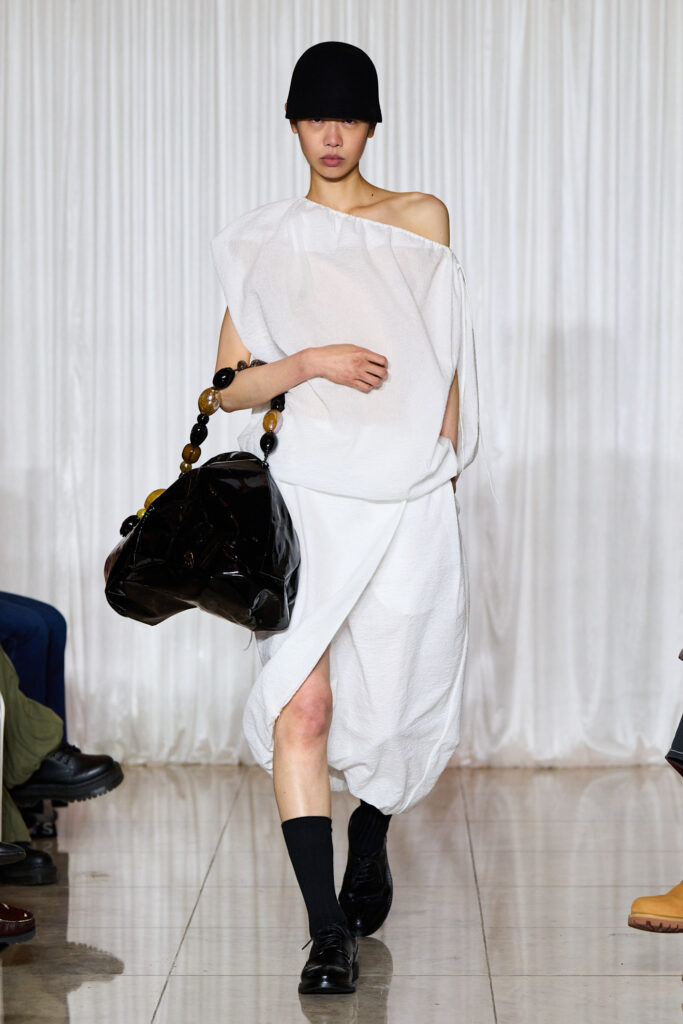
Amidst a grey London week, the clouds shifted to reveal sunlight on the last day of London Fashion Week — in perfect timing for Rory William Docherty’s SS26 debut.
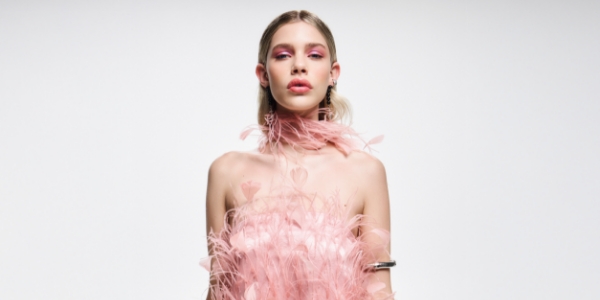
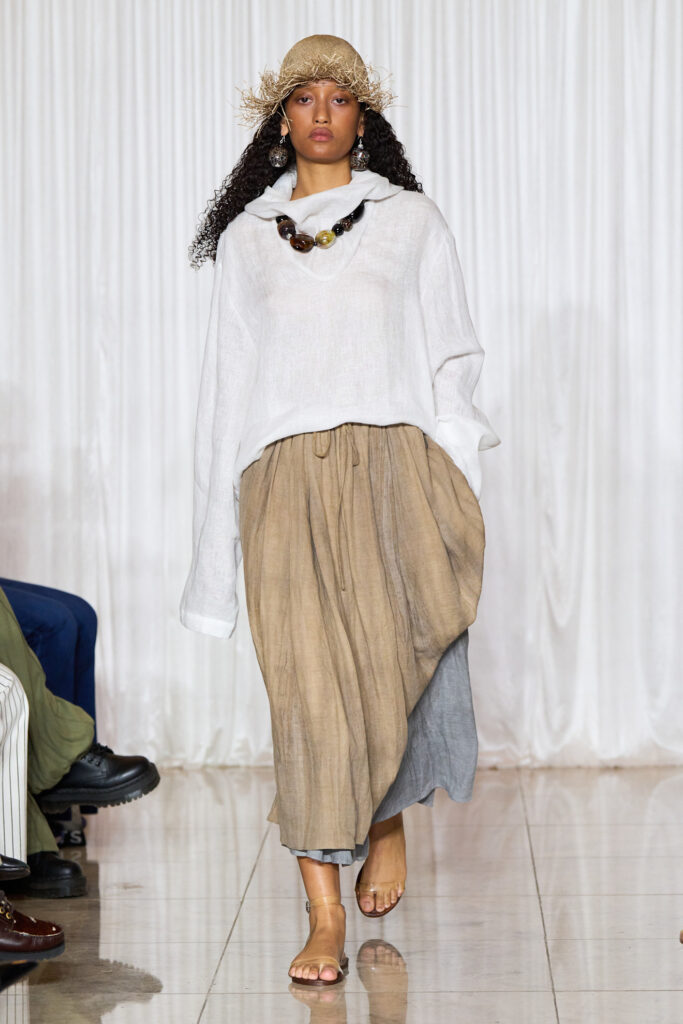
Set inside the historic Andaz London, the light-filled Grade II listed ballroom quickly made guests forget the chaos just a breath away on Liverpool Street. And as each model walked onto the runway, it no longer felt like just another show on the Fashion Week schedule. Instead, you could almost smell the salt and feel the wind beneath your hair — as if transported to a quintessential day on the Aotearoa coast, watching the tide come in and out to reveal new treasures and colours.
Debuting ‘The Tides’ at London Fashion Week felt like a homecoming for Rory Docherty, who launched his label in 2017. It was always going to be London for Rory. Born to Scottish parents, he’d previously spent formative years in the city working at Yohji Yamamoto and Miu Miu.
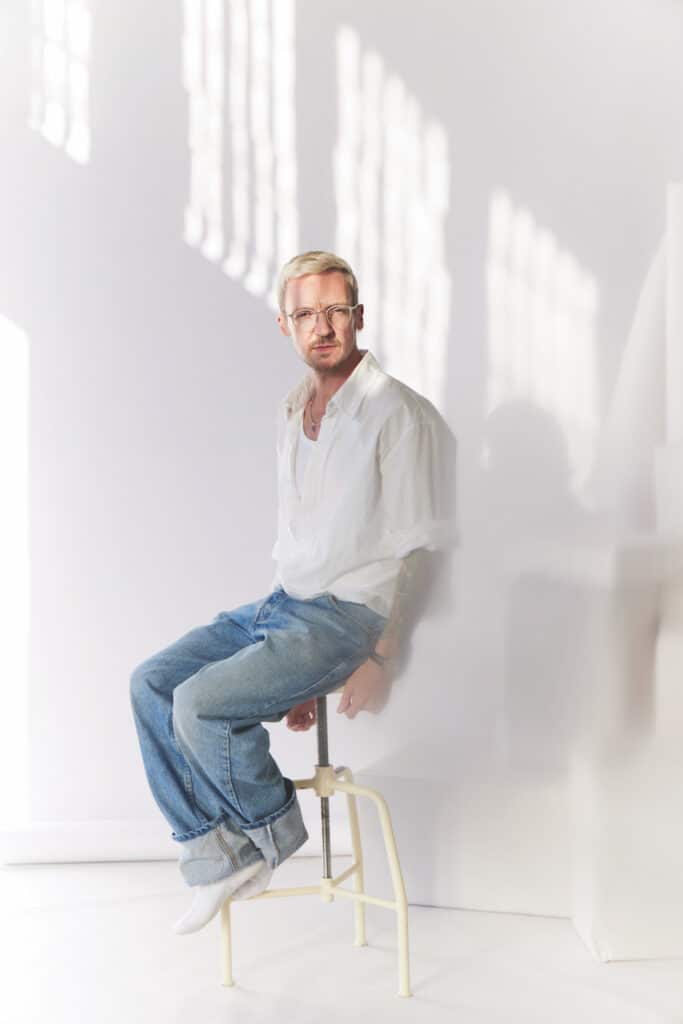
Landing only a week before the show, Rory had spent months planning virtually over a 13-hour time difference. It’s an unfathomable challenge that requires the most meticulous attention to detail, though true to his grounded nature, he quickly brushes over it. The effort paid off however, with his industry peers turning out despite the timezones on show day. On the brand’s Instagram Live, the feed was filled with support and fangirl-like comments from fellow New Zealand designers, including Claudia Li and Bobby Campbell Luke. A public showcase of the community that defines our small industry.
Amidst the post-show buzz and chaos, Fashion Quarterly contributor Yawynne Yem managed to catch the designer for a quick 20 minutes of reflection. She catches up with the ever-so gracious Rory Docherty to talk through the journey to London, for a brief pause before he dashed off to Paris on the Eurostar for a week of wholesale appointments. Read more below.
In conversation with Rory William Docherty
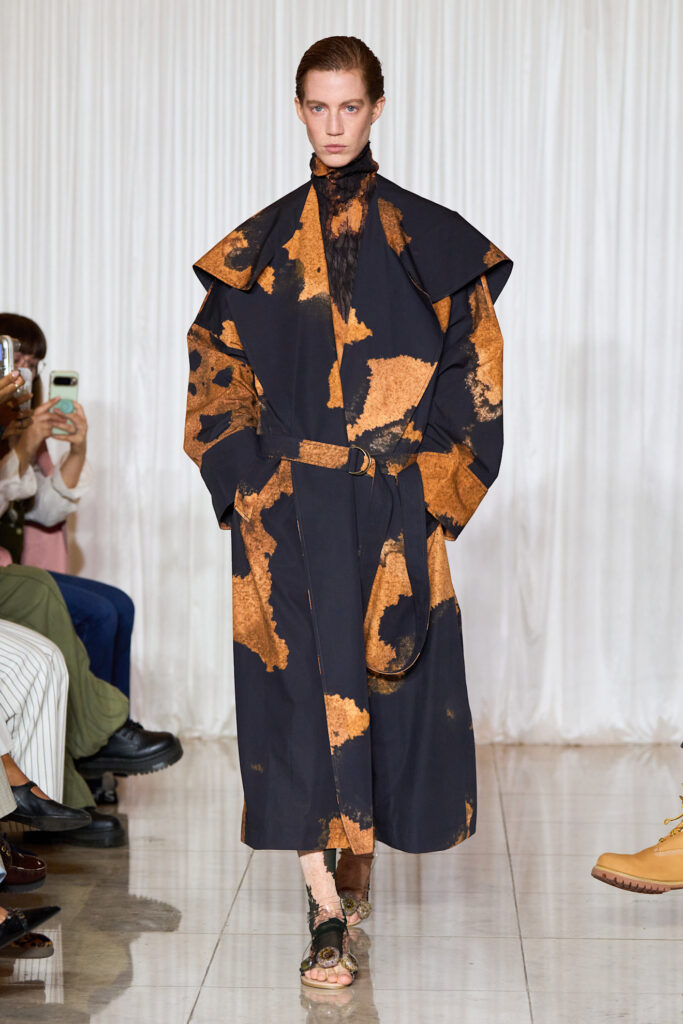
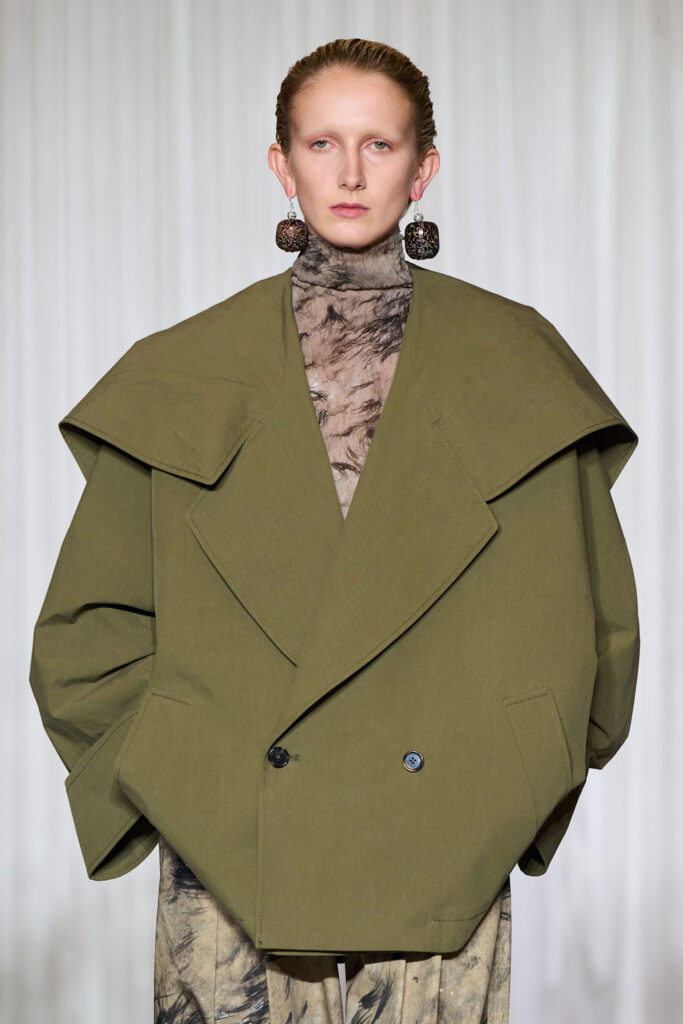
Rory, thank you so much for making the time. Let’s jump in – before the show, all I knew was the collection’s name. But as soon as those first five models walked out, I got it immediately. The first question that immediately jumped out to me was, which Aotearoa coastlines specifically inspired and shaped this collection?
Rory: Ha! I’m actually going to throw you onto speakerphone. I’m sitting next to my partner Jordan [Draffin] here, and because I’m brain-dead, he will be able to tell you where it was that we went.
Jordan: It was the Tutukaka Coast, just up from Whangarei. We were camping at Pataua South for six days.
Rory: Jordan knows the area and that’s why we went up there. I hadn’t seen that part of Aotearoa. It was nice to get away, because at that time we were super busy, and I like to decompress by getting out of the city and getting into nature.
From that first trip up North onwards, what became your favourite part of designing The Tides? It’s pretty special to picture you both in this rural campsite, to now showcasing the final pieces on an international stage.
Rory: I don’t know if there’s one particular bit, I genuinely love the process. The drawing and painting at the very beginning, or walking along the coastline and taking photographs of some sea lettuce that’s washed up onto the beach, or seeing the anemones on the rocks when the tide goes out. That’s what’s always exciting — seeing those things which are the seeds of the beginning of the collection. Then working on the fabric prints and seeing the first strike offs of the prints come through… Even though there are hugely frustrating moments in between, I’m something of a goldfish memory magpie. One shiny thing, and I’m happy and in love with the process again.


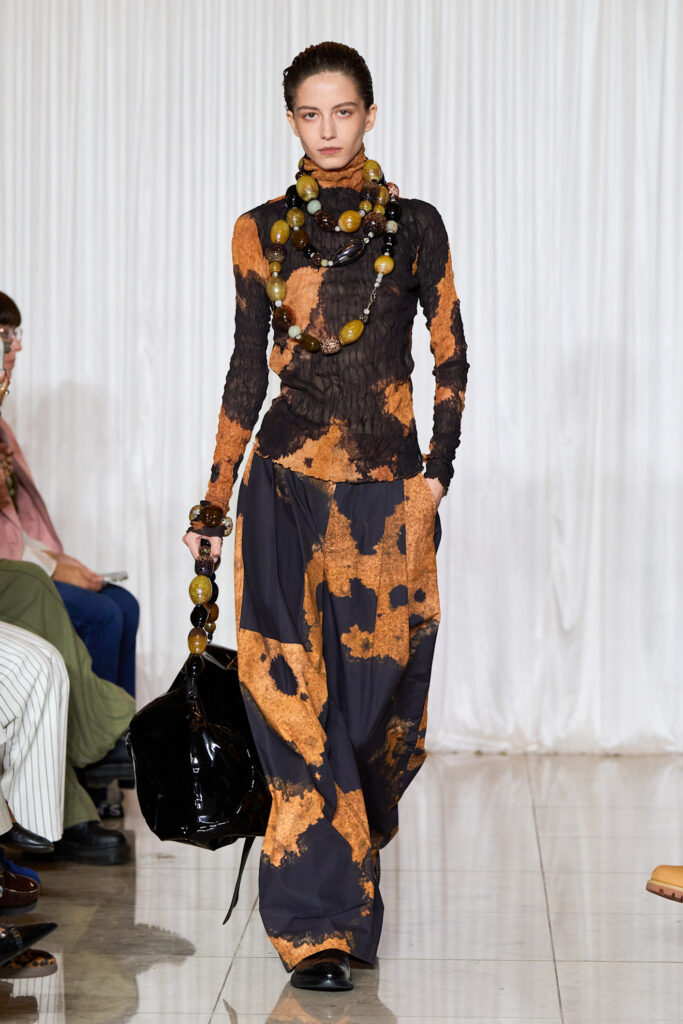
On that note of being a magpie, one of my favourite pieces was the black patent leather bag adorned with Grinter Glass beads. You also worked with Harris Tweed and Lyttelton Hat Co. How did these collaborations shape the collection?
Rory: I mean, I’ve worked with some people for quite a long time. Abby, who does some of the leather work, made the leather body of the bag. And Mel, who I’ve worked with for some time as well, she made the incredible patent leather jacket out of the same leather. Then, on one of our trips up to Whangarei, we came across Grinder Glass, and we worked with them closely to create the beautiful hand-blown glass beads and sea anemone baubles that were hand sewn to the jackets. It was actually Jordan who assembled all the jewellery himself, and constructed the handle and the little glass zip pole on that bag. It’s been really nice to kind of work with other creatives back home, and bring people on this journey as well.
Glass is such a different material from the fabrics that you usually work with, how did it change your typical design process?
Rory: For the most part, they were like separate jewelry pieces – earrings and necklaces and bracelets, so they kind of stood aside from the collection. But the bag you talked about, I personally hand-sewed all of the anemone glass baubles onto that, onto the green Harris Tweed jacket, and also the other bag. That was a very lengthy and slow process. I’m always quite involved in the making of those samples, because I think some of the designing still happens in that ‘making’ process.

Another thing that struck me was how magically the collection fit into the setting of the Andaz London. Tell me a little bit more about what that space meant to you.
Rory: It’s really worth noting – that beautiful location, the former dance 1901 ballroom with the incredible dark glass dome ceiling. It spoke to the history of London and East London, which obviously resonates with me. You’re inside this kind of glass-domed bubble filled with natural light, it was a little oasis away from the bustling city itself. We certainly did a lot of investigating and looked at a whole bunch of different options. But on seeing that space, it just felt right.
It also feels like no time since I watched your first show at New Zealand Fashion Week: Kahuria show in 2023. You’ve now built momentum across three very different stages, how have you found this journey shaping the brand internationally?
Rory: It’s certainly been a journey. Going from New Zealand Fashion Week to Australian Fashion Week to London Fashion Week, it’s been nice to have each time, a team of people around me that helped bring the vision to life. Along the way, more people have learned about the brand, what I’m doing and helped me elevate the expression of it. And after what we managed to achieve at London, hopefully that will just keep going.
What has the immediate reception been like following the show?
Rory: It’s been really positive. But it’s sort of mad when you’re in it and it’s all encompassing. We were the last day of London Fashion Week, and then immediately everybody decamps and runs off to Milan. There’s that kind of constant change in terms of that the media is always reporting on what’s next.

It must be quite a contrast for you as a slow-fashion designer. How do you find it?
Rory: There is that sense of, oh my god, you put months and months and months into it, and then there’s this burst of enthusiasm and reporting… But then everybody kind of moves on. I suppose as positive as that is, well — I feel I have to kind of stay. I am grounded in what I’m doing and happy with the process. I don’t lean on or really crave that gratification from media attention. Because I think if you do, then it’s going to be a pretty disheartening process. You have to love the process and enjoy what you’re doing, rather than kind of do it for that 15 minutes of fame after the show.
Of course, we’re speaking post-show, so tell me, I have to ask — what’s next for the brand?
Rory: We’re still standing here, working away, frantically trying to get everything ready and in time for ducking over to Paris on Sunday. We’re there next week doing wholesale appointments and a couple of media showings. Then we come back and head up to Scotland, where we’re off to see Harris Tweed. It just keeps going. During that process, at some stage, the next collection is going to be designed. It keeps going.
Your work always stands out to me as so thoughtful and intentional. With such a hectic schedule, how do you maintain the slower, more reflective part of your process?
Rory: I would love to say that I have a brilliant work life balance but I don’t. It is just constant work, you know, but I’m okay with that. It’s just sort of where I’m at at the moment. You need to put in the mahi to get the results.
Words: Yawynne Yem
Imagery: Launchmetrics/Spotlight.