

Landing a creative director role at a luxury fashion house is like playing musical chairs. There are fewer seats than contenders, and even if you nab one, the music soon restarts, and you’re left scrambling to keep it or swipe someone else’s. Things move fast at the top, with creative directors (CDs) shuffling between houses frequently and often dramatically, so breaking into the exclusive club is tough — particularly if you’re not pale and male.
A lack of diversity in the upper rungs of the fashion ladder isn’t a debate; it’s a fact. A study by global fashion education platform 1 Granary found that nearly 90 per cent of top designers are men. And although no one is disputing the creative nous of these XY- chromosome-wielders, the problem is that the numbers don’t stack up. In an industry powered, shaped, and mostly worn by women, how can almost all of the ‘best’ be boys?
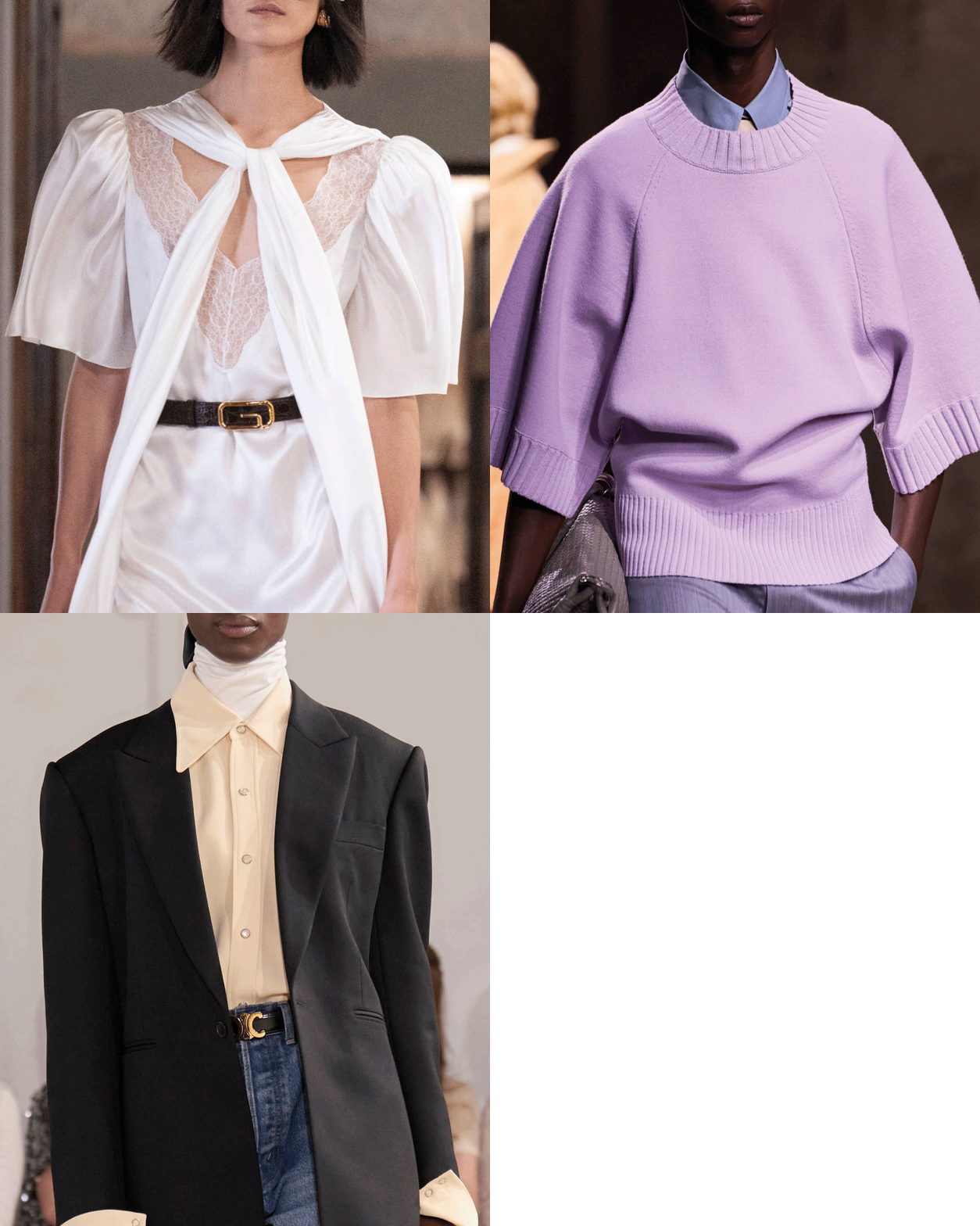
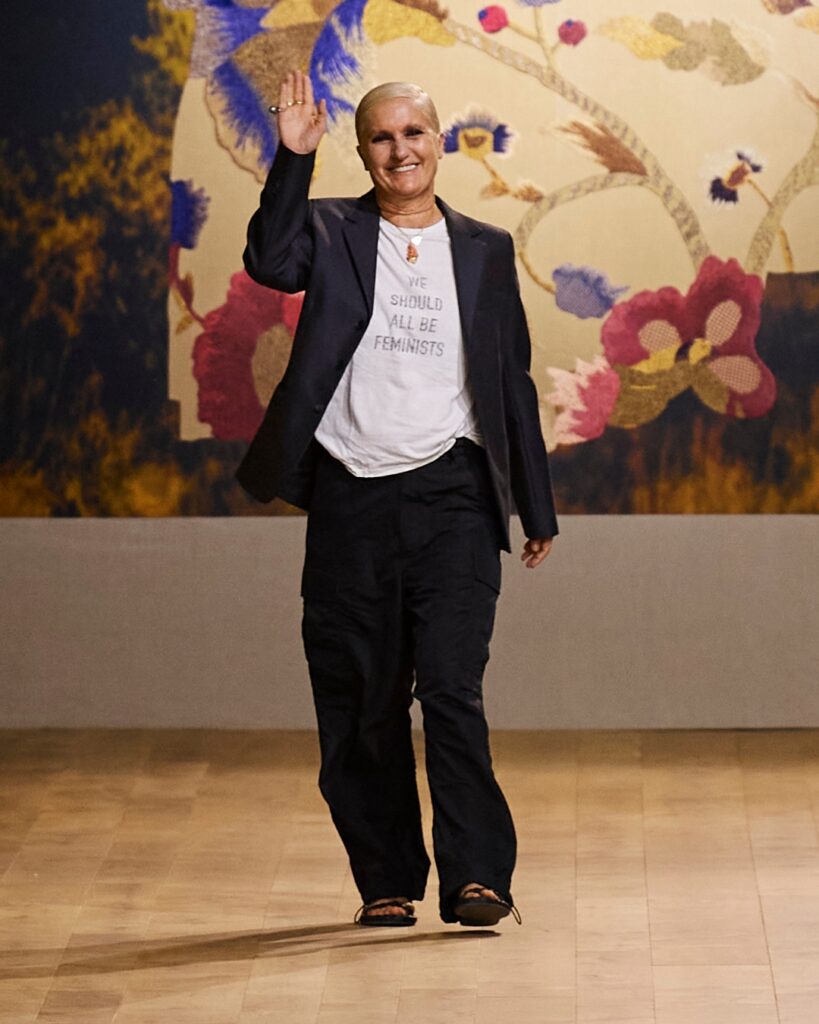
Let’s look at the power players. Multinational holding companies Kering and LVMH dominate the luxury space. Of Kering’s most prestigious houses — Gucci, Saint Laurent, Bottega Veneta, Balenciaga, McQueen, and Brioni — just one is currently helmed by a woman: Louise Trotter at Bottega Veneta. Over at LVMH, two of its 10 premier maisons are led by women: Sarah Burton at Givenchy and Camille Miceli at Pucci. It was three, but Maria Grazia Chiuri (Dior’s first-ever female CD) stepped down in May, and the house backslid by appointing Jonathan Anderson in her place.
The imbalance stems from a messy tale of history, sexism, and the usual suspects: maternity, menopause, and misogyny. And what it means is that women’s wardrobes are still being conceived through the male gaze, designed to suit how men think women should look, rather than how women actually want to feel.
Jennifer Whitty, a sustainable systems designer and researcher with a specialism in fashion, and a senior lecturer in design at Auckland University of Technology (AUT), is interrogating these patterns. After years of working as a designer and witnessing the glaring social, environmental, and equity issues firsthand, Whitty returned to academia to examine and address these systemic barriers. “It’s about questioning and critiquing the paradigm and these systems of oppression,” she says. “Trying to develop new mindsets, models, and systems for new fashion practices.”
One major roadblock in women’s way to the top is a lack of flexibility. Fashion doesn’t follow a 9-to-5 schedule, which makes motherhood particularly challenging. Designer Tory Burch famously left a role she “loved” at LVMH after having three children under four. As she later told Vogue, she launched her billion-dollar namesake label, “Out of the necessity of having a place to work that had flexibility and understood the challenges that women faced in managing being a mom and having a career.”
The notion that founding your own company could provide a better work/life balance is wild. When the majority of your workforce are young females, it seems counterintuitive not to support and retain them through maternity. French fashion pioneer Madeleine Vionnet had a crèche for her employees in her atelier and offered them paid holidays, maternity leave, and healthcare. The woman was born in 1876; my, how times have changed.
This ‘all or nothing’ approach endures, thanks, in part, to the endless talent waiting in the wings. Roughly three quarters of the students filing through the doors at AUT’s fashion design department are female, and not all are privy to the internships, long hours, and low pay that the sector demands. “Fashion is undervalued, seen as a feminised, less important form of design,” says Whitty. “Creative New Zealand barely acknowledges it, and it’s not even a core category in the Best Design Awards.” We devalue the industry and its people by diminishing fashion as a discipline. “So I love encouraging my students to be feisty, to stand up for themselves. Because that kind of compliant, docile attitude won’t get you anywhere.”
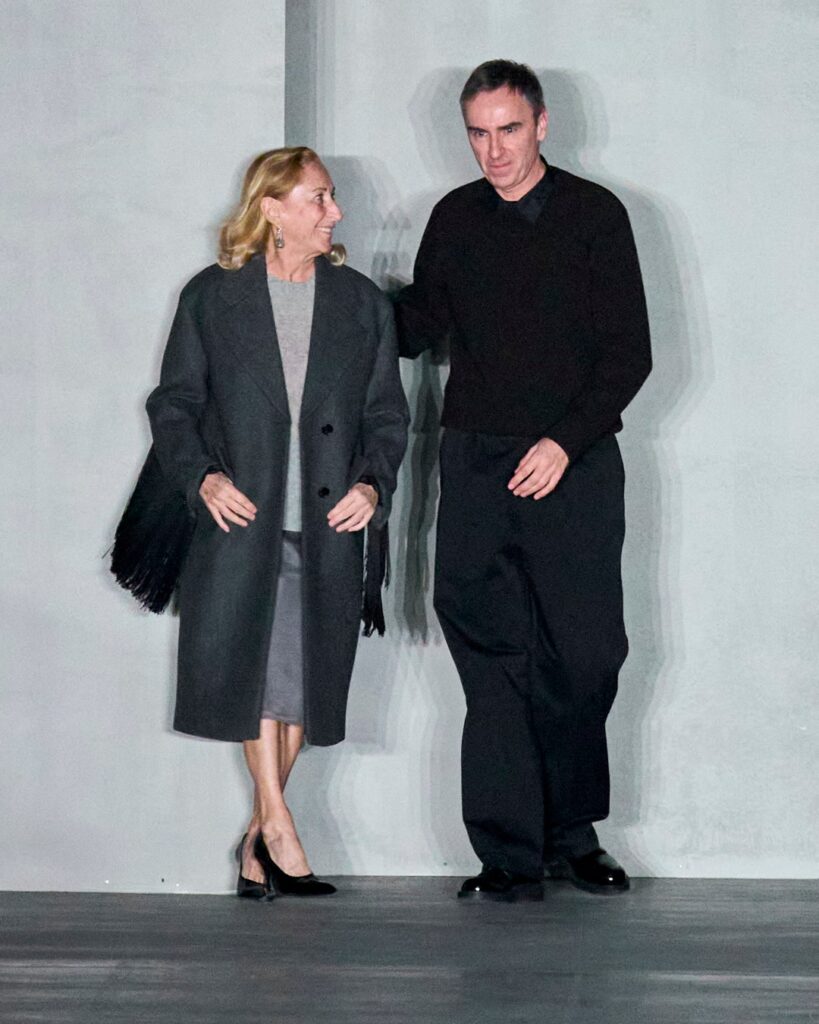
Of course, there are women at the table. Maria Grazia-Chiuri made history at Dior. Miuccia Prada’s tenure over Prada and Miu Miu has been a commercial and creative success. Phoebe Philo’s run at Céline is still lauded with the #oldceline, and her eponymous label carries that legacy into a new era. Simone Rocha, ROKSANDA, The Row and Khaite have female CDs, as do local labels Maggie Marilyn and Paris Georgia. But here’s the catch: most founded or inherited their brands.
And although they’re proving themselves without a hand up, the creative and commercial responsibility is heavy. That’s not necessarily the case for salaried CDs, with Jonathan Anderson once saying,“For me, fashion is exciting, and it should be exciting whether you get it wrong or right.” Failure is a luxury not many of these women can afford.
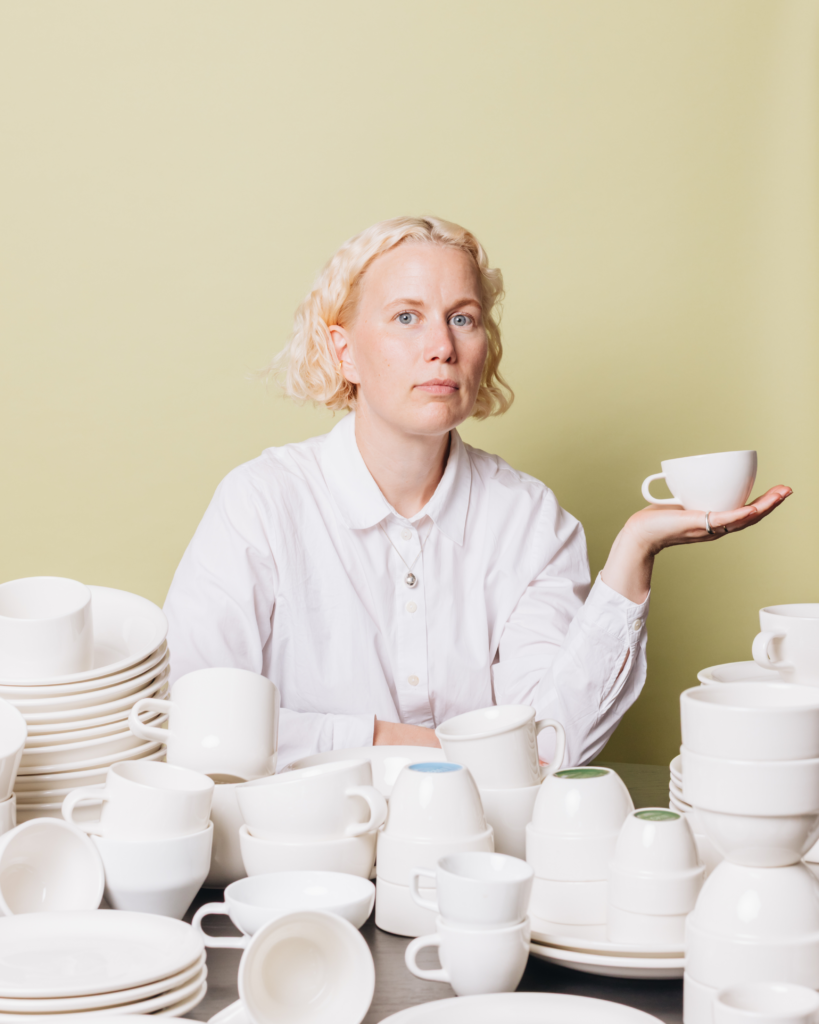
Anna Hoang, founder and creative director of Anna Quan, has travelled this self-paved path. A law graduate-turned-fashion designer, she was concerned upon graduating that people might consider her overqualified. “So I decided that I would start my own business to give myself a job,” Hoang says pragmatically. Focusing on modern tailoring, hers is not a story of overnight success, but of the steadfast perseverance required. It was three years of juggling a full-time job with fashion before her first wholesale supplier signed on, and now, as the company thrives, Hoang faces new challenges.
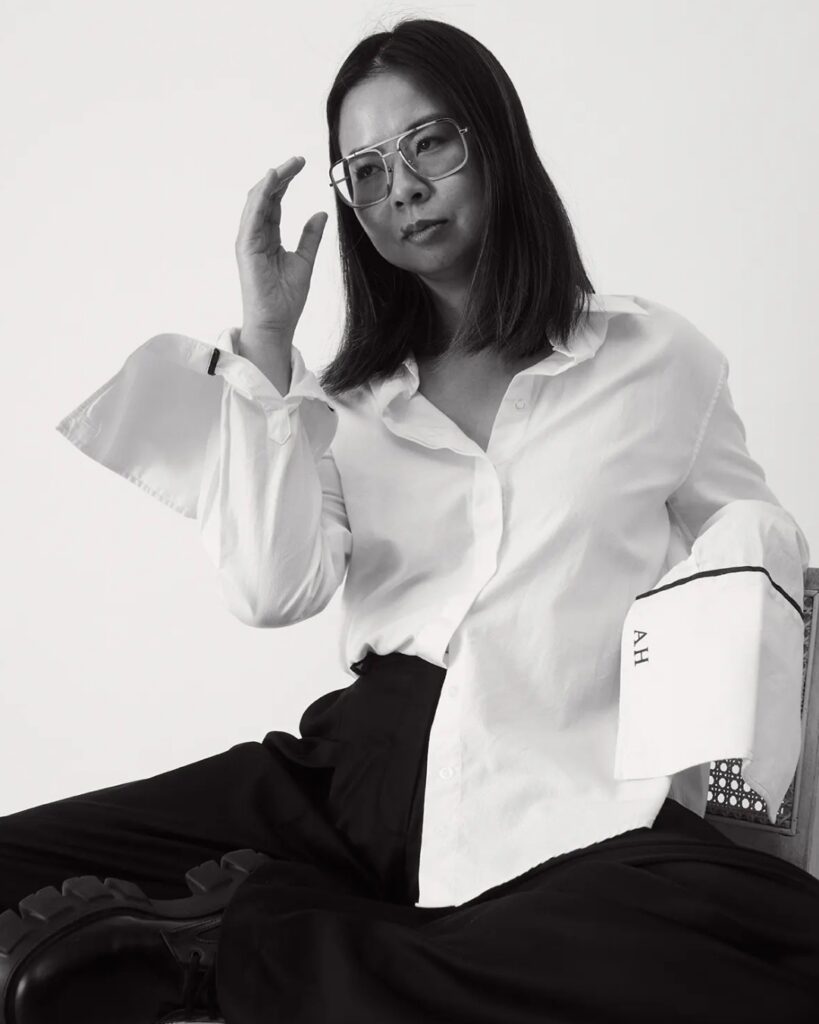
“It’s easy to feel ill-equipped to deal with the growth,” says the Sydney-based creative. “Most designers do not have the education, training, skill, distribution channels or relationships to get to that next level.” Building strong commercial and production relationships takes time, money and trust, and starting from scratch means starting on the back foot. But it also allows leading by example. “The big takeaway for me, as an employer, is to be conscious of the fact that there are these obstacles in place for women and people of colour, and you can choose to be conscious of that and what you want to do with it,” says Hoang. “People talk about diversity in campaign shoots and output, but I think the real issue is, who is behind that lens? Who is making the decisions behind the scenes?”
In her home life, Hoang’s husband is the primary caregiver for their two children because that’s what makes the most sense in their family. “I don’t want to say I’m fortunate because that should be everyone’s experience,” she says. “The question is, how do you create cultural change? If you want equality for women, you need to look at the men. Give them more responsibilities and parental benefits.”
There are signs of movement. Kering “strives” to close the gender pay gap and reach gender balance at all levels this year. Women make up 63 per cent of the group’s total headcount and 55 per cent of the board, but their single female CD highlights significant room for improvement. LVMH’s 2025 targets are similarly angled, shooting for: “50 per cent of key positions held by women”. With much of the year gone, the TAG Heuer is ticking.
But power doesn’t only sit in the Paris boardrooms. Buyers have influence, too and it’s time we use it. “Consumers need to factor in who they’re buying from — do they want to perpetuate in a patriarchal system?” asks Whitty. “We can speak out, name and shame, use our purchasing power. The age of visibility is here.”
This article originally appeared in Fashion Quarterly’s Spring 2025 issue.
Words: Harriet Cowie.
Imagery: Launchmetrics/Spotlight and Anna Quan.