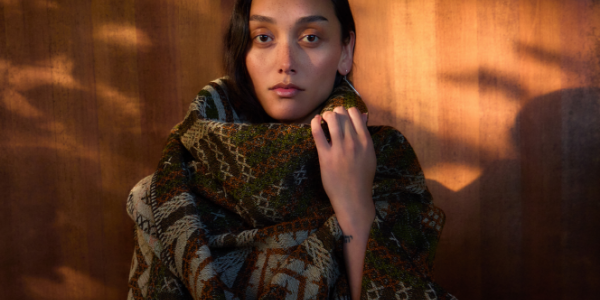


A piece of knitwear is perhaps one of the most intimate objects in our wardrobes. An outer layer beloved for its lack of structure, we turn to it in search of softness, of comfort, and to seek respite from modern life. Natalie Robb of Amélie, the knitwear label soon to evolve into Āhuru, understands this.
The Amélie story begins with a blanket. Known to her circle as Nat, the former sustainability consultant was at home with her family one day, when she noticed her brother knitting a blanket beside her. Perhaps it was sibling rivalry, or perhaps it was an invisible string pulling her. This simple mission to learn knitting quickly became a private Instagram account, which soon morphed into commissions from friends, and before she realised it — all paths had led to Amélie.
“I don’t like sending them down to oblivion and then not hearing anything,” Robb confesses when we catch up over a video call. “Them” refers to her pieces, not her loved ones. She’s speaking from a bright Hawke’s Bay morning, where she’s fresh as a daisy despite attending a wedding the night before. This unique sense of protectiveness permeates our entire conversation, and it strikes me that it’s a gift that can only be achieved by a founder who is quite literally tied up in every stitch of their craft.
The first Amélie collection was released in 2022, with the range continuing to be intentionally tight with cosy balaclavas, cardigans, and jumpers. Made-to-order styles now guide the business, with the bestseller being the Marlon Cardigan — a piece aptly named after musician Marlon Williams.
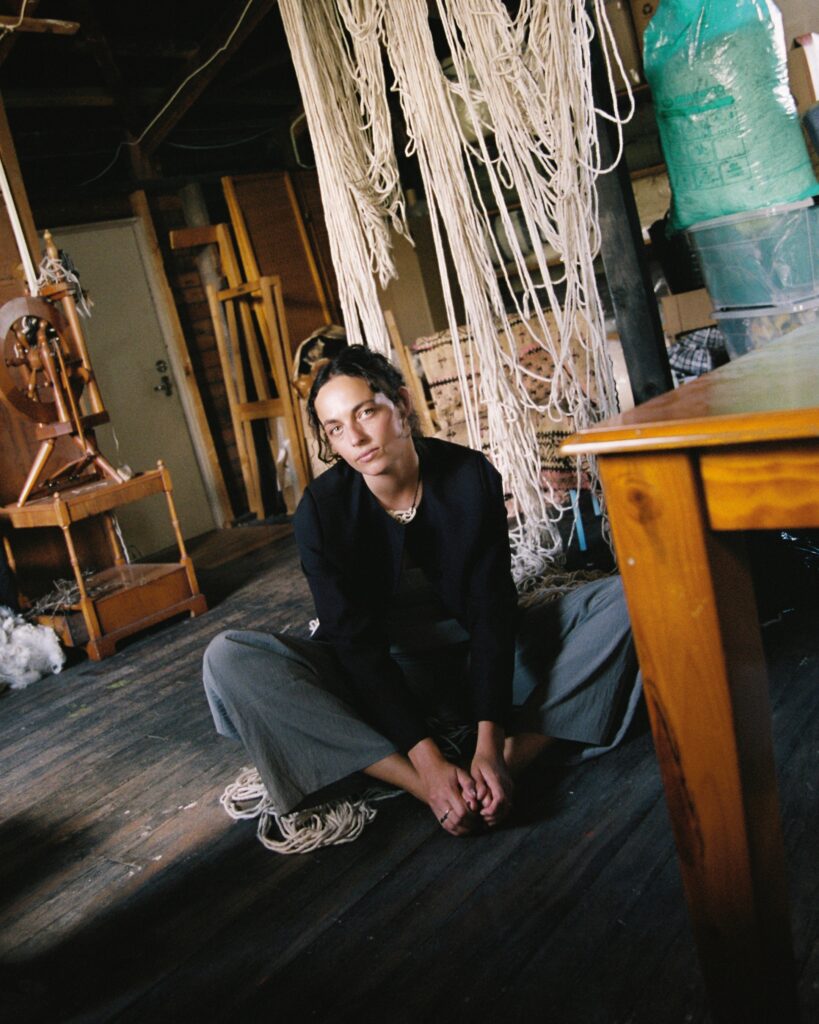
The tale of the designer’s muse is one as old as time. It’s a privilege typically bestowed upon a category of Ms: models, musicians, and multi-hyphenates. Williams may have a cardigan bestowed after him, but backstage at a show was never going to be the setting for an Amélie muse. Never one for the rule book, Robb discovered her muses at a local community crafts club in Māhia Peninsula on the East Coast. She was new amongst the nearly 250 residents in its beach town. Yet she showed up to the club alone.
One invitation to spin at the wheel later, and she was firmly indoctrinated into the world of her “angels”: Barb, Mau, Annette, and Sue. “They’re all 65 plus in age, and they have all got this amazing generational knowledge and traditions that they’ve been passed on from their grandmas, and sometimes their granddads too,” she explains. “These women, they’re mainly retired farmers. They live in such a remote part of New Zealand. But they all have bonded so much over their love of craft and being part of a community within a remote [town].”
This appreciation for rural Aotearoa is a unique one within the fashion industry, in which many of Robb’s peers have grown up exclusively in the cities of Auckland and Wellington. But she’s been everywhere. Her formative years were split across Ararimu, Matamata, and Geraldine. “Everyone should go rural,” she says. It’s a deep love that shines through in the brand’s unique campaign imagery, often shot in unfamiliar towns such as her beloved Māhia by long-time collaborator and friend photographer Holly Sarah Burgess. She explains that, “It is important for me that I can share as much of that experience and connect these worlds together.” To Robb, viewing rural Aotearoa within a fashion lens is putting it “on the main stage”, and she adds that it is “inherent to the brand now.”
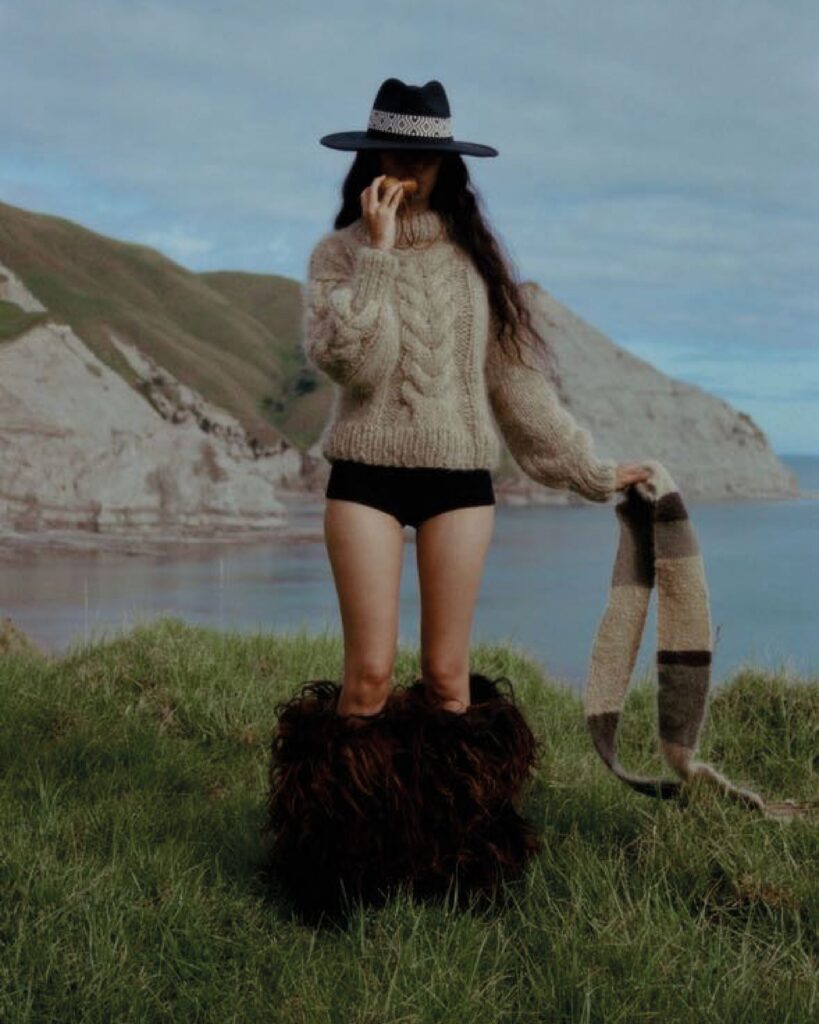
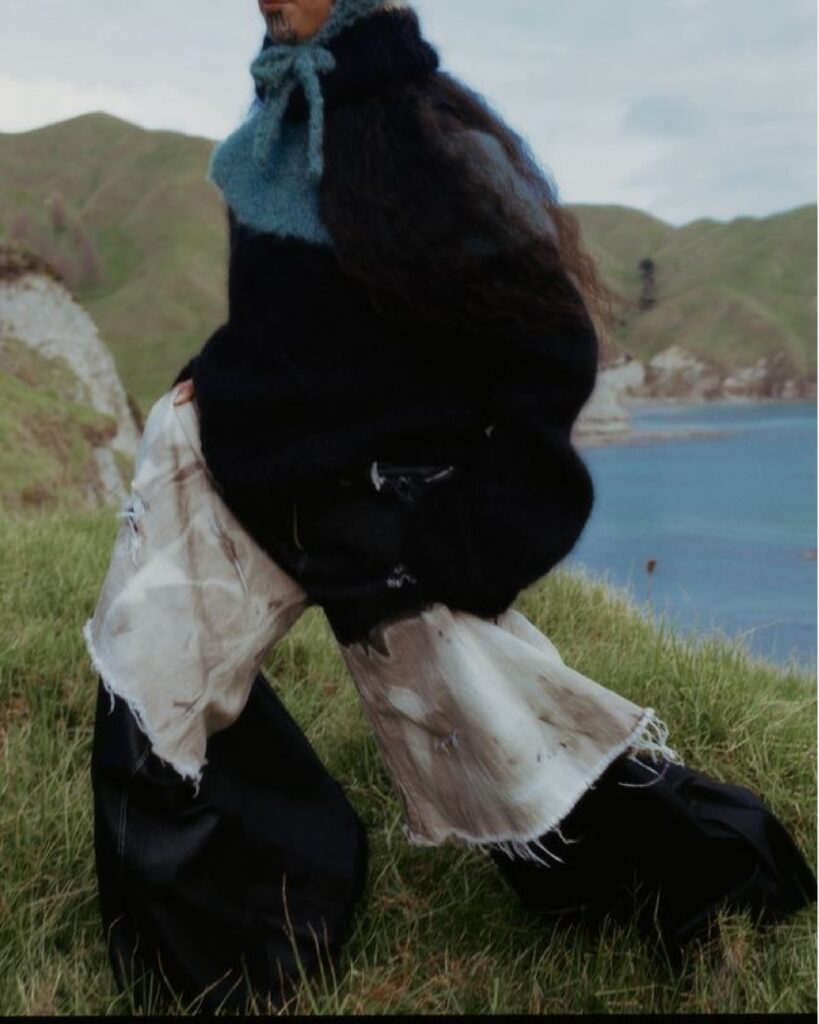
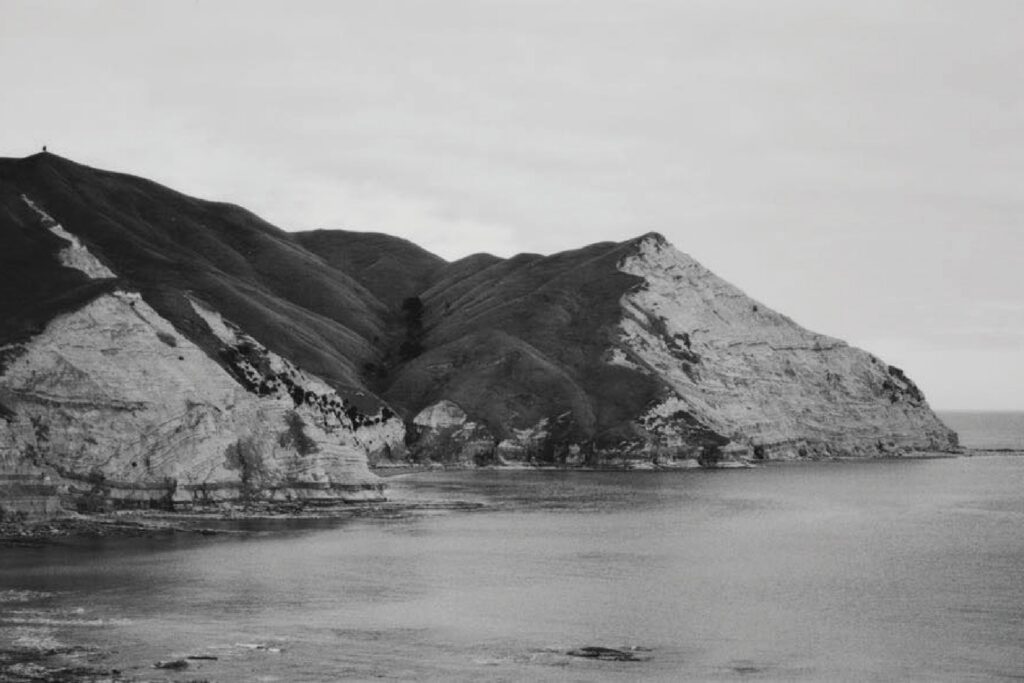
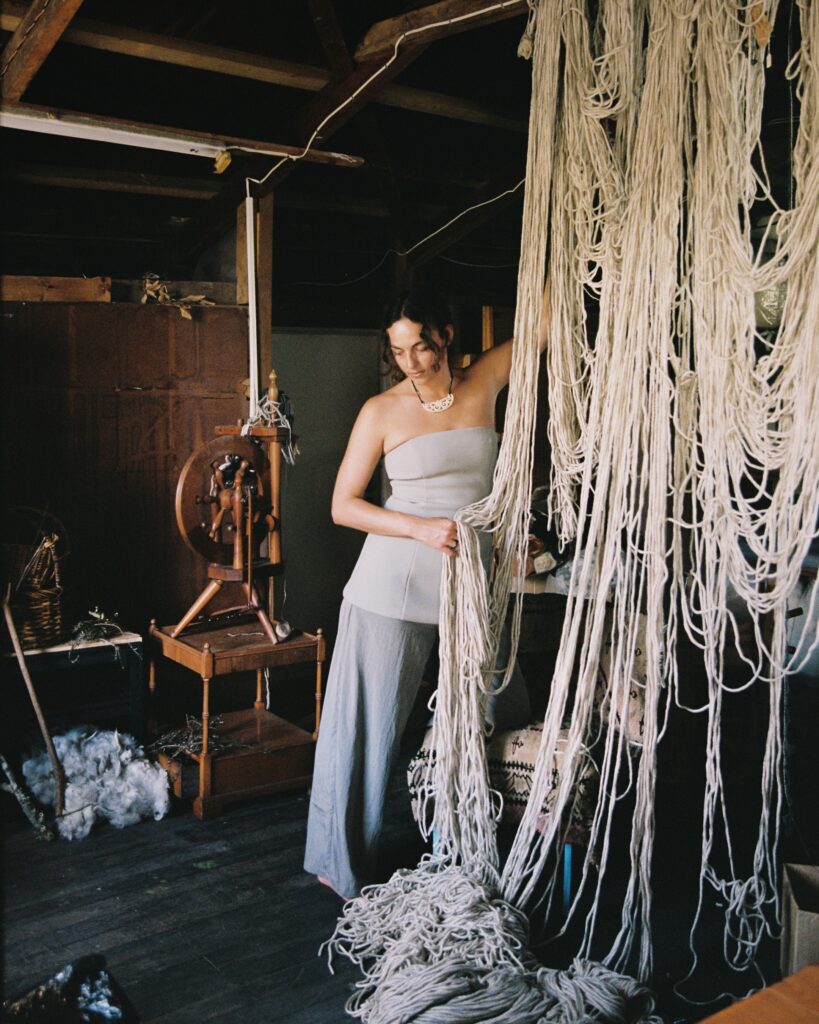
Four years on, the Amélie evolution has stayed rooted in this kaupapa but has also moved in rhythm with Robb’s own expanding skill set and guidance from her Māhia angels. “Learning from them and understanding the craftsmanship that goes into every single part of making a real homespun [knit], from fleece pick, [to] your neighboring thumb, all the way through to the end product.” She had originally begun with just knitting, but now her craft extends to weaving, hand-dyeing, and crocheting. Her one kryptonite? Spinning raw wool into yarn. Ironic, considering this was the first string that connected her to her Māhia muses. It’s a team effort though, and Robb’s supply chain now encompasses a small, trusted team of women who spin yarn for her locally.
This effort was recognised in 2025, with Amélie taking home two awards at the FQ Fashion Awards, winning both the Rising Star and The Emerging Designer Award. Robb describes the win as “insanely unexpected.” It’s opened a new chapter for her to commit full time to the brand. As part of The Emerging Designer Award prize, she will also take residence at The Shelter for six months. This residency arrives at a transformative time for the brand.
In April, Amélie will become Āhuru. A te reo Māori word that means to be cosy, comfortable, and warm. The name is one that has quite physically sat with Robb within this very context — it’s inscribed above the fireplace in her Māhia home. The process of a name change is an emotional one for any founder, not to mention an achingly admin-heavy one. But in speaking to Robb, Āhuru feels more like homecoming for the brand, an immortalisation of Māhia.
The name perhaps is more meaningful than ever, following Robb’s departure from her beloved Māhia for Tāmaki Makaurau in the middle of last year. “I was so lucky to be absorbed in a completely old Te Ao Māori world,” she says of that time. Now living in Grey Lynn, just moments away from long-time fashion friends, she has found herself able to “bounce ideas off” an inner circle of the new fashion guard, including Rebe Burgess (REBE), Joshua Heares (Porter James Sport), and Lauren Tapper (Harris Tapper).
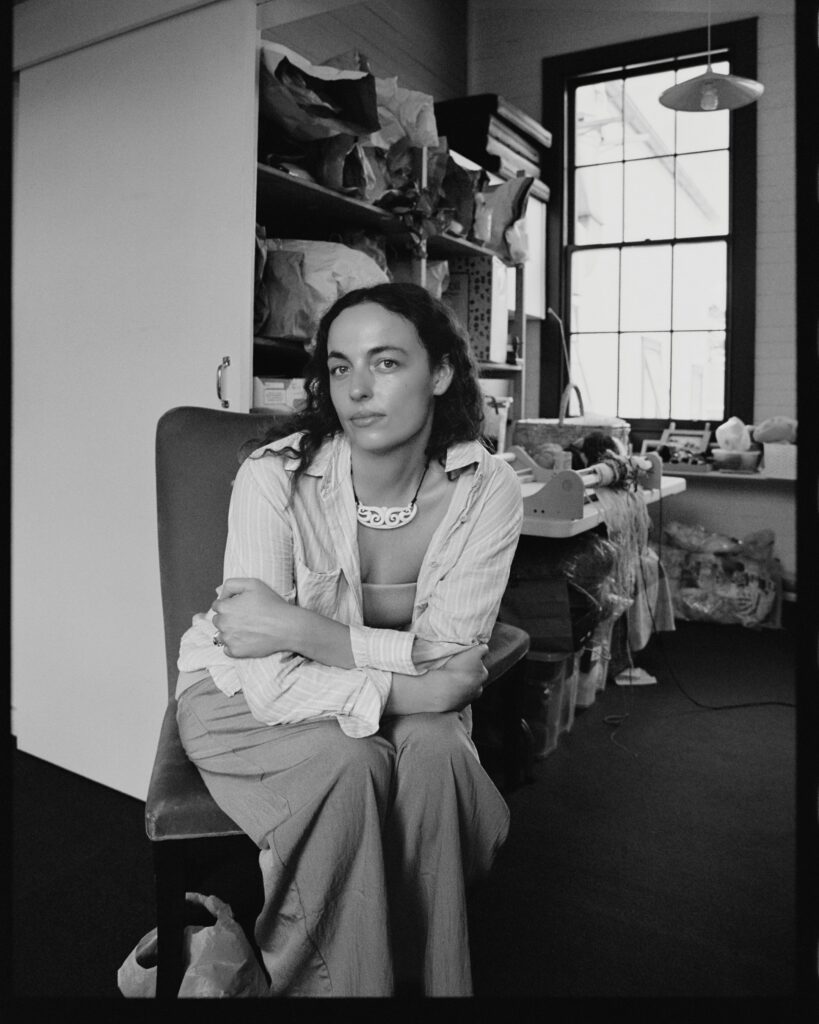
Liz Mitchell is another mentor to her, she adds, bonded through “that shared love of wool”. It’s a contrast to the craft community group where Āhuru was born, but a testament to Robb’s ability to connect.
The first collection under Āhuru will be the exhibition opening at The Shelter. It will feature 15 knits, alongside the first of multiple woven wall-hanging pieces. Robb has found herself deep in her roots during the collection process. “I’ve been doing natural dyeing, using the whenua around my home and trying to find whenua that is native to New Zealand.”
“It’s understanding when things bloom, when they die, what their plants look like for the year.” She’s been experimenting with kawakawa, pōhutukawa, and harakeke, which will all feature as colours in the upcoming exhibition. Future collections might also soon be shaped by the seasonality of these native plants. “I do have to think about dyeing as an annual process,” Robb says. She jokes that when her partner comes home from his 9 to 5, she’s often being “a witch” in the kitchen.
And when the time comes for guests to pick up a knit, they will be holding more than just wool. The yarn that Robb has been dyeing is a collective mission by her Māhia wahine, spun “from fleeces that are from farms of family or friends of theirs,” Robb says. The locality of her supply chain never fails to stun me during our conversation. The opening of this exhibition will allow a new kind of spinning, one under the spotlight for her collaborators. She’s flying all four of them up to attend. “I just really want to show the women that I learned from down in Māhia. They are just incredible fibre artists,” Robb says.
The fashion industry might have been a home she’s fallen into, but every step within it has been full of intention. The speed or scale of collections was never the challenge for her when starting out in the industry — it was staying aligned. “It’s agreeing on the kaupapa, on the thing that you want to do and being happy with it,” she says. If it’s tradition and generational knowledge that have formed the map for Āhuru, then it is Robb’s soft power — her ability to join people together — that keeps us all wrapped and warm. It’s a power that’s most certainly better than a blanket.
This article originally appeared in Fashion Quarterly’s Autumn 2026 issue.
Words: Yawynne Yem
Natalie Robb portraits: Dylan Martin
‘A love letter to Te Wairoa’ campaign imagery: Holly Sarah Burgess