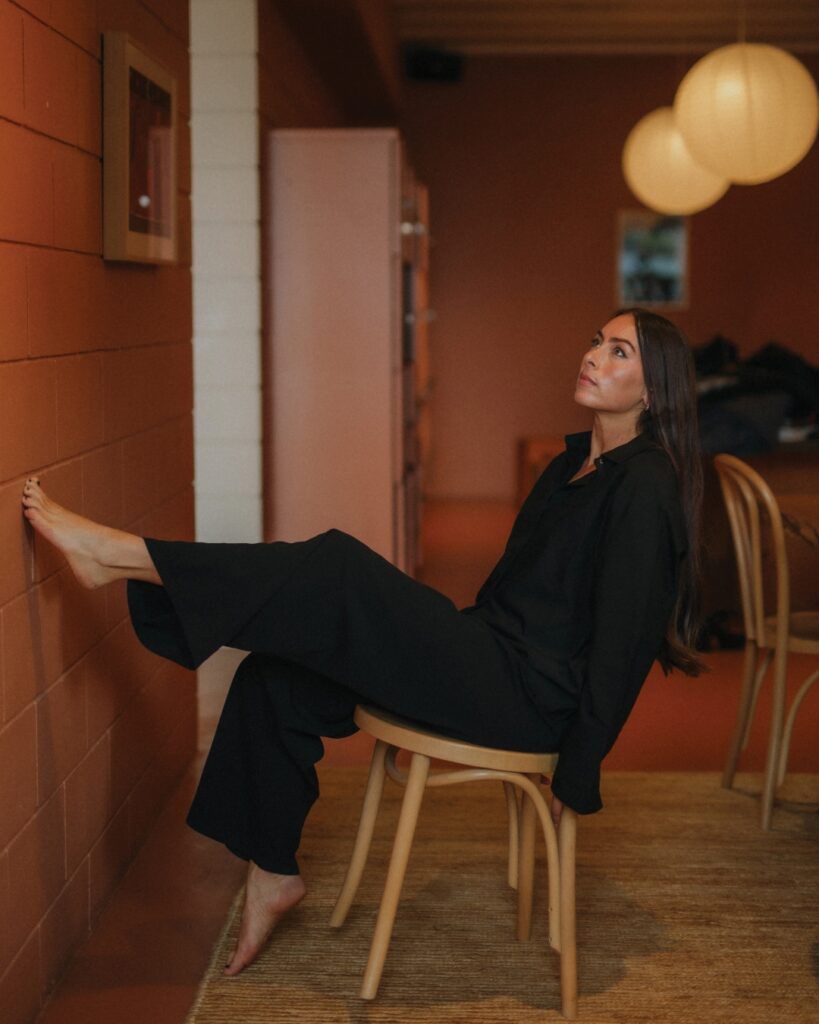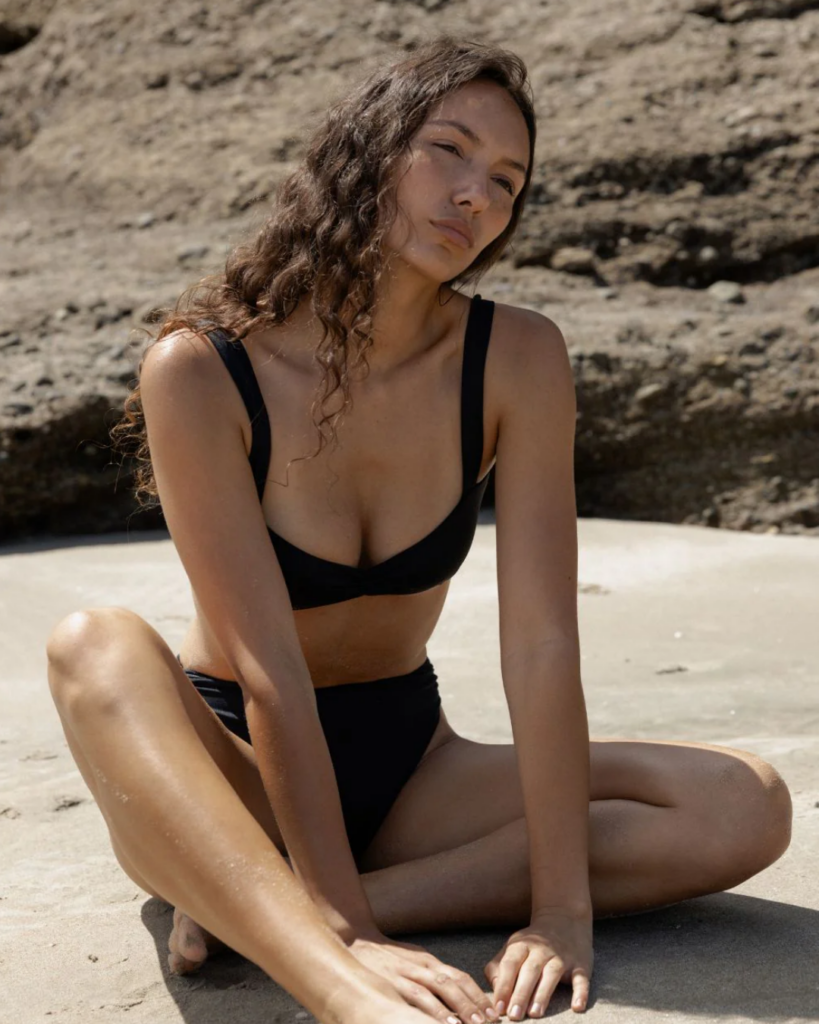


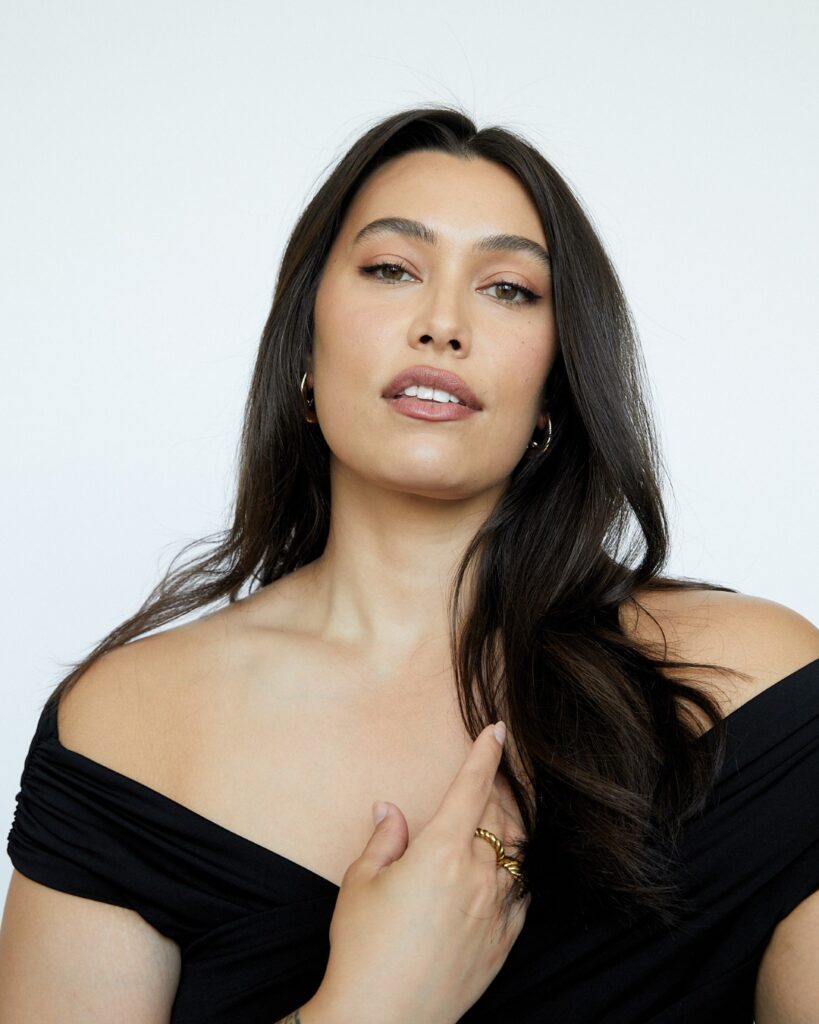
Isabella Moore has a presence that lingers long after she leaves the room. Whether stepping onto a runway, performing on an opera stage, or simply walking through the streets of London, her energy is magnetic — equal parts poise, humour, and grounded authenticity. A New Zealand-born Samoan with a heritage she proudly calls a “fruit salad,” Isabella has built a career that moves fluidly between fashion and music.
She recently appeared in ‘Cutting the Curve’ – a powerful RNZ documentary series by Evelyn Ebrey and Julia Parnell exploring body diversity in fashion and the industry’s troubling regression toward ‘diet culture’ following the rise of body positivity and curve models.
From growing up raiding her mother’s bold, colourful wardrobe in Auckland to sharing her journey as a curve model in ‘Cutting the Curve’, she has turned vulnerability into strength, creativity into expression, and kindness into a signature.
In this Q&A, Isabella opens up about following her instincts, embracing her heritage, and redefining what it means to show up as yourself in every space you occupy.
In conversation with Isabella Moore
Let’s get up to speed. Tell us a bit about you and your career to date.
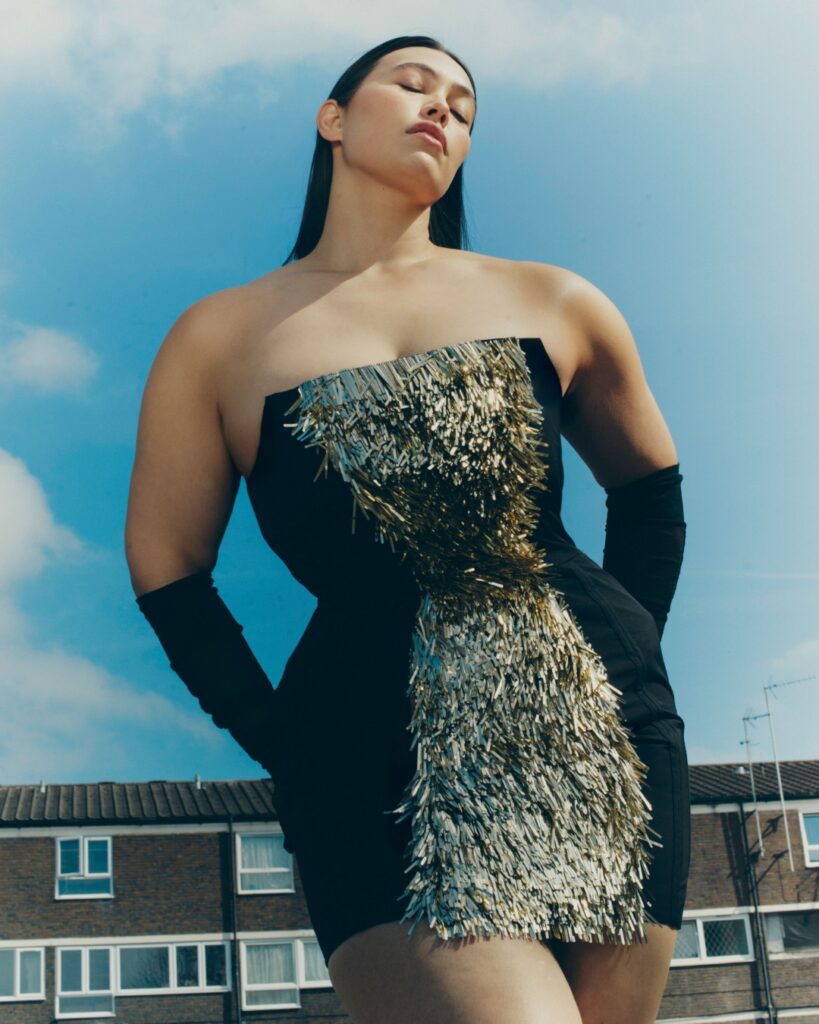
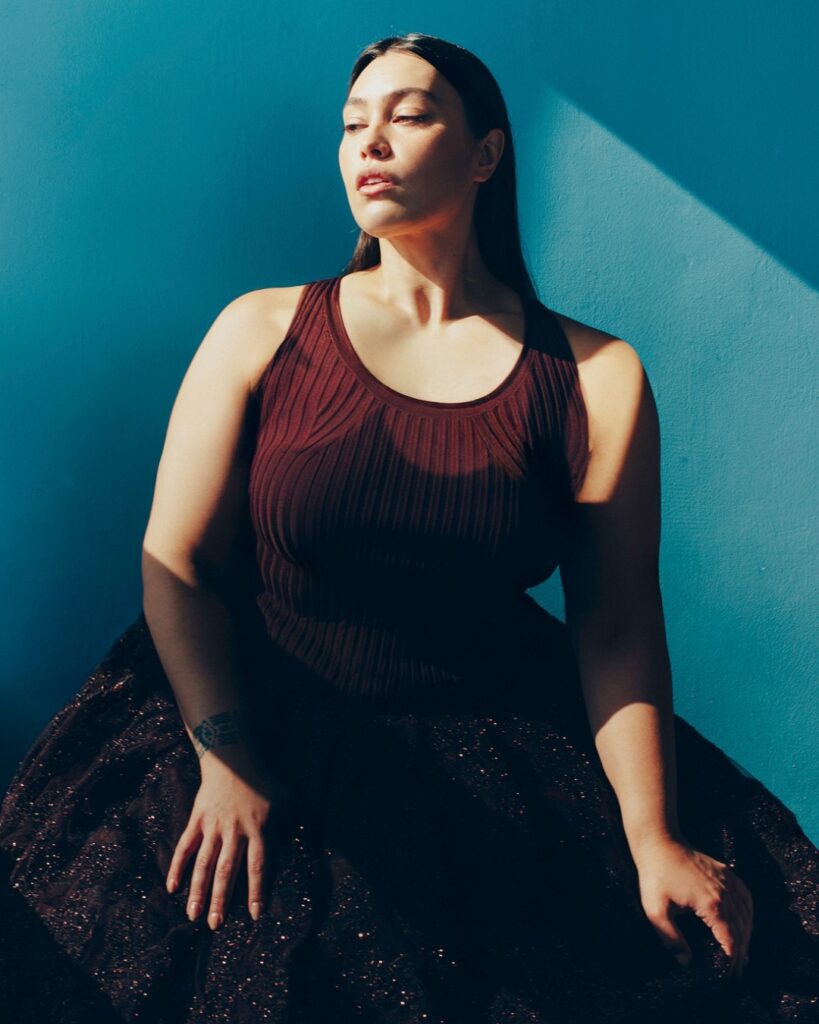
I follow my creative passions, and the opportunities that life has presented me with and they have driven my careers as both an opera singer and model. As an opera singer, I’ve performed in Aotearoa, Samoa, Australia, Europe and the UK mostly for high profile events and to represent Aotearoa and Samoa. There’s nothing quite like connecting with an audience through music.
My modelling has also taken me around the world for campaigns, e-commerce, runways, commercials, and more. A kind of performance in its own way, modelling has given me another way to creatively express myself. It’s also allowed me to challenge beauty standards; my presence has stood for body diversity in the industry and, more personally, has helped women who’ve felt othered because of their size feel seen and included.
Both careers have really tested me in terms of vulnerability and resilience, but I’m still on my journey and will continue to show up; whether that’s in front of the camera or on stage.
What is your earliest memory of fashion?
My mother was my first fashion icon. Growing up I remember she always took great pride in her appearance and the way she styled her outfits. She had many subscriptions to magazines and fashion catalogues, and so I would spend a lot of time flicking through them. I also spent a lot of time raiding her wardrobe and stealing more than just a few items of clothes (sorry Mum). Mum’s style is very bold, colourful, feminine and always very polished.
How would you describe your personal style, and what influences it the most?
I would say my style is a mix of timeless elegance with a modern edge. I often dress to my mood. My style changes depending on how I’m feeling or what inspires me. Being in the fashion industry, I am exposed to trends and if an aesthetic speaks to me then I’ll add it into my wardrobe. I love incorporating Polynesian touches as part of my styling, especially jewellery or accessories as I’m super proud of my heritage. I’m big into op-shopping and wearing vintage pieces; giving clothes a second chance but also finding really unique, one-off pieces. Right now, I’m aspiring to a modern romantic aesthetic with a whimsical peasant-witch twist (I wore bloomers the other day and loved it).
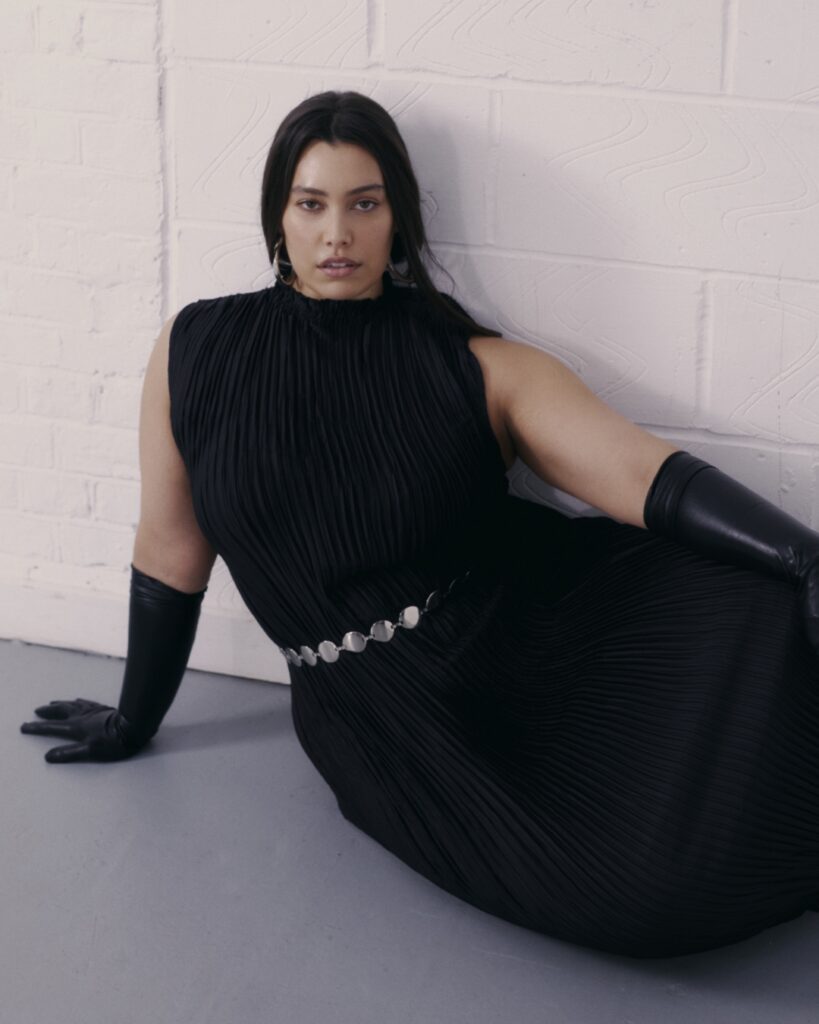
You’ve recently shared your experiences as a curve model in the documentary series ‘Cutting the Curve’. What has it been like to have such an intimate part of your journey captured and broadcast so widely?
Terrifying yet so fulfilling. It felt really good to be so honest. I learnt a lot about myself and although I found the process so scary because of the vulnerability required of me, it helped me face a lot of truths and gave me even more self-awareness. I’m very grateful. The docoseries helped me embrace myself more authentically and let go of pressures I was feeling around who I should be/what I should be doing, and I’m finally giving myself permission to just be me.
What do you hope people take away from the series?
Number one take away: Bodies aren’t trends. In my opinion, there’s a lack of humanity and kindness in fashion. I want people, especially women to challenge the beauty standards and rules they live by. Question them and make decisions for yourself. I don’t think we realise how much internalised fatphobia we still have; it still seems to be our default setting. Take back your power and don’t let others dictate how much worth you place in your looks or the size of your body. There is a kindness issue with the fashion industry, the issue is not with you. I would love for bodies to be neutral and not deemed good or bad.
What’s one thing you wish you could tell your younger self?
You are capable. You are so much more than the way you look, your size, or what society calls your flaws. Believe in yourself! You deserve to have a wonderful, magnificent, thrilling, and joyful life, and the way you look should never define your quality of life. Trust yourself, trust your instincts, and keep leading with kindness.
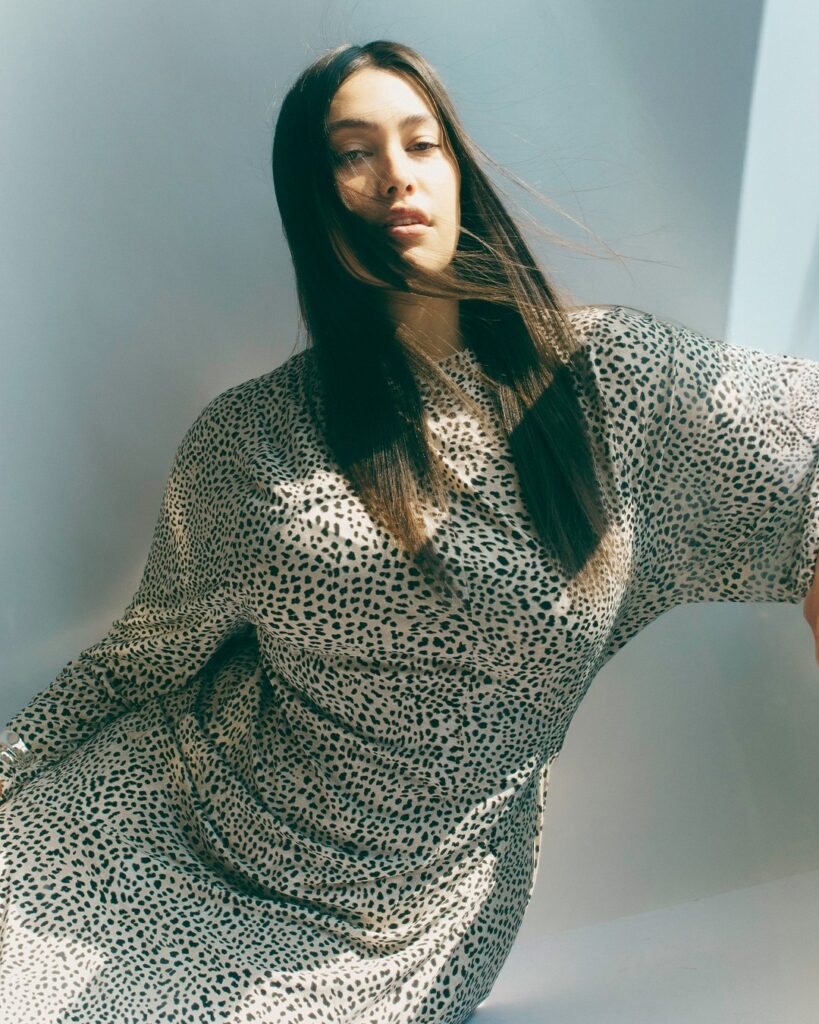
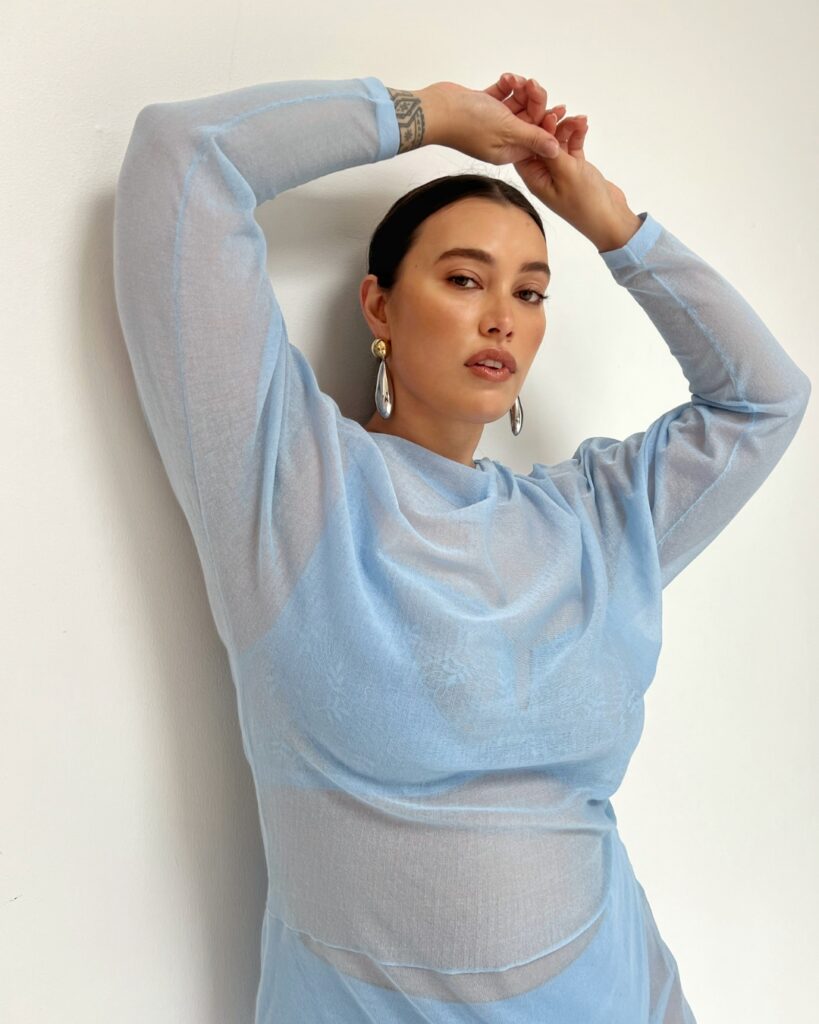
Are there any New Zealand designers you gravitate toward or that more people should know about?
I gravitate towards designers who have authentic inclusion at their core. Ruby is a brand I am truly grateful for, as they consistently strive to be inclusive and recognise that bodies aren’t trends. In the docoseries, Ruby’s designer and creator Emily Miller-Sharma, shares her belief that bodies should be viewed neutrally; there is no ‘good’ or ‘bad’ body, and I totally agree. We also spoke with Lost and Led Astray designer Sarah-Jane Duff, who champions fashion for plus-size women and is a passionate activist for diversity. I’m yet to own any of her pieces, but when I’m home later this year, one of my first stops will be her studio on K Road!
What trends do you think everyone will be wearing this time next year?
I’m not completely sure, but I would love to see more people embracing aspects of their culture and heritage in their styling. I love to see people weave elements of their traditional wear into modern fashion. It celebrates individuality and helps open the Western world’s eyes to different types of beauty. I’m not gonna lie, I’ve also loved seeing the Shakespeare-inspired trends popping up in the media recently; soft tailoring, voluminous sleeves, ruffles, corsets… they satisfy all my operatic, romantic, and dramatic dreams!
What do you find to be underrated right now?
Kindness > Coolness. Call me a cringey millennial, but I think we should create our own trends, our own rules, and stop trying to be ‘cool’ or ‘exclusive’. Kindness is so underrated. We miss out on so many opportunities when we focus on impressing others over being genuine; when we hide behind the status quo instead of showing up with openness and warmth. Kindness opens doors where coolness shuts them.
Quick-fire questions
The next item on my wardrobe wishlist is… Vintage cowboy boots.
The book currently on my bedside table is… Kingdom of Ash by Sarah J. Maas.
If you could only save one item in your wardrobe, what would it be? My mum’s leather jacket.
My favourite place to dine… London: Fazenda (Brazilian churrascaria, ££££) or Al Arez (Lebanese, £). Auckland: Family To’ona’i (Island food, priceless) or Dear Jane (Brunch, $$). Wellington: Sweet Mother’s Kitchen (Southern (US) Fusion, $$).
The song I currently have on repeat is… Any Josh Tatofi song.
Three beauty products I can’t live without… Medik8 Hydr8 B5 Serum, Dr Althea 345 Relief Cream, Ultra Violette Supreme Screen SPF50+.