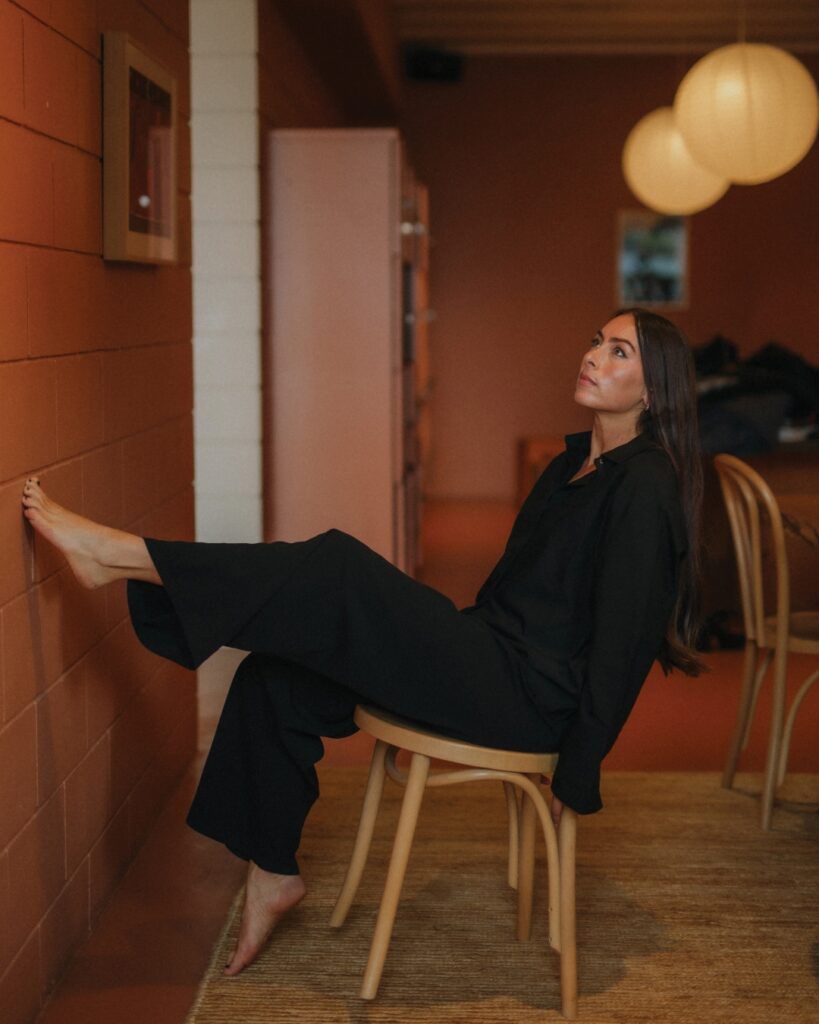


In a world where fast fashion and trends often dominate the style conversation, Natua Kaa-Morgan’s aesthetic emerges as something far deeper — an intentional expression of identity, culture, and care. Her style is grounded in ancestry and connection, yet never rigid or predictable. Instead, it shifts and swells like the waters that inspire it.
By day, Kaa-Morgan is an educator at Te Wānanga o Aotearoa, weaving kaupapa Māori into every facet of her mahi. But her influence extends well beyond the classroom. Through her vibrant social presence at @na_teatua, she showcases not only her impeccable style and thrifted fits but also her deep knowledge of Aotearoa’s fashion landscape. Her ongoing video series Hinenui te Pūweru: Aotearoa Fashion is a standout —thoughtful, well-researched, and unapologetically focused on uplifting Māori and Pasifika designers. This combination of style and cultural stewardship makes Kaa-Morgan one to watch — and one to learn from.
In conversation with Natua Kaa-Morgan
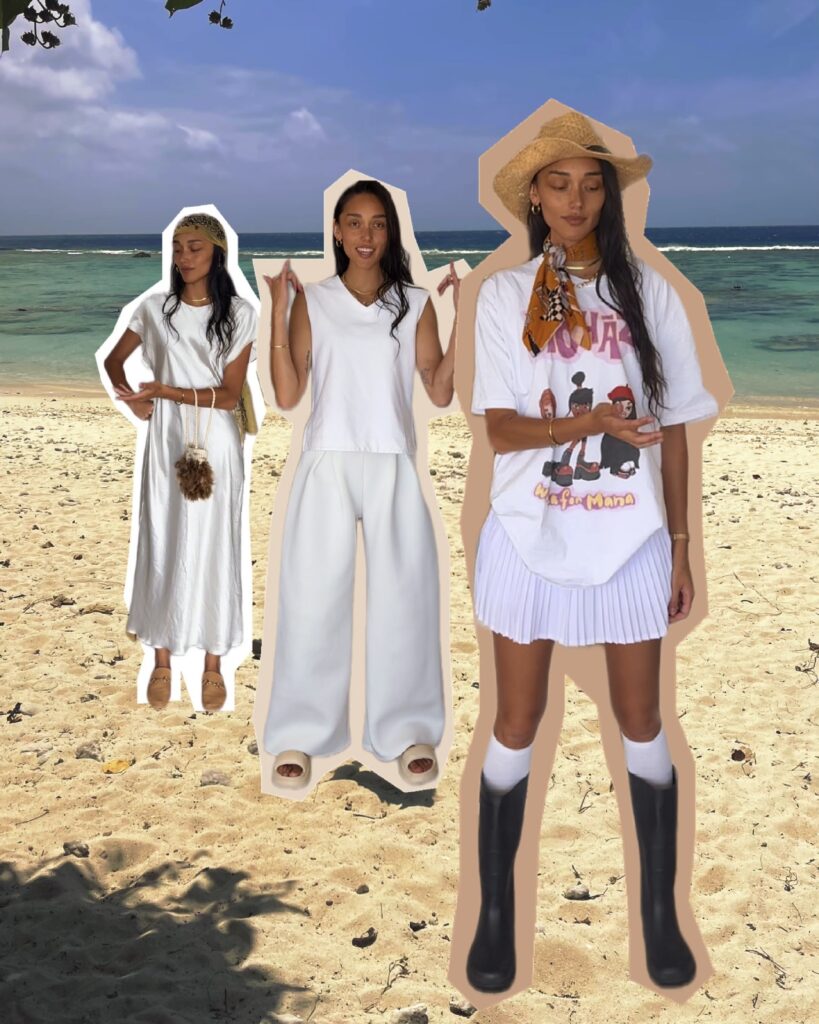
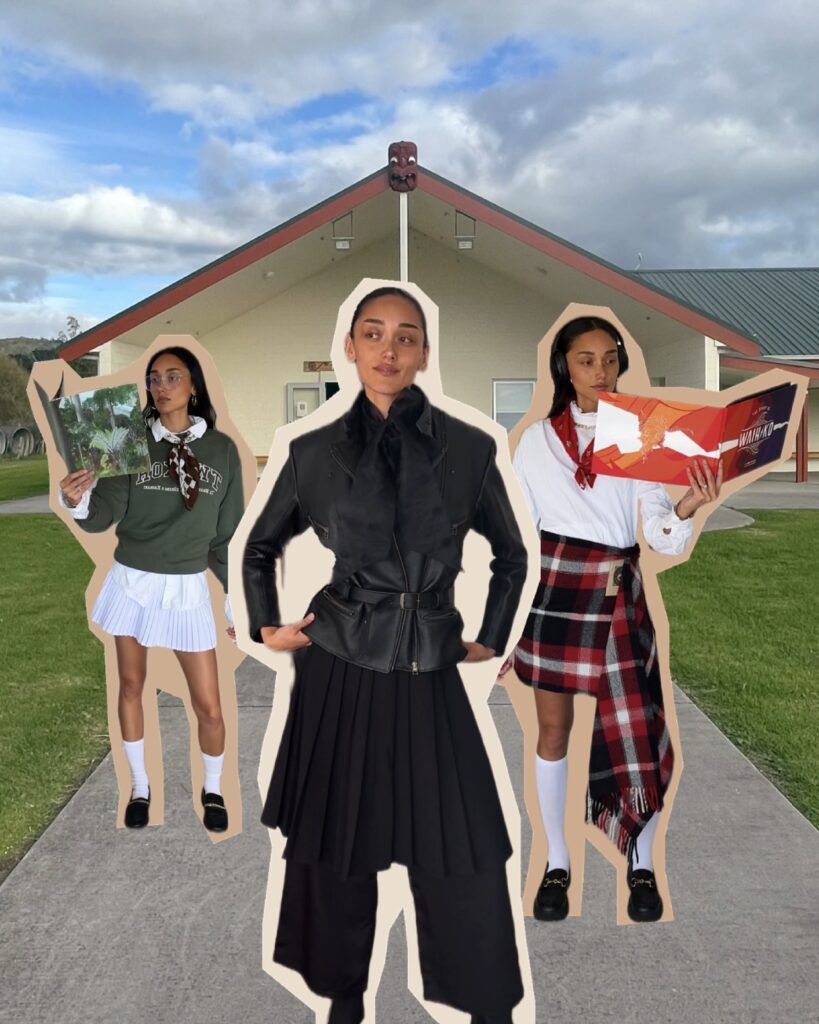
Natua Kaa-Morgan: I’ll make it up and say my style is Kiwa-Core. As in Te Moana-nui-a-Kiwa — the most biodiverse ocean in the world. A style that fosters as much variety and beauty as the waters I come from. I’ve only just realised my personal style since aligning my external vibe with my internal sense of self. A key part of this evolution was learning te reo Māori as it so deeply informs my identity, which I express through my style.
When it comes to buying something new, I ask myself: do I love it? Does the brand align with my values? Is it a financially sensible decision? Or does the money go to something meaningful? And for real, do I love it?
There are things I think every fashion lover should have — but I’m not talking about must-have bags or seasonal trends: kilt pins! And the belief that you can make anything look good — you can grab that for a few bucks from your local op shop. That’s where the magic begins.
I tend to gravitate toward local BIPOC creatives who are creating work that moves in all the right ways. Atarangi Anderson making clothes out of aute bark. Bobby Campbell Luke and Dom Blake styling the Māori Queen. The Kāhui Collective ten toes deep in sustainable practices. Adrion Atelier gifting us structure and flavour. Claudia Li when I want my jaw on the floor.
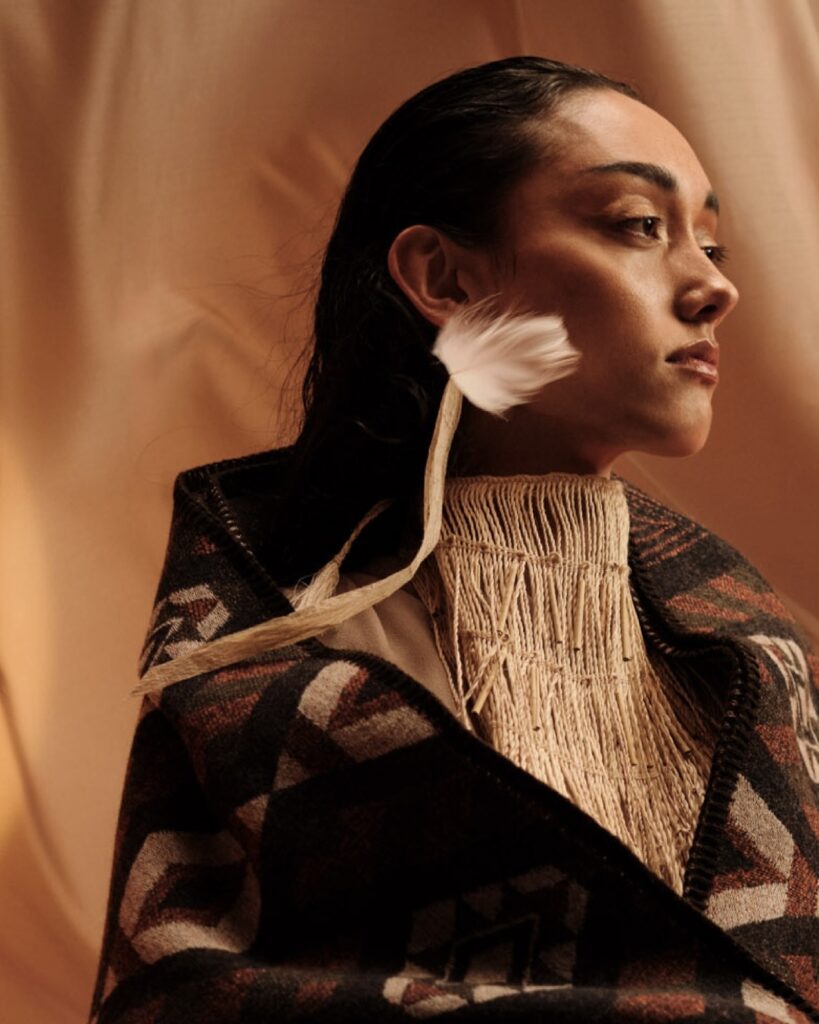
As for having a signature piece? Kiwa-Core thrives off of always changing it up — so I hope not. One of my most special pieces, though, is a pair of aute bark earrings made by Atarangi Anderson. My husband gifted them to me. There’s this saying where I’m from: “Haere mai ki Hauraki he aute tē āwhea” / “Come to Hauraki where the paper mulberry plant survived.” So when I wear the earrings, I feel that connection to my home and the Tainui waka (canoe) that the original aute plant species arrived here on.
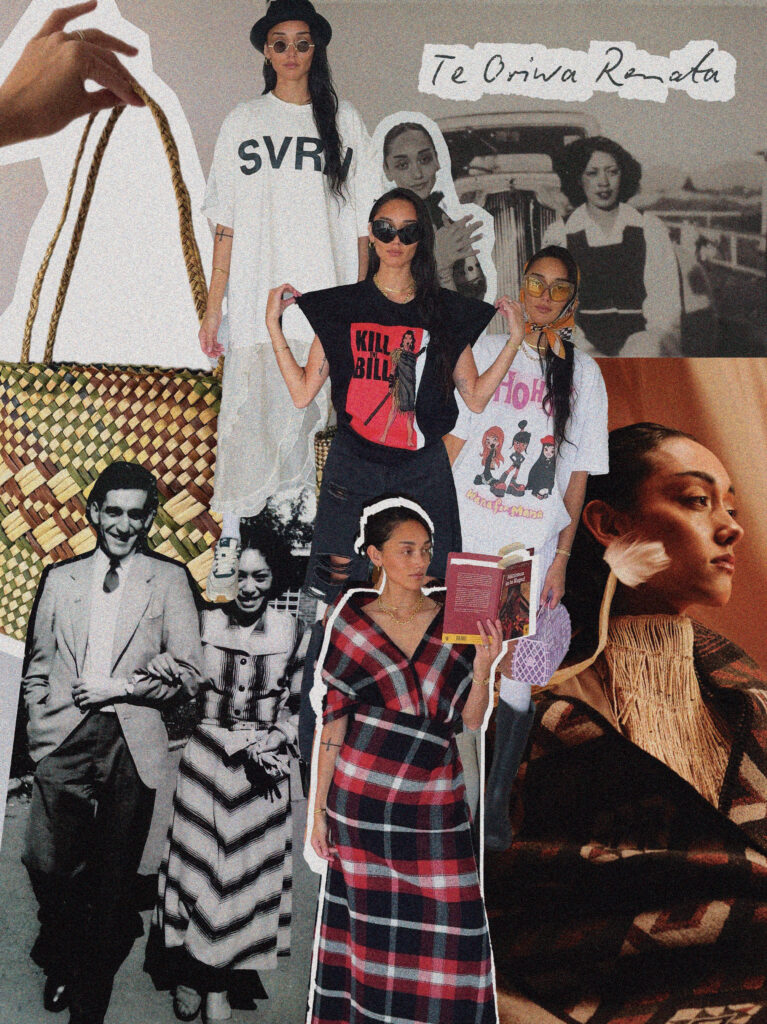
My wardrobe is 70 per cent thrifted, darling. I have a bit of everything in there. Eras, shapes, silhouettes — it’s a curated chaos of form and feeling.
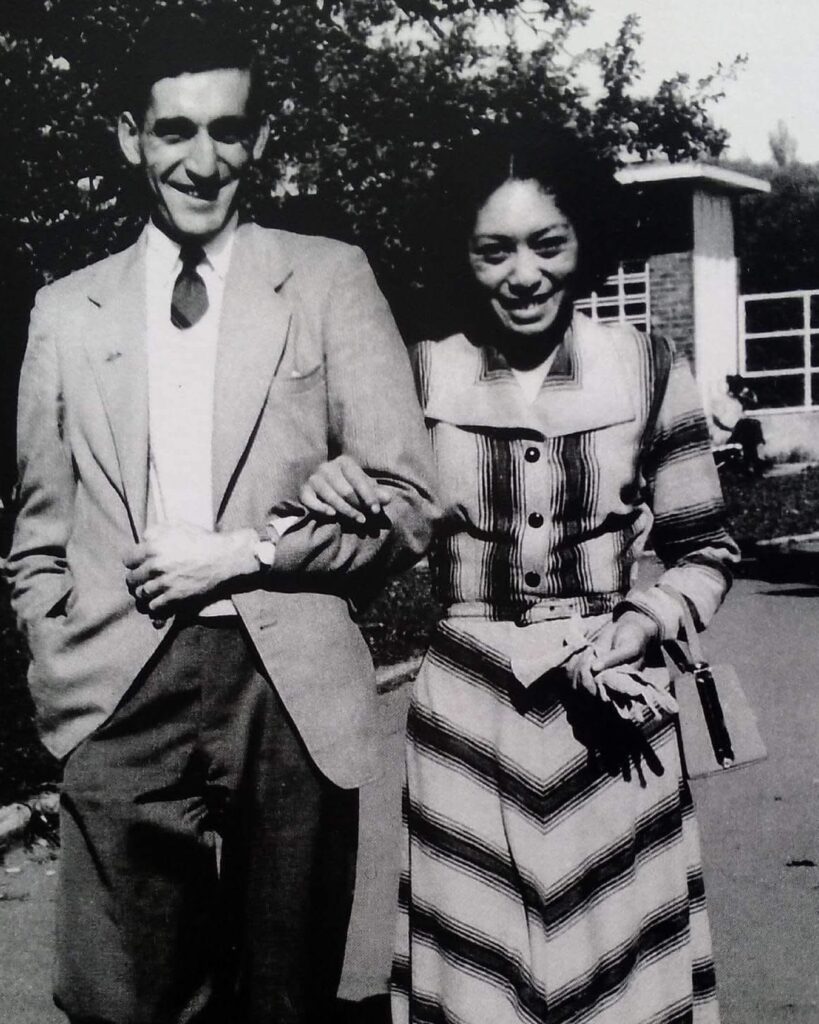
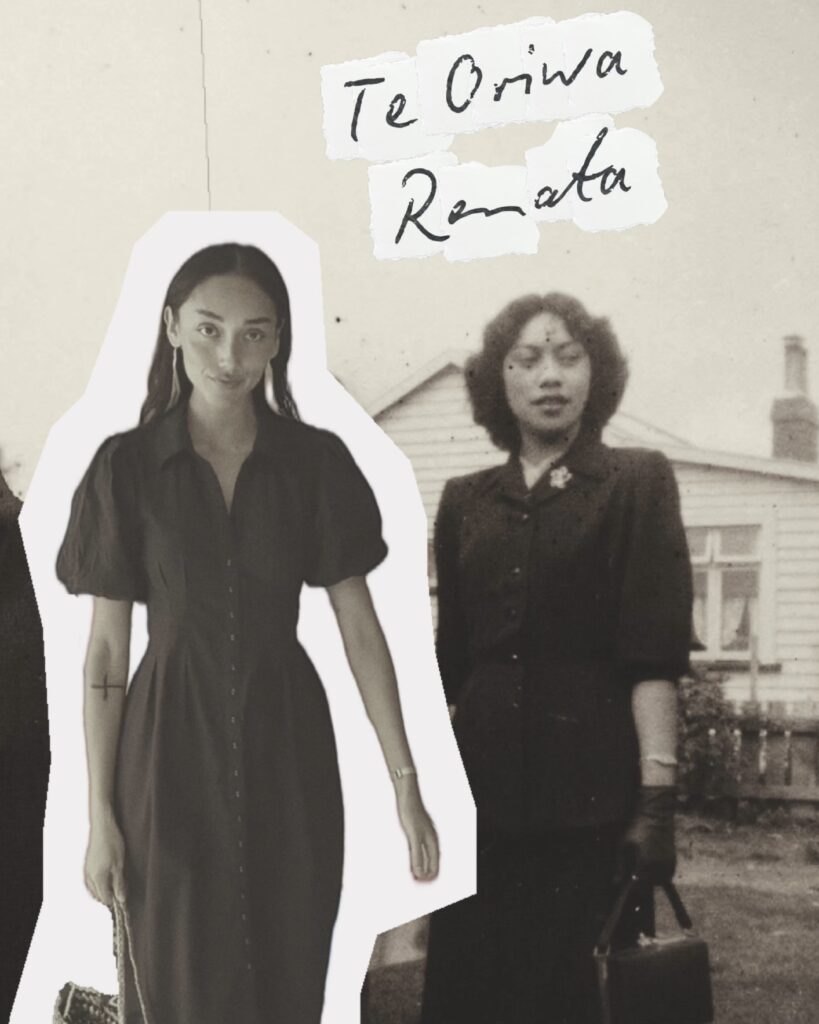
I’m rich in inspiring surroundings. Photos of my nana Te Oriwa Renata, who had a natural eye for beauty. Kaumātua at formal gatherings on the marae, dressed in certainty, stories, and practicality. Wharenui adorned with art and ancient stories. All of them. I’m so rich.
When it comes to investing in pieces, I say: invest not just in the material or the cut but in versatility and longevity of wear. A few years ago, I purchased a blanket from Noa Blanket Co. It’s imbued with story, 100 per cent New Zealand wool, made in Aotearoa, Māori owned, limited edition and unlimited in use. My whānau have intentionally increased its value by wearing it to meaningful events — like my older sister’s moko kauae ceremony or the Māori Queen’s first koroneihana. The fibres can hold the memory of those moments long after we’re gone. On top of that, I styled it for fun once on social media, and the designers saw it and invited me to be in the campaign for their next limited-edition blanket collection. We became stunning friends and the rest is history — all thanks to a wool blanket.
Confidence for me is a well-curated thrifted outfit with good structure and texture. I have a few of those go-tos. And I stay admiring the community of other sustainable stylists like Tuihana Ohia, Misty Ratima, and Ellice Prictor — also doing the do.
This article originally appeared in Fashion Quarterly’s Summer 2025 issue.
As told to: Sophie de Renzy.
Imagery: Natua Kaa Morgan and Hunter Studio.