

Feeling overwhelmed at work, it was my husband who first suggested bringing in a productivity expert. I scoffed — surely I was already operating at peak efficiency? But he pressed on, pointing out that productivity isn’t just about getting things done; it’s about working smarter, not harder.
Intrigued, I decided to book Rachel King from Quotient to run a workshop for the entire Fashion Quarterly team. I’ll admit, I was nervous about how it would be received. Productivity is a word that gets thrown around constantly, often making us feel like we should be doing more rather than helping us work better. Between endless emails, back-to-back meetings, and the constant ping of notifications, finding time for focused, meaningful work can feel like an uphill battle. That’s exactly why, over the course of two weeks, the FQ team committed to not one, but two Quotient productivity workshops, led by King.
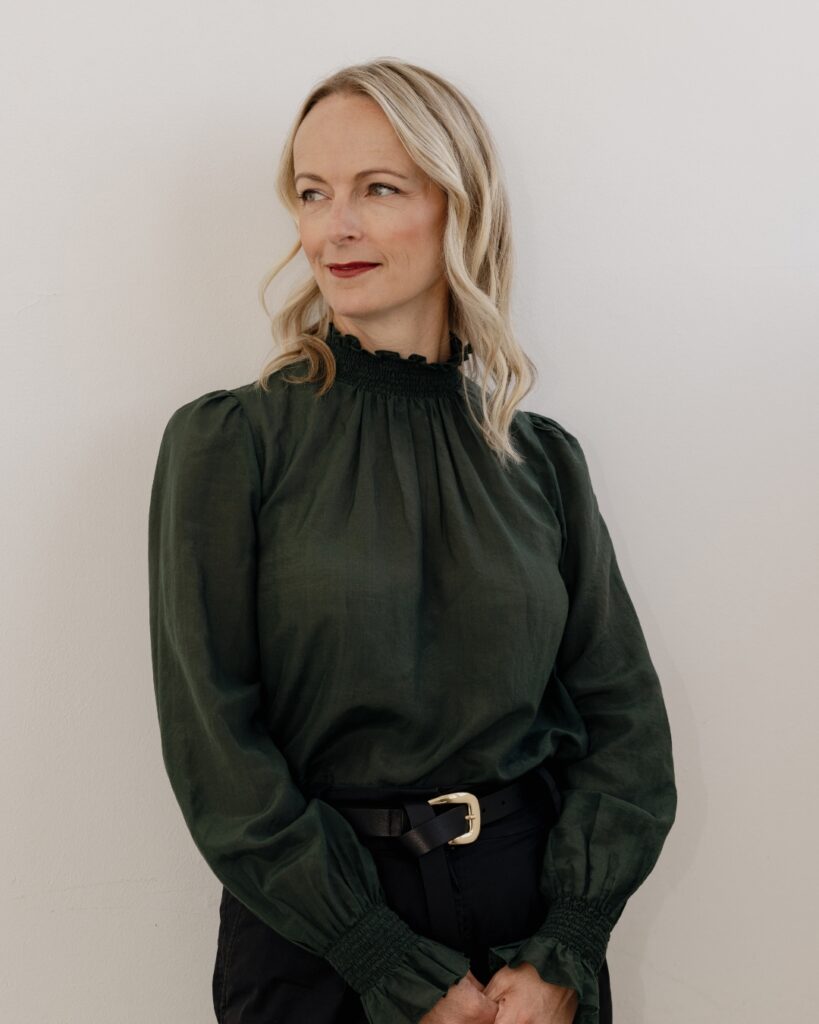
King is passionate about helping leaders and their teams achieve high performance without burnout. As a trained civil engineer, she understands the foundations of a building; now, she says, she applies that same logic to people. “I’m absolutely passionate about seeing people thrive at work and in life; to show them that sustainable productivity without burnout is attainable.”
Her change in career came after she became a mum, juggling three kids under three. “I started looking for solutions to the impossible challenge of juggling it all and staying sane. I read and studied productivity, psychology, ancient philosophy — the works. I filtered through loads of people promising the world but without much substance to back it up. I road-tested it all.”
The result? A series of research-backed strategies that King now teaches through her workshops. And after experiencing them firsthand, I can confidently say they work.
The FQ team walked into the first session unsure of what to expect, and — if we’re being honest — skeptical about whether anything could help with our overwhelming volume of work. But by the second session, something had shifted. We had begun implementing small changes — batching jobs, setting clearer boundaries around email, and starting each day with our most important task rather than getting bogged down in admin — the impact was almost immediate. I honestly feel like I’ve gained another eight hours in my working week, just by controlling interruptions and prioritising my workload.
King’s focus is on working smarter. “People often react to the word ‘productivity,’ thinking it’s all about how many things you can jam into a day. Busy does not equal productive, despite what culture would have us believe,” King explains. “If there’s one thing people take away from Quotient workshops, it’s acknowledging the reality that you can’t possibly do it all. Once you make your peace with that, it’s giving yourself permission to slow down and focus your energy on work that has impact.”
A focus of the workshop was on identifying common productivity traps. One of the biggest? The tendency to ‘clear the decks’ before tackling meaningful work. “Most people think that if they just get all the little tasks out of the way, then they’ll finally be able to focus on their important work,” says King. “But the problem is, those little tasks never end. We end up clearing the decks all day and never get to that big project we planned to do.”
We saw this play out in real time. Initially, many of us at FQ still felt the urge to check emails or respond to messages immediately. But by the end of the second workshop, we had implemented focus time — blocking out uninterrupted periods for work. It wasn’t easy at first, but once we got over the discomfort of ignoring the ‘urgent’ in favor of the important, the difference was immediate.
King shared her go-to tool for managing tasks: the Eisenhower Matrix, which helps quickly distinguish between urgent and important tasks. “The important work never shouts at us. It sits and waits patiently until we turn our attention to it,” she says.
A key takeaway was the importance of team rules. “Most of us don’t work in silos, so we need to align our ways of working with others,” King explains. For us, this meant agreeing on when to have concentrated work time, from 9.30-11.30 every morning, setting boundaries around emails, and carving out space for collaboration without interruptions.
As a result, we’ve started implementing what King calls “open door” each morning from 11.30 — a time for collaboration and questions.
One surprising insight was how much of our productivity struggles stem from energy management rather than time management. “We can’t work at an unrealistic pace all the time,” says King. “We have to map our work to our energy levels and plan micro-breaks to reset. Top athletes know to allow time for rest and recovery between intense bursts, and we need to remember to do the same.”
The beneficial element to adapting these strategies is that they can be applied to life outside of work. “The lens I teach applies to everything. Getting good at filtering everything with the question, ‘Is this actually important?’ is as relevant at home as it is at work. There are endless possible things I can do outside of work, but I always pause and ask myself what’s most important.”
For the FQ team, this has meant rethinking how we approach our workload. Instead of feeling like we’re falling behind, we’re starting to regain control. The results speak for themselves. One team member noted that she’s no longer a slave to her inbox, while another has started to implement walking meetings outside to get some vitamin D.
The feedback King receives from her workshops reflects similar transformations. “A senior leader told me a Quotient workshop was the most relevant, impactful workshop she’d ever attended.” Someone else told King, her workshop had saved their marriage!
Ultimately, these workshops aren’t solely about productivity — they’re changing the way we work and live. For us at Fashion Quarterly, the shift has been profound. We’ve realised that it’s not about doing more, it’s doing what matters. And that is truly life-changing.
10 SMALL CHANGES TO BECOME MORE PRODUCTIVE
1. Prioritise
Have only one to three key things that you are focusing on each day. Any more and you’ll become scattered and overwhelmed.
2. Power hour
Start the day with a power hour — turn off email and notifications and do your most important piece of work.
3. Energy
Align your tasks with your physical and mental energy: plan your high focus activities for the morning. We are all more focused and creative then.
4. Micro-breaks
When you get stuck, and are tempted to start scrolling, get outside for a walk for five minutes. The shift in environment helps you process your thoughts.
5. Pause
When someone asks you to do something, pause and ask yourself if it’s actually yours to do.
6. To-dos
Capture all your to-dos in one place — there are many list type apps out there. Pick one and stick with it. If you’ve got 1000 to-dos in 1000 places, your brain will go into overdrive trying to remind you of all the things.
7. Next action
If you’re procrastinating on a task, ask yourself, “What is the very next thing I need to do to move this project forward?”. And do that.
8. Sit with loose ends
Accept that you will never do it all. Learn to sit in the discomfort of loose ends, and do the most important thing anyway.
9. Just start
Don’t clear the decks before starting on your top priority. Just start now. The decks will always be there.
10. Focus time
Discuss with your team the idea of having a block of time when none of you interrupt each other. Imagine having an hour to yourself just to focus.
Words: Sarah Murray.